How Long Does Hardwood Flooring Last in Hawaii?
Key takeaway
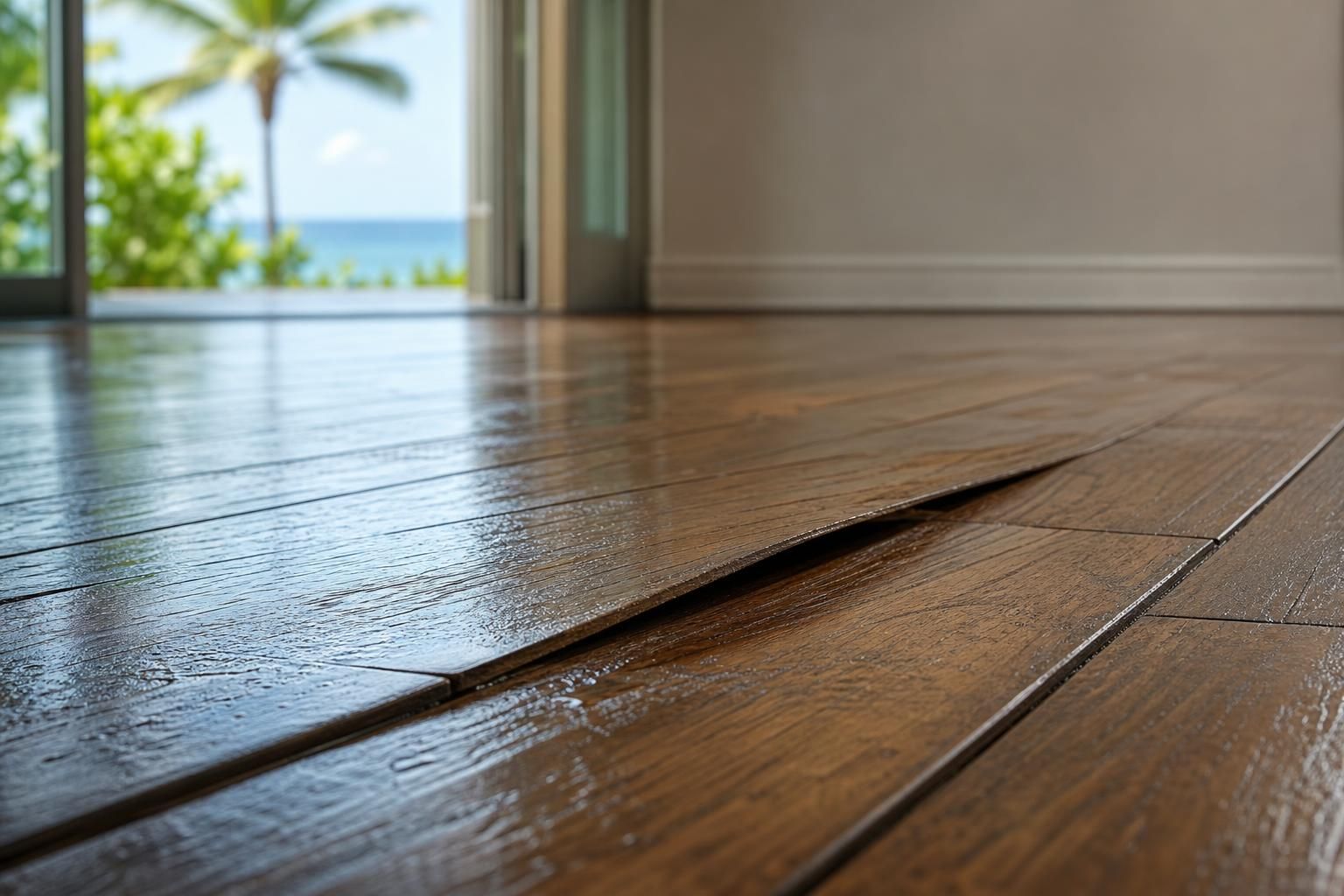
Solid hardwood flooring installed and maintained correctly in a Hawaii home typically lasts 20 to 40 years before it needs full replacement, though humidity, UV exposure, and proximity to the ocean can shorten that if the wood isn't acclimated and finished properly. Engineered hardwood tends to run shorter, often 15 to 25 years, because its veneer layer limits how many times it can be sanded and refinished. Homes with poor humidity control or standing moisture problems can see failure — cupping, buckling, or finish breakdown — in well under 10 years.
Key takeaways
- Solid hardwood can last 20–40 years in Hawaii; engineered hardwood usually lasts 15–25 years because its wear layer is thinner.
- Oahu's year-round humidity (often 65–75%) is the biggest threat to hardwood lifespan, not foot traffic.
- Waterproof vinyl plank is a common alternative for bathrooms, kitchens, and ground-floor units where humidity or flood risk makes hardwood a gamble.
Why Hawaii Shortens Hardwood's Lifespan Compared to the Mainland
Wood flooring is hygroscopic — it absorbs and releases moisture from the surrounding air, expanding and contracting as it does. In a climate-controlled mainland home with seasonal humidity swings, that movement is modest and predictable. In Honolulu, where NOAA climate data for the island shows relative humidity regularly sitting in the 65–75% range year-round with little seasonal relief, wood is under near-constant moisture pressure. That's a fundamentally different stress pattern than what manufacturers design and warranty for on the continental U.S.
The practical result: boards that aren't acclimated to the room before installation, or that sit over a slab without a proper vapor barrier, cup or gap within the first few years rather than the first few decades.
What Actually Determines Lifespan Here
Lifespan isn't one number — it's the sum of several variables, and in Hawaii these matter more than elsewhere:
- Acclimation time. Boards need to sit in the installation space long enough to reach equilibrium moisture content before nailing or gluing down. Skipping this step is the single most common cause of early cupping.
- Subfloor moisture. Slab-on-grade homes (common on Oahu) need a vapor barrier under solid hardwood; without one, moisture wicks up from the concrete and attacks the wood from below.
- Finish quality and refresh schedule. A site-finished or factory UV-cured finish protects against surface moisture and foot traffic wear; it needs recoating roughly every 7–10 years in high-humidity homes to keep doing its job.
- Direct sun exposure. UV through windows and sliding doors fades and dries out finish faster in Hawaii's sun angle than in most mainland climates, per general guidance from the National Wood Flooring Association.
- Proximity to wet areas. Kitchens, entryways, and lanai-adjacent rooms see more incidental water exposure, which shortens finish life even if the structural wood is fine.
Homeowners comparing what hardwood flooring costs in Honolulu should factor these maintenance realities into the total cost of ownership, not just the install price.
Solid vs. Engineered Hardwood in a Humid Climate
Solid hardwood is a single piece of wood through its full thickness, which means it can be sanded and refinished multiple times over its life — each refinish effectively resets the surface and extends the floor's usable years. Engineered hardwood has a real wood veneer bonded over plywood or composite layers; it's more dimensionally stable in humidity swings because of that layered construction, but it can usually only be refinished once or twice, if at all, depending on veneer thickness. In a climate like Oahu's, engineered hardwood's stability is an advantage against warping, but its shorter refinish life caps total lifespan lower than well-maintained solid wood.
Homeowners shopping in-stock options can see this tradeoff directly when comparing hardwood flooring available on Oahu — thicker veneers and solid options generally cost more upfront but have longer realistic lifespans here.
Signs Hardwood Is Failing Early
Watch for these indicators, especially in the first 2–3 years after installation:
- Cupping — board edges rise higher than the center, almost always a sign of moisture imbalance between the top and bottom of the plank.
- Gapping — visible seams open up between boards, typically from the wood drying out faster than it absorbed moisture originally.
- Finish dulling or whitening — cloudy patches near sliding doors or windows, usually UV and moisture combined.
- Soft or spongy spots — a sign water has reached the subfloor, which is a structural problem, not cosmetic.
Any of these within the first few years points to an installation or moisture-control issue rather than normal wear, and usually needs a flooring professional to assess rather than a simple refinish.
Hardwood vs. Waterproof Vinyl Plank for Humidity-Prone Rooms
Given how much of hardwood's lifespan in Hawaii depends on moisture control, many homeowners choose waterproof vinyl plank — particularly SPC rigid core — for bathrooms, laundry rooms, condo units near the ocean, and ground-floor spaces where humidity or flood exposure is a known risk. Waterproof vinyl plank doesn't expand, cup, or absorb moisture the way wood does, which removes the main variable that shortens hardwood's life in this climate. H&W Flooring sells retail luxury vinyl plank at $2.79 per square foot, with installation from $8 per square foot, including demo of old flooring, leveling (incl. self-leveling material), and baseboard, as a direct comparison point for homeowners weighing wood against a waterproof alternative in the same room.
For homeowners who like the look of wood but want more certainty around longevity, it's worth comparing this guide against how long laminate flooring holds up in Honolulu homes, since laminate and engineered hardwood face similar humidity pressures but behave differently once moisture gets underneath the wear layer.
How to Extend Hardwood's Life on Oahu
- Run a dehumidifier or keep AC running consistently rather than cycling it off when the house is empty — stable humidity matters more than a specific target number.
- Use entry mats and wipe up spills immediately, especially near lanai doors and kitchens.
- Schedule a recoat (not a full sand) every 7–10 years in high-humidity rooms to keep the finish doing its job.
- Avoid steam mops and excess water when cleaning; damp, not wet, is the rule for wood floors in this climate.
Frequently Asked Questions
Q: Does hardwood flooring last as long in Hawaii as on the mainland?
Generally no — the same solid hardwood product that might last 50+ years in a dry mainland climate more typically lasts 20–40 years in Hawaii because of sustained high humidity, unless the subfloor and acclimation are handled carefully.
Q: Can hardwood flooring be installed in a Hawaii bathroom or kitchen?
It's technically possible but not recommended for wet areas; the constant moisture exposure in bathrooms and kitchens shortens hardwood's life dramatically compared to waterproof vinyl plank, which is built to handle standing water without warping.
Q: How often does hardwood flooring need to be refinished in Hawaii?
Most hardwood floors in Hawaii benefit from a recoat every 7–10 years, sooner in rooms with direct sun or near sliding doors, to protect the finish before moisture reaches the wood itself.
Q: Is engineered hardwood a better choice than solid hardwood in Hawaii's climate?
Engineered hardwood is more dimensionally stable against humidity swings, which reduces cupping risk, but it can typically only be refinished once or twice, giving it a shorter total lifespan than well-maintained solid hardwood.
Q: What's a more humidity-proof alternative to hardwood for Hawaii homes?
Waterproof vinyl plank, especially SPC rigid core, doesn't absorb moisture or expand the way wood does, making it a common substitute in bathrooms, condos, and ground-floor rooms where humidity control can't be guaranteed.