How to Clean Vinyl Plank Flooring the Right Way
Key takeaway
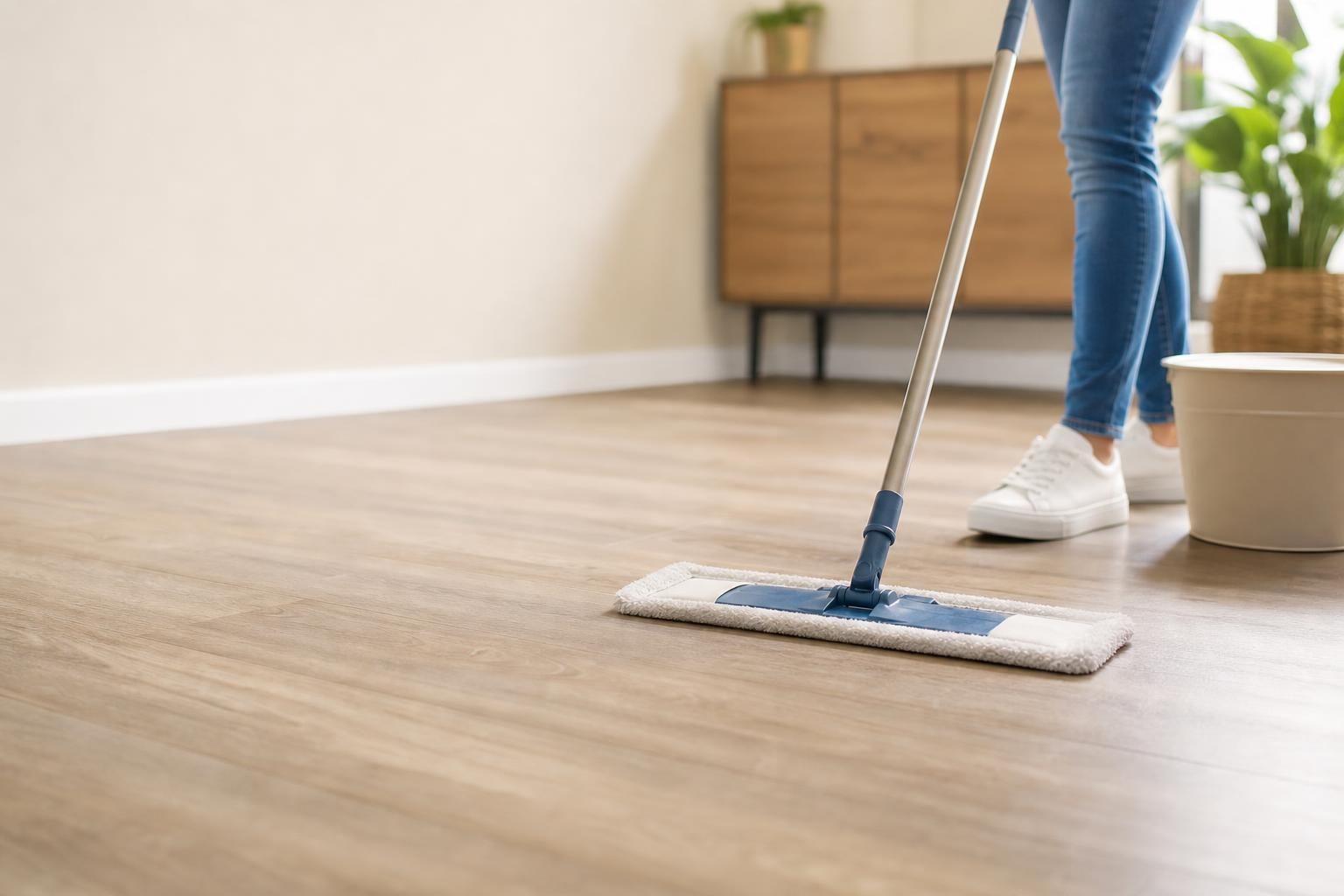
Clean vinyl plank flooring by sweeping or vacuuming loose grit first, then damp-mopping with a pH-neutral cleaner diluted in warm water — never steam, wax, or oil-based soap. Wipe up spills promptly and use furniture pads under heavy pieces to prevent scuffing the wear layer. Done this way, a waterproof vinyl plank floor can go years without needing anything more than routine upkeep.
Key takeaways
- Sweep or vacuum before mopping — grit acts like sandpaper on the wear layer under foot traffic.
- Skip steam mops, wax, and ammonia-based cleaners; they can cloud the finish or soften seams over time.
- A pH-neutral vinyl floor cleaner and a microfiber mop handle nearly everything, including most stuck-on residue.
Why Vinyl Plank Cleaning Rules Differ From Hardwood or Tile
Vinyl plank and SPC (stone-plastic composite) flooring have a printed design layer sealed under a clear wear layer, usually finished with a urethane coating. That coating resists scratches and water, but it isn't invincible — harsh chemicals and excess heat can dull it or break down the seams between planks. Unlike solid hardwood, there's no refinishing a worn vinyl floor by sanding it down, so protecting the wear layer from day one matters more than it does with wood or tile.
Daily and Weekly Cleaning Steps
- Sweep or dry-vacuum first. Use a soft-bristle attachment, not a beater bar, which can scratch the surface.
- Damp-mop weekly with warm water and a pH-neutral cleaner made for resilient flooring. A few drops of dish soap in a bucket of water works in a pinch, but a labeled vinyl cleaner is more consistent.
- Wring the mop nearly dry. Vinyl plank is waterproof at the surface, but standing water can still seep into seams, transitions, or around baseboards over time.
- Dry with a microfiber towel in high-traffic entry areas so grit doesn't get tracked back in before the floor fully air-dries.
What to Avoid
- Steam mops. The heat and moisture can soften adhesives and stress plank seams, especially on floating floors.
- Wax or polish. Vinyl doesn't need a topcoat, and wax buildup actually dulls the factory finish and attracts more dirt.
- Ammonia, bleach, or vinegar-based cleaners. These can break down the wear layer's finish and leave a hazy film after repeated use.
- Abrasive scrub pads. Anything rougher than a soft nylon brush risks micro-scratching the surface, which shows up as dullness in raking light.
Handling Stains, Scuffs, and Standing Spills
Most spills — coffee, wine, cooking oil — wipe up with a damp microfiber cloth if caught quickly. For dried-on residue like crayon or scuff marks, a small amount of isopropyl rubbing alcohol on a soft cloth usually lifts it without touching the finish; test in an inconspicuous spot first. Standing water from an appliance leak or a bathroom overflow should be mopped up promptly even on waterproof vinyl, since prolonged moisture at seams and transitions is where problems start, not across the plank face itself.
For bathrooms, laundry rooms, and other wet areas, the cleaning routine matters less than what's underneath. Proper waterproofing at seams, thresholds, and wall transitions during installation is what actually keeps water from reaching subfloor or framing — cleaning habits can't compensate for a install that wasn't detailed for a wet area in the first place.
For Contractors: What to Tell Clients After Installation
If you're a licensed contractor handing a finished vinyl plank job over to a homeowner or property manager, a short written care sheet saves you callback calls. Keep it to three points: no steam mops, no wax, and wipe standing water promptly — especially in kitchens and baths. Contractors buying in volume through a wholesale account can usually get manufacturer care sheets from the supplier at the time of purchase, which is worth asking for when you're setting up a wholesale flooring account rather than writing your own from scratch every time.
Maintaining Vinyl Plank in High-Traffic or Rental Units
Rental units and condos see faster wear at entryways and under rolling office chairs. Walk-off mats at exterior doors catch most of the grit before it reaches the floor, and chair mats or felt pads under furniture legs prevent the slow scuffing that shows up as a worn path over a few years. None of this requires special cleaning products — it's almost entirely about keeping abrasive grit off the surface in the first place, since dirt trapped under foot traffic is the primary cause of wear-layer dulling according to flooring industry guidance from the Resilient Floor Covering Institute.
Frequently Asked Questions
Q: Can I use a steam mop on vinyl plank flooring?
No. The combination of heat and moisture from a steam mop can soften adhesives and stress the seams between planks, even on waterproof products. Stick to a damp (not wet) microfiber mop instead.
Q: What cleaner is safe for vinyl plank floors?
A pH-neutral cleaner labeled for resilient or vinyl flooring is the safest choice. Avoid ammonia, bleach, and vinegar-based cleaners, which can dull or damage the wear layer's finish over repeated use.
Q: Does vinyl plank flooring need to be waxed or polished?
No. Vinyl plank comes with a factory-applied wear layer that doesn't need a topcoat. Adding wax or polish typically builds up residue and dulls the finish rather than protecting it.
Q: How do I get scuff marks off vinyl plank flooring?
A soft cloth with a small amount of isopropyl rubbing alcohol usually removes scuffs without affecting the finish. Test an inconspicuous area first, and avoid abrasive scrub pads, which can leave fine scratches.
Q: Is standing water a problem on waterproof vinyl plank flooring?
Standing water on the plank surface itself generally isn't a problem, but it can still work into seams, transitions, or wall edges over time. According to the Environmental Protection Agency, prolonged moisture anywhere in a home is also a mold risk, so wiping up standing water promptly is still good practice even on waterproof flooring.