What Is Vinyl Plank Flooring Made Of?
Key takeaway
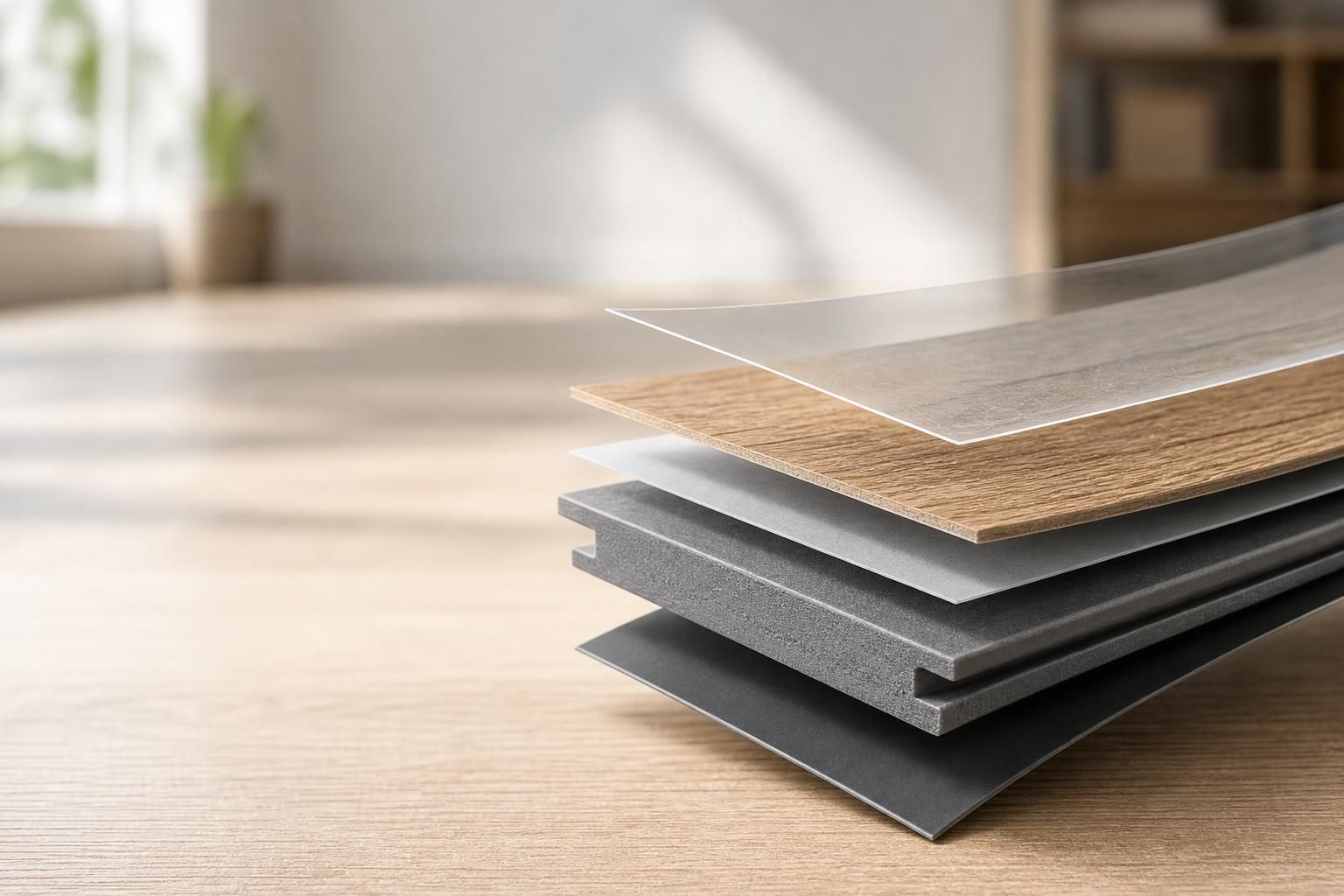
Vinyl plank flooring is built from several stacked layers, almost always centered on PVC (polyvinyl chloride) resin blended with plasticizers and limestone or stone-composite filler for the core, a printed film layer for the wood or tile look, and a clear urethane-coated wear layer on top. Rigid-core versions, known as SPC, replace the flexible PVC core with a denser mix of limestone powder and polymer for extra stiffness and waterproofing. Nothing in a standard vinyl plank is organic wood or paper, which is why the material doesn't swell, rot, or absorb water the way laminate or hardwood can.
Key takeaways
- Vinyl plank is built in layers — backing, core, print film, and wear layer — not a single material, and the core layer determines whether it's standard flexible vinyl or rigid SPC.
- The wear layer thickness (usually measured in mil) is the main spec that predicts how long the floor resists scratches and foot traffic, not the brand name on the box.
- Because the core is PVC and stone filler rather than wood fiber, vinyl plank is naturally waterproof — an important distinction for bathrooms, laundry rooms, and ground-floor units in humid climates.
The Layers That Make Up Vinyl Plank Flooring
Every vinyl plank, whether it's a budget box or a premium SPC product, is built from the same basic stack, bottom to top:
- Backing layer — a thin foam or cork-like base that adds cushioning and sometimes sound dampening.
- Core layer — the structural heart of the plank, made of PVC resin, plasticizers, and stabilizers in flexible vinyl, or a denser PVC-and-limestone composite in SPC rigid core.
- Print film layer — a high-resolution photographic layer that gives the plank its wood grain, stone, or tile appearance.
- Wear layer — a clear coating, usually urethane, that protects the print layer from scratches, stains, and UV fading.
The wear layer's thickness, measured in mil, is the single biggest factor in how a floor holds up over years of use. Thin wear layers scratch faster under furniture and foot traffic; thicker ones cost more but resist wear longer. This is also the main thing that separates a residential-grade plank from a commercial-grade one — a distinction covered in more detail in this breakdown of vinyl plank grades.
Flexible Vinyl vs. SPC Rigid Core
Not all vinyl plank is built the same way underneath. There are two core types sold on the market:
Flexible (standard) vinyl plank uses a softer PVC core, which makes it easier to cut and lets it flex slightly to follow a subfloor's minor imperfections. It's typically thinner overall.
SPC (stone plastic composite) uses a rigid core made from limestone powder mixed with PVC and stabilizers, compressed into a dense, hard board. SPC is thicker, dimensionally more stable under temperature swings, and generally considered more impact- and dent-resistant because the core itself does the structural work rather than just the surface layer.
There's also WPC (wood plastic composite), which uses a foamed core with wood-flour or bamboo filler. WPC is softer underfoot than SPC but typically less dent-resistant, which is part of why SPC has become the more common choice for busy households and rental units in Hawaii.
Why the Core Material Matters in a Humid Climate
Because PVC is a closed, non-porous plastic rather than a fibrous wood product, water doesn't get absorbed into the plank the way it can with laminate's wood-fiber core or solid hardwood. That's the material-level reason vinyl plank is marketed as waterproof rather than just "water-resistant." The U.S. Environmental Protection Agency notes that controlling moisture indoors is one of the most effective ways to prevent mold growth, and a non-absorbent flooring material is one piece of that control — particularly relevant on Oahu, where humidity and occasional water exposure from trade-wind rain or plumbing are routine concerns. This is also why vinyl plank performs differently outdoors than indoors; see this guide on using vinyl plank outside in Hawaii for where that waterproof claim does and doesn't apply.
How Composition Affects Installation Method
The core material also decides how a plank can be installed. Flexible vinyl plank is often sold as a glue-down product because its thinner, more pliable core needs full adhesion to stay flat. Rigid SPC core, by contrast, is dense and dimensionally stable enough to use a click-lock edge system that floats over the subfloor without glue. The difference between those two installation systems — and when each makes sense for a given room — is covered in this comparison of click-lock and glue-down vinyl plank.
Material composition also affects how a plank should be handled before installation. Because PVC and limestone-composite cores expand and contract slightly with temperature, manufacturers generally recommend letting boxes sit in the installation space for a period before laying them, a process explained further in this guide to acclimating vinyl plank flooring.
Are There Health or Safety Considerations?
PVC flooring has been studied for indoor air quality because of plasticizers and the potential for low-level volatile organic compound (VOC) off-gassing, especially right after installation. The U.S. Consumer Product Safety Commission and industry standards bodies like ASTM International maintain testing and labeling guidelines that manufacturers use to limit VOC emissions in flooring products. Buyers who want to compare products on this point can look for low-VOC or FloorScore-type certifications printed on the box, though not every vinyl plank product carries the same certification.
Frequently Asked Questions
Q: Is vinyl plank flooring made of real wood?
No. Vinyl plank flooring is made of PVC plastic, stabilizers, and a printed film layer that visually mimics wood grain — there is no wood fiber in the plank itself, which is part of why it doesn't swell when it gets wet.
Q: What is SPC vinyl flooring made of, specifically?
SPC stands for stone plastic composite, and its core is made from limestone powder combined with PVC resin and stabilizers, compressed into a rigid board that's thicker and stiffer than standard flexible vinyl core.
Q: Does the material composition affect how long vinyl plank lasts?
Yes — the wear layer thickness and core type are the two biggest material factors. A thicker urethane wear layer resists scratching longer, and a rigid SPC core generally resists dents and impacts better than a flexible vinyl or WPC core.
Q: Is vinyl plank flooring recyclable or environmentally friendly?
PVC-based flooring is not widely curbside-recyclable in most areas, and environmental impact varies by manufacturer and product line. Buyers concerned about this should ask a retailer directly about a specific product's content and any take-back or recycling programs rather than assuming all vinyl plank is the same.
Q: Why does vinyl plank feel harder or softer depending on the brand?
That's driven by the core and backing layers. A foam-backed WPC product will feel softer and quieter underfoot, while a dense SPC core feels firmer and more like a hard surface such as tile.