Is Vinyl Plank Flooring Good for Homes With Pets?
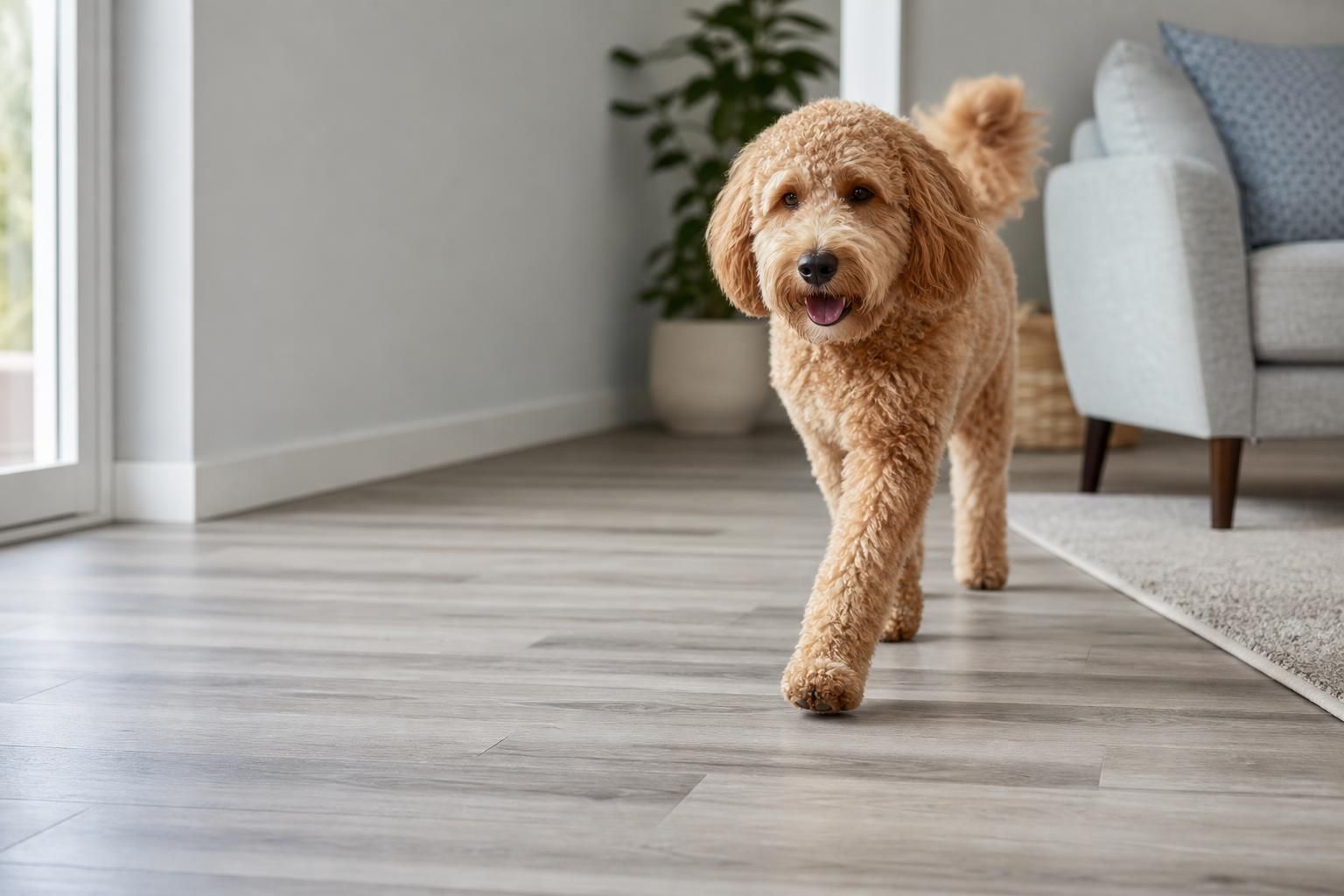
Key takeaway
Yes — waterproof vinyl plank flooring is one of the better choices for homes with pets because its core is impervious to water, it doesn't absorb urine or odor the way wood and carpet can, and a wear layer of 12 mils or more resists scratches from claws and nails better than most hardwood finishes. It won't survive every possible mishap undamaged, but of the common flooring types, it's the one built to shrug off the specific messes pets make.
Key takeaways
- Look for a wear layer of at least 12 mils (20 mils for larger or multiple dogs) — this is the layer that resists scratches, not the overall plank thickness.
- SPC (stone plastic composite) core vinyl resists dents from nails and furniture better than flexible WPC cores, which matters more with big dogs.
- Waterproof vinyl stops accidents at the surface instead of letting them soak into subfloor or seams, but grout lines in tile and gaps at baseboards still need attention.
Why Vinyl Plank Handles Pets Better Than Wood or Carpet
Solid and engineered hardwood can scratch, dent, and warp when urine sits on the finish long enough to reach the wood underneath — and once it does, you're usually looking at a plank replacement, not a wipe-down. Carpet traps hair, dander, and odor in the padding where it's hard to reach with routine cleaning. Waterproof vinyl plank is built with a rigid or semi-rigid core that doesn't swell when wet, topped with a wear layer that takes the scuffing instead of the decorative layer underneath.
That construction is also why vinyl plank shows up so often in pros and cons breakdowns for Oʻahu homes — the same waterproof core that handles Hawaiʻi's humidity and the occasional slab moisture issue is what keeps a dog's water bowl spill from becoming a bigger problem.
Wear Layer Thickness Is the Number That Actually Matters
Not all vinyl plank resists scratches equally, and the spec to check is wear layer thickness, not overall plank thickness. The wear layer is the clear top coating that protects the printed design layer from abrasion. A thin 6-mil wear layer is fine for a guest room nobody walks on; it's not enough for a 70-pound dog doing laps across the living room. For households with pets, a 12-mil wear layer is a reasonable minimum, and 20 mils or higher gives more margin before you see dulling or light scratching in high-traffic paths.
SPC vs. WPC Cores for Claws and Weight
Vinyl plank cores generally fall into two categories: WPC (wood plastic composite), which is softer and more flexible, and SPC (stone plastic composite), which is denser and more rigid. SPC resists denting under concentrated weight — think a large dog's nails or a heavy food bowl rack — better than WPC because the core itself doesn't compress as easily. If you're comparing the two specifically for a pet-heavy household, the contractor's guide to SPC vs. vinyl plank lays out the core differences in more detail than most product pages do.
What Waterproof Actually Stops (and What It Doesn't)
"Waterproof" on a vinyl plank product describes the plank itself — the core and wear layer won't swell, warp, or let water migrate through the material. It does not mean the seams between planks or the transition at a doorway are sealed shut. Urine that sits on a floor can still find its way into seams, baseboard gaps, or under appliances if it isn't cleaned up promptly. For bathrooms, laundry rooms, or any space where a pet accident is more likely to pool, waterproofing the transitions and underlayment at install matters as much as the plank spec — this is the kind of wet-area detail that gets handled during installation rather than fixed after the fact.
Sound, Traction, and Comfort Underfoot
Two other factors matter for pet owners that don't show up in a durability spec sheet:
- Noise. Rigid vinyl plank over a hard subfloor can amplify the click of nails compared to carpet. An acoustic underlayment reduces this, and also helps with impact noise in general — something covered in more detail in this breakdown of underlayment options.
- Traction. Smooth, high-gloss vinyl finishes can be slippery for older dogs or dogs on hardwood-style smooth planks, particularly when wet. A textured or embossed finish gives noticeably more grip than a polished one.
Maintenance That Keeps Vinyl Plank Looking New With Pets
- Trim or file nails regularly — the American Kennel Club recommends nails short enough that they don't touch the ground when a dog is standing, which reduces surface scratching on any hard floor.
- Wipe up accidents immediately rather than letting them sit, even on a waterproof surface, to avoid residue building up in seams.
- Use furniture pads under heavy items like crates or food stations, since concentrated point-weight is what causes dents, not general foot or paw traffic.
- Avoid steam mops. Heat and moisture forced under pressure can work into seams and transitions even on waterproof products; a damp microfiber mop with a pH-neutral cleaner is the safer routine.
Indoor Air Quality Considerations
Pet owners are often also managing allergens, and flooring choice plays a role here. The U.S. Environmental Protection Agency notes that hard flooring surfaces are generally easier to keep free of dander and allergen buildup than carpet, since there's no pile for particles to settle into. Vinyl plank falls into that easier-to-clean category, which is part of why it's a common swap-out when a household is managing both pets and allergies.
Frequently Asked Questions
Q: Can dog nails scratch vinyl plank flooring?
Vinyl plank with a wear layer under 12 mils can show light scratching from active dogs over time, but products with a 12- to 20-mil wear layer generally resist nail scratching well under normal use. The wear layer thickness, not the plank's total thickness, is what determines scratch resistance.
Q: Does vinyl plank flooring hold pet odor?
Waterproof vinyl plank's core doesn't absorb liquid, so it doesn't trap urine odor the way carpet padding or untreated wood can, provided accidents are cleaned up before they sit in seams or transitions for an extended time. Odor becomes a problem only when liquid is left to pool or seep into gaps.
Q: Is SPC or WPC vinyl plank better for large dogs?
SPC (stone plastic composite) core vinyl is denser and more resistant to denting under concentrated weight, which makes it a better fit for larger or multiple dogs than the softer, more flexible WPC core. Both are waterproof, so the choice mainly comes down to the denting resistance.
Q: Will vinyl plank flooring be slippery for pets?
Smooth, high-gloss vinyl plank finishes can be slippery for pets, especially older dogs or when the surface is wet. Choosing a textured or embossed finish instead of a polished one improves traction without giving up the waterproof core.
Q: Do I need special underlayment for vinyl plank with pets?
An acoustic underlayment isn't required for durability, but it reduces the click and tap of nails on rigid vinyl plank and helps with general impact noise in multi-level homes. It doesn't change the floor's water or scratch resistance, which comes from the plank itself.