What Is the Wear Layer on Vinyl Plank Flooring?
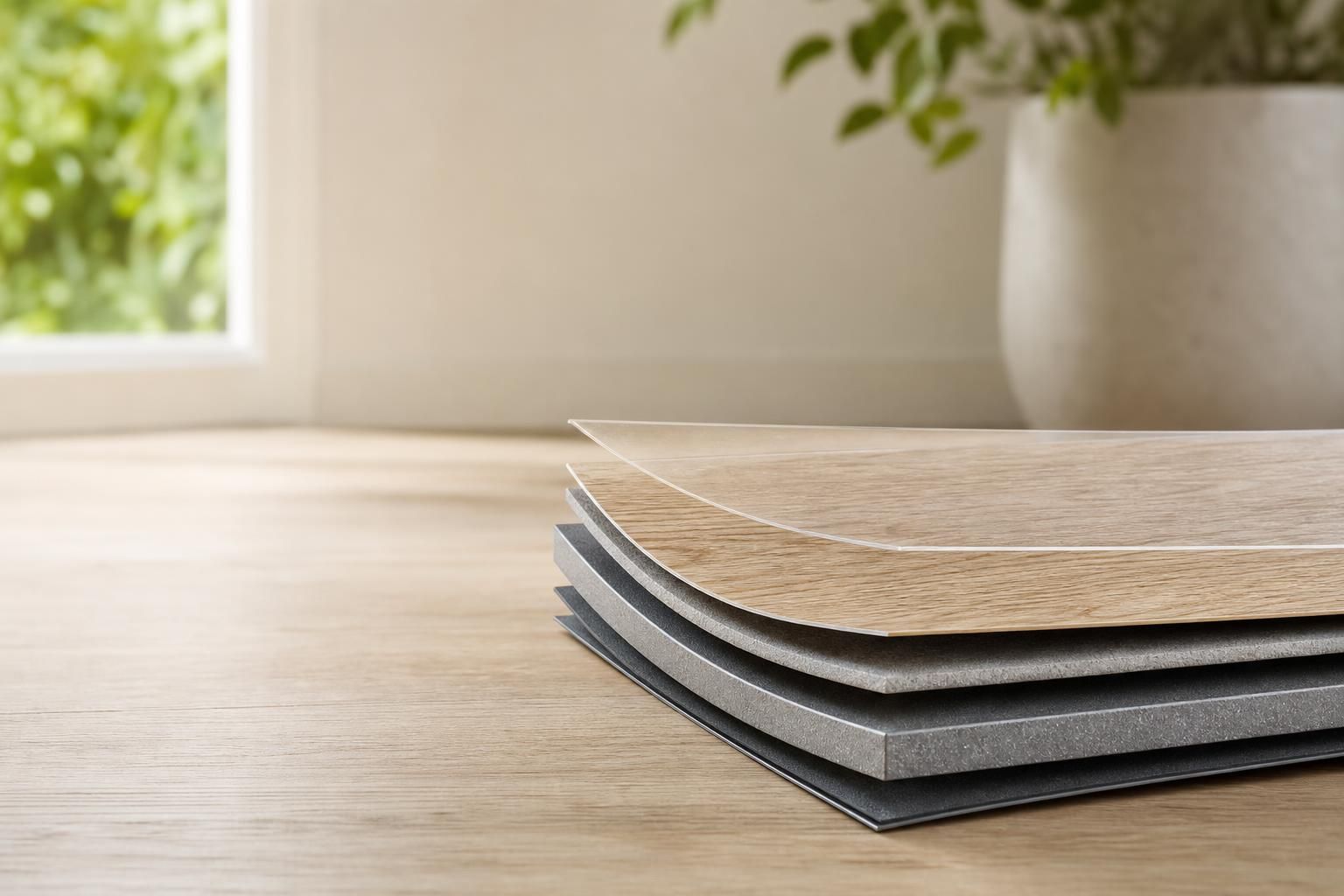
Key takeaway
The wear layer is the clear, top-most coating on a vinyl plank — usually a urethane or aluminum oxide finish measured in mils (thousandths of an inch) — that protects the printed design layer underneath from scratches, scuffs, and foot traffic. It sits above the print film and below any surface texture, and it's the single spec that determines how long a floor looks new before it starts showing wear patterns in high-traffic paths. Thicker wear layers cost more and last longer under commercial or rental-grade abuse; thinner ones are fine for a bedroom that sees light use.
Key takeaways
- Wear layer thickness is measured in mils; residential jobs typically run light-to-moderate mil ratings, while rentals and commercial spaces call for heavier ones.
- The wear layer protects the look of the floor, not the waterproofing — that's a separate function of the plank's core.
- Always check mil thickness against the specific manufacturer's warranty terms before buying by the pallet, since ratings aren't standardized the same way across brands.
What the Wear Layer Actually Does
Vinyl plank is built in layers: a backing, a rigid or flexible core, a printed design film, a wear layer, and sometimes a final UV coating. The wear layer is clear — it has no pattern of its own — and its only job is to take the physical abuse of foot traffic, furniture legs, grit, and cleaning chemicals so the printed wood or stone pattern underneath doesn't scratch through. Scuff a thin wear layer hard enough and you can expose the print layer, which shows as a dull or white scratch that won't buff out.
This is a different job than waterproofing. A plank's water resistance comes from its core material (SPC, WPC, or a waterproof composite), not the wear layer. A thick wear layer on a floor with a weak core will still swell at a seam if water sits on it; a thin wear layer on a solid waterproof core will resist moisture fine but show wear sooner in heavy traffic. Contractors sourcing for wet areas should evaluate the two specs separately rather than assuming one implies the other — our guide on SPC flooring versus standard vinyl plank breaks down the core-side half of that decision.
How Mil Thickness Translates to Real-World Durability
Wear layers are sold in mil increments, and the jump between tiers matters more than it sounds:
- Light residential use (a guest bedroom, a low-traffic condo) can perform fine on the lighter end of what manufacturers offer.
- Everyday living areas — kitchens, living rooms, hallways in an owner-occupied home — hold up better with a mid-range wear layer, since these see daily shoe traffic and dropped utensils.
- Rental turnover and commercial foot traffic justify paying for the heaviest wear layer a line offers, because the cost of re-flooring a unit between tenants or closing a storefront for a day of install work dwarfs the difference in material cost.
There's no single industry-wide number that applies across every manufacturer — one brand's "commercial-grade" mil rating isn't automatically equivalent to another's, so the manufacturer's own spec sheet and warranty language is the actual source of truth, not a general rule of thumb. ASTM International maintains the test methods (including resilient flooring standards) that manufacturers use to rate wear resistance, abrasion, and indentation, so a spec sheet citing a specific ASTM test number is a more reliable signal than marketing language like "extra durable."
Matching Wear Layer to the Job
Spec'ing by use case saves money without sacrificing durability where it matters:
- Short-term rental or Airbnb turnover — heavier wear layer pays for itself in fewer refinish cycles between guests; see our breakdown of vinyl plank options for Honolulu Airbnb units for how that trade-off plays out.
- Owner-occupied single-family home — mid-range wear layer is usually the sweet spot between cost and longevity for normal household traffic.
- Commercial storefront or office — go to the top of the manufacturer's wear layer range and confirm the product's commercial warranty terms explicitly, since residential and commercial warranties on the same plank line often differ sharply.
- Low-traffic secondary spaces (closets, guest rooms) — this is where a lighter, less expensive wear layer is a legitimate way to control material cost on a larger job without compromising the rooms that actually take abuse.
Contractors buying by the pallet across multiple units should also check brand-to-brand consistency before mixing product lines on one job — see what to verify on a vinyl plank brand's spec sheet before committing to a supplier.
Wear Layer vs. Other Plank Specs Contractors Should Separate
It's easy to conflate wear layer with other performance claims on a spec sheet. They're distinct:
- Wear layer — resistance to scratches and surface wear, measured in mils.
- Core type — determines waterproofing, dimensional stability, and sound. The Resilient Floor Covering Institute publishes general guidance on how resilient flooring categories (vinyl, VCT, luxury vinyl) differ by construction, which is useful background when a spec sheet uses "luxury vinyl" and "SPC" interchangeably.
- Texture and finish — embossed-in-register texture affects slip resistance and feel underfoot, not wear resistance.
- Warranty length — tied to wear layer thickness but set independently by each manufacturer, so two products with the same mil rating can carry different warranty years.
For jobs with heavy commercial foot traffic, wear layer is one of several specs worth checking against the manufacturer sheet before bidding; our commercial vinyl plank buyer's guide covers the rest of that checklist.
Pricing and Lead Time Considerations
Wear layer thickness is one of the variables that moves price per square foot within a vinyl plank line, alongside core type and brand. H&W Flooring publishes vinyl plank starting at $2.79 per square foot retail, with contractor-wholesale tiers at $2.79, $2.59, and $2.39 per square foot depending on order volume — heavier wear layer products within a line can sit above that starting price point. Because stock is held on Oahu rather than shipped from the mainland, contractors specifying a higher-wear-layer product for a commercial or rental job can confirm availability and pick up the same day rather than building a shipping delay into the bid.
Frequently Asked Questions
Q: Does a thicker wear layer mean the floor is more waterproof?
No. Wear layer thickness affects scratch and scuff resistance only; waterproofing comes from the plank's core material (SPC, WPC, or similar), which is a separate spec on the manufacturer's sheet.
Q: What wear layer thickness is best for a rental property?
Rentals and other high-turnover spaces generally hold up better with the heaviest wear layer a given product line offers, since it reduces how often flooring needs replacing between tenants.
Q: Can a worn wear layer be repaired without replacing the plank?
Once a wear layer is scratched through to the print layer underneath, that spot typically can't be buffed or refinished back to its original look the way solid hardwood can — the plank usually needs to be replaced.
Q: Is wear layer thickness standardized across all vinyl plank brands?
No. Mil ratings are set by each manufacturer, and a given mil number doesn't guarantee identical performance or warranty terms across different brands, so it's worth checking the specific product's warranty language rather than comparing mil numbers alone.
Q: Where does wear layer fit among the other specs I should check before buying in bulk?
It belongs alongside core type, warranty terms, and finish texture on a manufacturer spec sheet — check all four together rather than relying on wear layer thickness as the only durability signal.