Commercial Vinyl Plank Flooring in Honolulu: A Buyer's Guide
Key takeaway
Commercial vinyl plank flooring in Honolulu is typically SPC (stone plastic composite) or rigid-core luxury vinyl plank sold by the square foot through local wholesale suppliers rather than mainland distributors, with pricing that drops in tiers as order volume increases. For a retail buildout, restaurant, or multi-unit renovation, the deciding factors are wear-layer thickness, in-stock volume for same-day or next-day pickup, and whether the supplier offers contractor pricing instead of one-off retail rates. Projects that need hundreds or thousands of square feet on a construction timeline should be buying on a trade account, not walking in as a retail customer.
Key takeaways
- H&W Flooring publishes wholesale tiers at $2.79, $2.59, and $2.39 per sq ft, breaking at $5,000, $15,000, $100,000, and $200,000 in order volume — ask any Oahu supplier how their tiers compare.
- Installation on commercial jobs runs separately from material; H&W lists install from $8/sq ft, including demo of old flooring, leveling (incl. self-leveling material), and baseboard.
- Stocked product on Oahu avoids the 4-8 week mainland freight delay that can stall a commercial punch list.
What makes a vinyl plank "commercial grade"
The difference between residential and commercial vinyl plank is mostly the wear layer — the clear top coating that resists scuffs, rolling loads, and foot traffic. Residential-grade sheet and plank products often carry wear layers in the 8-12 mil range, while floors rated for commercial traffic generally start around 20 mils and go up from there. SPC cores (as opposed to softer WPC cores) also hold up better under rolling carts, chairs, and equipment, which is why most commercial specs on Oahu default to SPC rather than a flexible vinyl plank. Exact mil ratings and warranty terms vary by product line, so they should be confirmed against the specific SKU before it's written into a bid — not assumed from the category name.
Why pricing tiers matter more on commercial jobs
A single-room residential order rarely clears a few hundred square feet. A commercial floor — an office suite, a restaurant dining room, a multi-unit lobby package — can run into the thousands of square feet, which is exactly where published wholesale tiers start to matter. H&W Flooring's posted tiers move from retail at $2.79/sq ft down to $2.79, $2.59, and $2.39/sq ft as the order crosses $5,000, $15,000, $100,000, and $200,000 thresholds. That structure means a general contractor bidding a commercial tenant improvement can estimate material cost at the quoted tier before the job is even awarded, rather than negotiating a quote after the fact. If you're not yet buying at wholesale rates, it's worth understanding how to get a trade account with a flooring supplier before pricing out a commercial bid, since the tier you qualify for changes the per-square-foot math significantly.
Stock and lead times on a construction schedule
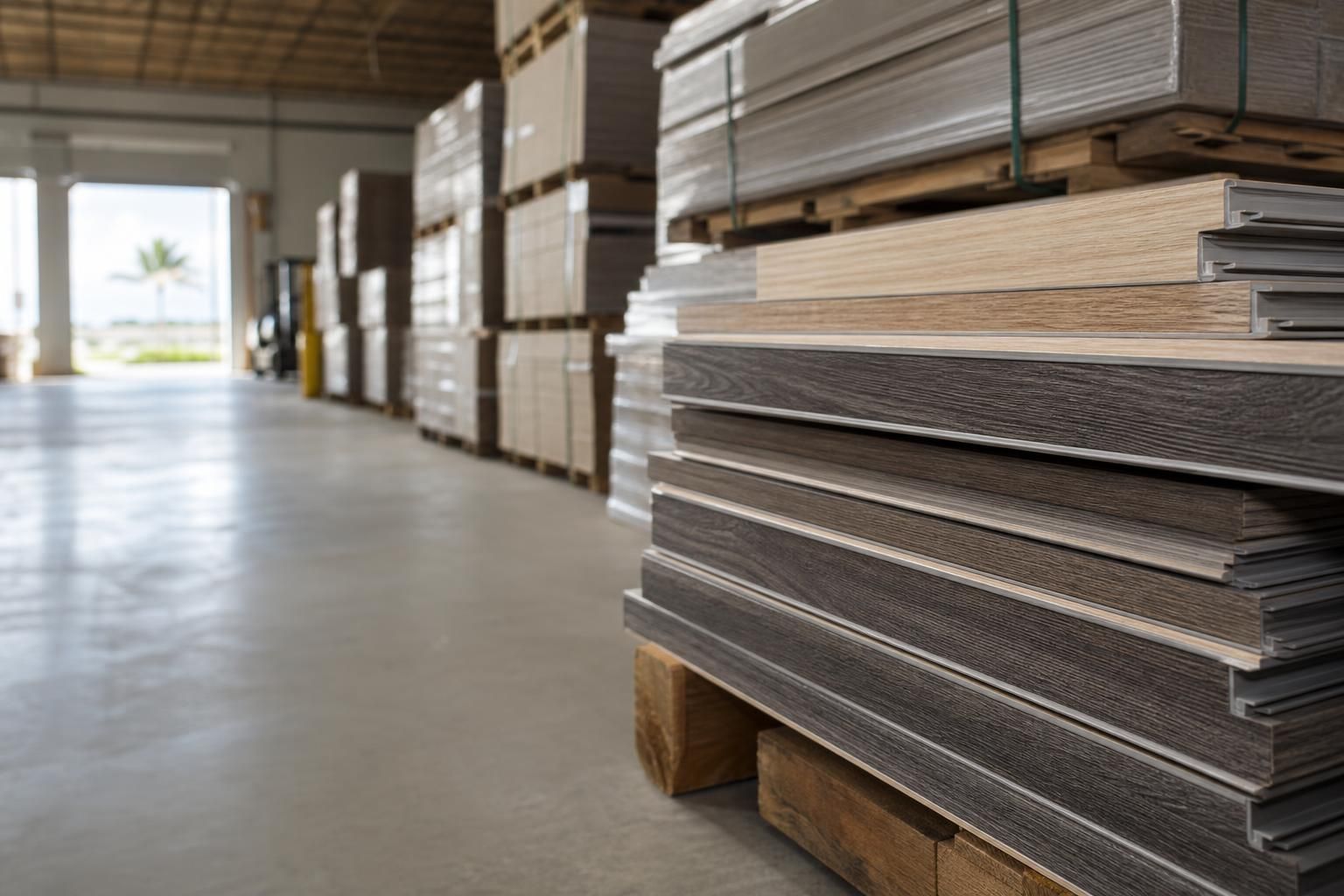
Commercial projects live and die by schedule, and flooring is frequently the trade that holds up final inspection or a tenant move-in date. Vinyl plank and SPC ordered from mainland distributors commonly ships on multi-week freight, which is a real risk on a job with a fixed completion date or liquidated-damages clause. Suppliers that stock product on Oahu remove that variable — material that's already on the warehouse floor can move to a jobsite the same day it's picked, instead of waiting on a container. For contractors scheduling multiple phases or trades around a flooring delivery, it's worth reading about how same-day flooring pickup actually works in Honolulu before locking in a schedule that assumes mainland lead times.
Budgeting installation and demo separately from material
Commercial bids usually itemize labor separately from material, and flooring should be no different. H&W Flooring lists installation from $8/sq ft, including demo of old flooring, leveling (incl. self-leveling material), and baseboard — a figure worth having in hand when a general contractor is assembling a line-item bid rather than a lump sum. On a commercial floor with existing VCT, carpet, or old vinyl to remove before the new plank goes down, the demo line can be a meaningful share of the total, especially in older Honolulu commercial buildings where multiple flooring layers have accumulated over past tenants. For a fuller breakdown of how install pricing scales with square footage and subfloor condition, see this cost-per-square-foot breakdown.
Slip resistance, transitions, and code considerations
Commercial flooring has to clear life-safety and accessibility requirements that residential jobs don't face. The Americans with Disabilities Act sets limits on floor-level changes at doorways and transitions — generally, a change in level greater than 1/4 inch must be beveled, and anything over 1/2 inch needs a ramp — which matters when vinyl plank meets tile, carpet, or an existing slab at a commercial entry. On the maintenance side, OSHA's walking-working surfaces standard requires employers to keep floors free of slip and trip hazards, which is part of why many commercial specs favor textured, matte-finish SPC over high-gloss vinyl in back-of-house and food-service areas. Neither of these is a flooring-supplier certification — they're building and employer obligations the general contractor or owner carries, but they should shape which product gets specified.
Buying for a multi-unit or multi-phase project
Hotels, apartment renovations, and multi-tenant commercial buildouts often buy flooring in phases rather than all at once — a few units this month, the rest next quarter. Because wholesale tiers are typically based on cumulative order volume rather than a single invoice, it's worth asking a supplier directly whether phased orders accumulate toward the next pricing break or reset with each purchase. That single question can move a mid-size multi-unit job from one tier to the next and change the total material cost by a meaningful margin.
Frequently Asked Questions
Q: What's the difference between residential and commercial vinyl plank flooring?
Commercial-grade vinyl plank generally has a thicker wear layer, often 20 mils or more, and more commonly uses a rigid SPC core to handle rolling loads and heavy foot traffic. Residential-grade product is usually thinner and built for lower-traffic household use.
Q: Does buying commercial volume automatically get contractor pricing?
Not automatically — wholesale tiers are usually tied to a trade account and order volume, not just the type of project. A licensed contractor buying thousands of square feet should set up a trade account first to confirm which pricing tier the order qualifies for.
Q: How much does commercial vinyl plank installation cost per square foot?
Material and labor are typically quoted separately. H&W Flooring, for example, lists installation from $8/sq ft, including demo of old flooring, leveling (incl. self-leveling material), and baseboard, on top of the material cost per square foot.
Q: Why does lead time matter more on commercial jobs than residential ones?
Commercial projects usually run on fixed schedules with inspections or tenant move-in dates attached, so a multi-week mainland freight delay on flooring can hold up the entire job. Suppliers that stock vinyl plank on Oahu can often get material to a jobsite the same day it's picked, rather than waiting on a shipment.
Q: Do ADA rules affect what vinyl plank can be installed in a commercial building?
Yes — the ADA sets limits on abrupt changes in floor level at transitions, generally requiring a bevel above 1/4 inch and a ramp above 1/2 inch. This affects how vinyl plank is detailed where it meets tile, carpet, or existing concrete in a commercial entry or hallway.