Wholesale Flooring for Contractors on Oahu: Pricing Guide
Key takeaway
Wholesale flooring for contractors on Oahu works on volume-based pricing tiers tied to a Hawaii contractor license, rather than a single discounted rate for everyone. A licensed, DCCA-verified contractor typically unlocks lower per-square-foot pricing as their purchase volume crosses set thresholds, and because inventory is stocked locally, there's no mainland freight delay eating into the schedule. This guide breaks down how those tiers work, what documentation gets you access, and what to check before you commit a job's material order to any supplier.
Key takeaways
- Wholesale pricing on Oahu is usually tiered by volume, not a flat contractor discount — expect per-square-foot rates to drop as cumulative purchases cross set dollar thresholds.
- A valid Hawaii contractor license verified through DCCA is typically the entry requirement for trade pricing, not just a business card or tax ID.
- Local, Oahu-stocked inventory avoids the multi-week mainland shipping delays that can stall a job timeline, especially for same-day or next-day pickup needs.
How Wholesale Pricing Tiers Typically Work
Most wholesale flooring pricing on Oahu scales with how much a contractor buys, either per order or cumulatively across a trade account. As an example of how tiering works in practice, H&W Flooring prices waterproof luxury vinyl plank at $2.79 per square foot at retail, dropping to $2.79, $2.59, and $2.39 per square foot at wholesale as purchase volume crosses $5,000, $15,000, and $100,000 thresholds, with pricing that continues to scale with volume above $200,000. That structure rewards contractors who consolidate purchasing with one supplier rather than splitting orders across multiple vendors to chase one-off deals.
The practical effect is that a small remodeler doing a handful of units a year lands in a different pricing bracket than a general contractor running several multi-unit jobs simultaneously. Suppliers that publish these thresholds make it easier to forecast material costs during bidding, which matters more on Oahu than almost anywhere else given how tight margins get once freight and storage are factored in.
Why Hawaii Contractor Licensing Matters for Trade Pricing
Wholesale pricing isn't generally available to anyone who asks — it's tied to proof of an active Hawaii contractor license. The Hawaii Department of Commerce and Consumer Affairs maintains the state's contractor licensing database, and suppliers extending trade pricing typically verify a license number against that record before setting up an account. This protects legitimate contractors' pricing from being diluted by homeowners trying to buy at trade rates, and it gives suppliers a reason to extend credit terms or volume discounts they wouldn't offer to a one-time retail buyer.
If a subcontractor or crew lead doesn't hold their own license, they can often still purchase under the general contractor's account, but the account itself needs to trace back to a verified license holder. Contractors setting up a new trade account for the first time should expect to provide their license number and basic business information up front.
Stock, Lead Time, and Same-Day Pickup
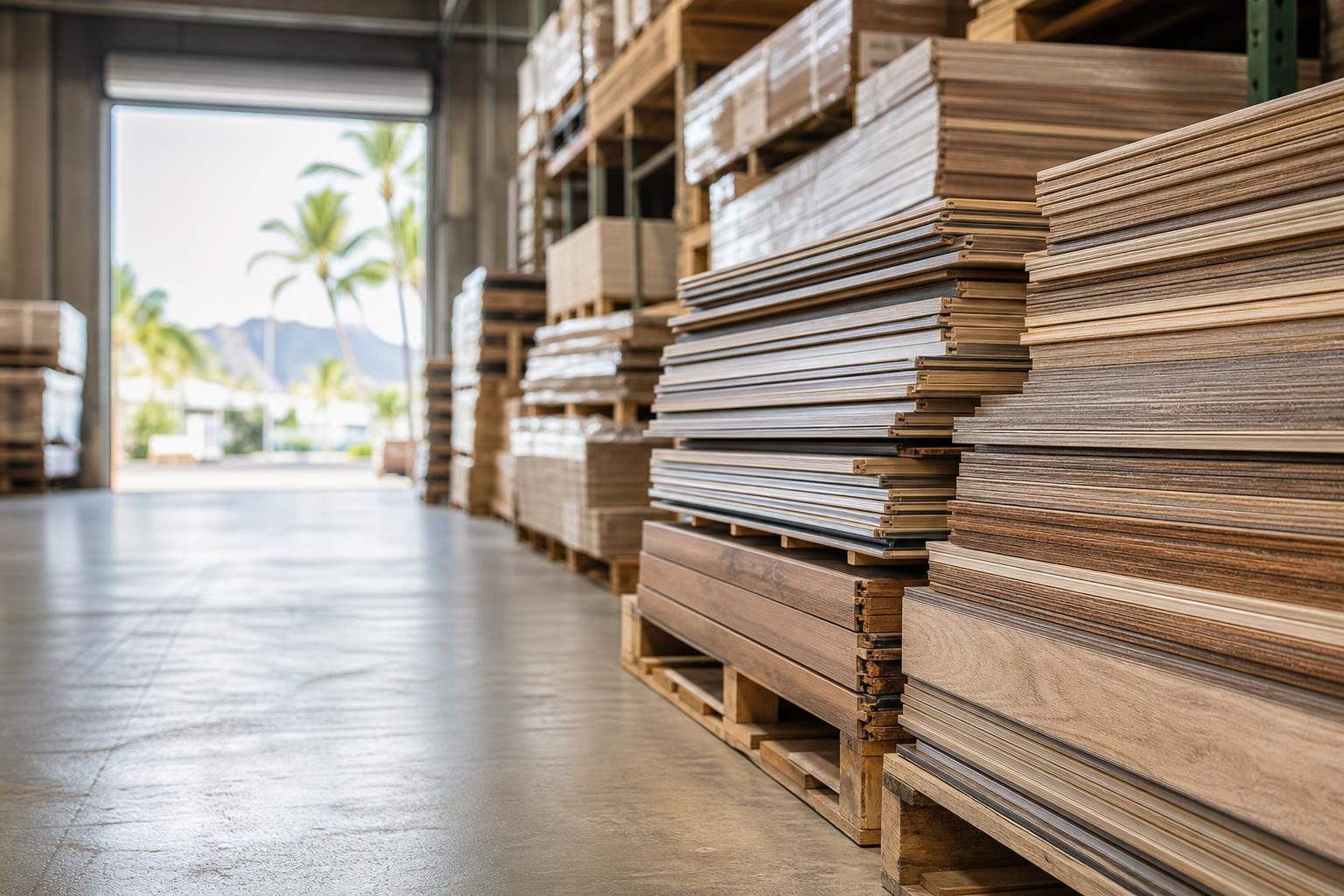
One of the biggest practical differences between ordering flooring on Oahu versus the mainland is lead time. Mainland-based online suppliers shipping to Hawaii routinely add one to several weeks of ocean freight time on top of production and handling, which can stall a job that's already on a tight subcontractor schedule. Locally stocked inventory on Oahu removes that variable entirely — material that's already on the warehouse floor can go out same-day, which matters most when a crew discovers mid-job that they're short a few boxes or a color run needs to match an earlier phase.
For contractors juggling multiple units or phases, this also reduces the carrying cost of over-ordering "just in case" to buffer against shipping delays. Buying closer to actual need, with confidence that more stock is a phone call away, frees up cash and storage space on the job site.
What to Check Before Setting Up a Trade Account
Not every supplier markets "wholesale pricing" the same way, so it's worth confirming a few specifics before committing a project's material budget:
- Published pricing vs. quote-only: Ask whether tier pricing is published or negotiated case-by-case. Published tiers make bidding faster and more predictable.
- Minimum order thresholds: Confirm the dollar amount needed to unlock each tier, since some suppliers calculate it per-order and others cumulatively over a billing period.
- Stock depth: Ask what's actually sitting in the warehouse versus what's special-order, especially for SPC rigid core products with longer production runs.
- Delivery vs. pickup: Same-day pickup is common for in-stock product, but confirm whether delivery is available and how it's priced for larger jobs.
- Installation labor, if needed: If the supplier also installs, confirm labor is quoted separately from material — for reference, H&W Flooring's installation labor on a project like this is from $8 per square foot, including demo of old flooring, leveling (incl. self-leveling material), and baseboard.
Contractors comparing multiple wholesale suppliers should also look at how a company structures its flooring wholesale supplier relationships beyond just unit price — payment terms, return policies on unopened boxes, and whether a dedicated contact exists for trade accounts all affect how smoothly a job runs.
Vinyl Plank Specifics Contractors Should Verify
Waterproof luxury vinyl plank and SPC rigid core products vary meaningfully by wear layer thickness, core density, and click-lock system, and these differences affect both performance and installed cost. The ASTM International standards body publishes test methods for flooring wear resistance and dimensional stability that manufacturers reference on spec sheets, so contractors buying wholesale should ask for that documentation rather than relying on marketing language alone. Thicker wear layers generally cost more per square foot but hold up better in high-traffic commercial or multi-unit residential settings.
For jobs involving bathrooms, laundry rooms, or other wet areas, waterproofing the substrate matters as much as choosing a waterproof plank — a fully sealed subfloor prevents moisture intrusion at seams and transitions even when the flooring itself is rated waterproof. Contractors sourcing product for condo renovations should also weigh HOA requirements around sound transmission, which can affect which underlayment is approved alongside the flooring on a given vinyl plank flooring project for Oahu condos.
Comparing Material Quality Across Brands
Not all vinyl plank marketed as "contractor grade" meets the same standard, and wholesale pricing alone doesn't guarantee performance. Checking wear layer thickness, core composition, and warranty terms across vinyl plank flooring brands before committing to a bulk order protects against callbacks on jobs where the cheaper product looked identical on a sample board but performed differently under real foot traffic. The U.S. Environmental Protection Agency also publishes guidance on indoor air quality considerations for flooring materials, which is worth checking against a product's certifications when bidding work for clients sensitive to off-gassing, particularly in enclosed condo units with limited ventilation.
Frequently Asked Questions
Q: Do I need a Hawaii contractor license to get wholesale flooring pricing?
Most suppliers offering trade pricing require a verifiable Hawaii contractor license, typically checked against the state's DCCA licensing database, before setting up a wholesale account. Unlicensed buyers generally pay retail rates instead.
Q: How much can a contractor save buying wholesale instead of retail on Oahu?
Savings depend on purchase volume rather than a flat discount. As one example, H&W Flooring's luxury vinyl plank starts at $2.79 per square foot at the entry wholesale tier and drops to $2.39 per square foot once cumulative purchases cross $100,000.
Q: Is locally stocked flooring actually faster than ordering online?
Yes, in most cases. Mainland online orders shipped to Hawaii typically add one to several weeks of ocean freight time, while flooring already stocked in an Oahu warehouse can be picked up the same day it's needed.
Q: Does installation cost get included in wholesale material pricing?
No, installation is quoted separately from material cost. Labor for installing vinyl plank flooring at H&W Flooring is from $8 per square foot, including demo of old flooring, leveling (incl. self-leveling material), and baseboard.
Q: What documentation does a supplier usually need to open a wholesale account?
Suppliers generally ask for an active Hawaii contractor license number and basic business details to verify eligibility before extending trade pricing and setting up an account for ongoing purchases.