How to Acclimate Vinyl Plank Flooring Before Installation
Key takeaway
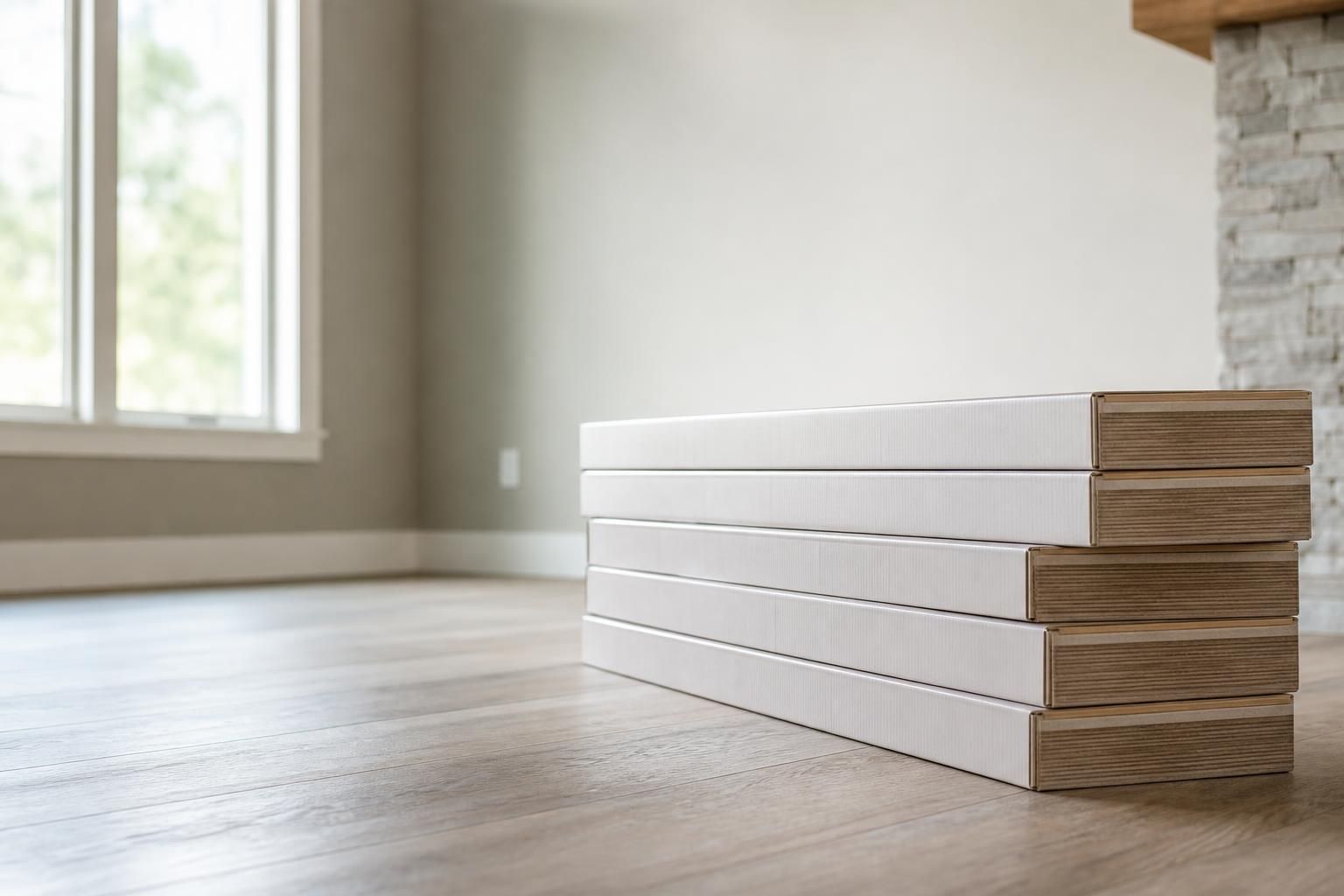
To acclimate vinyl plank flooring, lay the unopened boxes flat in the room where they'll be installed and let them sit for 48 hours at normal living conditions — roughly 65–85°F with indoor humidity in the typical comfort range. This gives the planks time to expand or contract to match the room's actual temperature and moisture level before they're locked or glued into place. Skipping this step is one of the most common causes of gaps, peaking, or buckling that shows up weeks after a "perfect" install.
Key takeaways
- Let boxes sit flat, unopened, in the install room for at least 48 hours before cutting a single plank.
- Keep the room at normal living temperature and humidity during acclimation — not a hot garage or an unconditioned lanai.
- Rigid core SPC needs less acclimation time than flexible vinyl plank, but Hawaii's humidity swings make the step worth doing anyway.
Why Acclimation Matters More in Honolulu Than in Most Places
Vinyl is a plastic product, and plastic expands and contracts with temperature and moisture the way wood does, just less dramatically. In most of the mainland U.S., indoor humidity swings seasonally with heating and air conditioning. On Oʻahu, outdoor humidity sits consistently high year-round, and that moisture gets into a flooring warehouse, a delivery truck, and eventually your living room at different rates depending on how each space is conditioned. If planks are installed straight off a hot truck into an air-conditioned condo, the material is still adjusting to a cooler, drier environment days after the crew leaves — which is exactly when gaps between planks tend to appear. This is also why vinyl plank handles Hawaii's humidity better than hardwood or laminate overall, but it still isn't immune to the stress of a sudden temperature or moisture change at install time.
The 48-Hour Rule, and When to Extend It
Most waterproof vinyl plank and SPC manufacturers specify a minimum 48-hour acclimation period at normal room conditions before installation. That's the baseline H&W Flooring works from on both retail and contractor jobs. A few situations call for longer:
- New construction or a freshly plastered/painted room — extra moisture in the air from wet trades can take longer to stabilize; extend to 72 hours if the room still smells damp.
- A home without central AC that relies on trade winds or window units — give the material time to settle at whatever temperature the room will actually run at day to day, not just the temperature on delivery day.
- Large commercial or multi-unit contractor jobs — stagger deliveries so each phase of material acclimates in the actual unit it will be installed in, not a shared storage room with different conditions.
Rigid SPC core product is more dimensionally stable than thinner flexible vinyl plank, so some manufacturers allow shorter acclimation windows for SPC. When in doubt, 48 hours is the safe default for any waterproof vinyl plank product.
How to Set Up the Room Correctly
Acclimation only works if the room is actually at the conditions the floor will live in long-term. A few practical rules:
- Run the AC or fans as you normally would. Don't acclimate in a closed-up, un-air-conditioned room if the home will be centrally cooled once you're living in it.
- Keep boxes off direct concrete and out of direct sun. Stack them flat, not on end, and leave a little space between stacks for air movement.
- Don't open every box at once. Crack a box or two to check for visible damage, but leave the rest sealed until install day so moisture exposure stays controlled.
- Confirm the subfloor is also within range. A subfloor moisture test matters as much as the planks themselves — vinyl plank is waterproof on its face, but a chronically wet slab underneath can still cause adhesive failure or odor problems over time, a concern the Resilient Floor Covering Institute flags as a leading cause of warranty claims industry-wide.
If you're also pulling up old flooring first, acclimation is a good use of that same window — material can sit and adjust while the crew finishes removing the old floor and preps the subfloor, instead of adding an extra day to the schedule.
What Happens If You Skip It
Installing vinyl plank straight out of a hot delivery truck, or right after a 55-gallon box sat in direct sun on a lanai, means the material is still contracting or expanding after it's locked into a click-lock seam or glued down. The result shows up later, not immediately: visible gaps at seams as the plank shrinks back down, or subtle peaking and lifting at edges as it expands against a wall it was installed too tightly against. The U.S. Environmental Protection Agency notes that indoor relative humidity swings are a normal part of home environments and recommends keeping indoor humidity in a moderate range to protect both air quality and building materials — flooring included. A rushed install doesn't just risk a cosmetic problem; it can also void a manufacturer's warranty, since most written warranties explicitly require acclimation before installation.
Does This Change Click-Lock vs. Glue-Down Installation?
The acclimation step is the same either way, but the stakes differ slightly. Click-lock planks rely on a tight mechanical seam, so if the material shrinks after installation, gaps are visually obvious and hard to hide. Glue-down vinyl plank is bonded directly to the subfloor, so a planks that's still adjusting can pull at the adhesive bond at the edges instead of showing a visible gap — often a slower, less obvious failure that still shortens the floor's life. Either method benefits from the full acclimation window; it's not a step that's safe to skip just because you're gluing instead of locking.
Acclimation Time Is Part of Any Honest Installation Timeline
If you're pricing out a job, ask whether the acclimation period is built into the schedule and the quote, not treated as a surprise delay. A written estimate that lists what's included in a flooring installation quote should account for delivery timing relative to install day, not just labor and material cost. H&W Flooring builds the acclimation window into contractor and homeowner schedules alike, with installation from $8 per square foot, including demo of old flooring, leveling (incl. self-leveling material), and baseboard, on top of the material cost — a number that only makes sense if the crew isn't rushing material onto the floor the same day it arrives.
Frequently Asked Questions
Q: How long does vinyl plank flooring need to acclimate before installation?
Most manufacturers require a minimum of 48 hours at normal room temperature and humidity. New construction, recently wet-painted rooms, or homes without consistent air conditioning may need 72 hours or more.
Q: Can I install vinyl plank the same day it's delivered?
It's not recommended. Even waterproof vinyl plank needs time to adjust to the room's actual temperature and humidity, and installing it immediately after delivery is one of the most common causes of post-install gapping.
Q: Does SPC rigid core vinyl plank need to acclimate the same way as flexible vinyl plank?
SPC is more dimensionally stable and some manufacturers allow a shorter window, but giving it the standard 48 hours is still the safer default, especially in a humid climate like Hawaii.
Q: Where should I store the boxes while they acclimate?
Lay boxes flat in the actual room where the floor will be installed, running the AC or fans at normal settings, away from direct sun or a damp exterior wall.
Q: Does acclimation affect my flooring warranty?
Yes. Most manufacturer warranties explicitly require proper acclimation before installation, and skipping it can void coverage if gapping, peaking, or adhesive failure shows up later.