What Flooring Is Best for a Lanai in Hawaii?
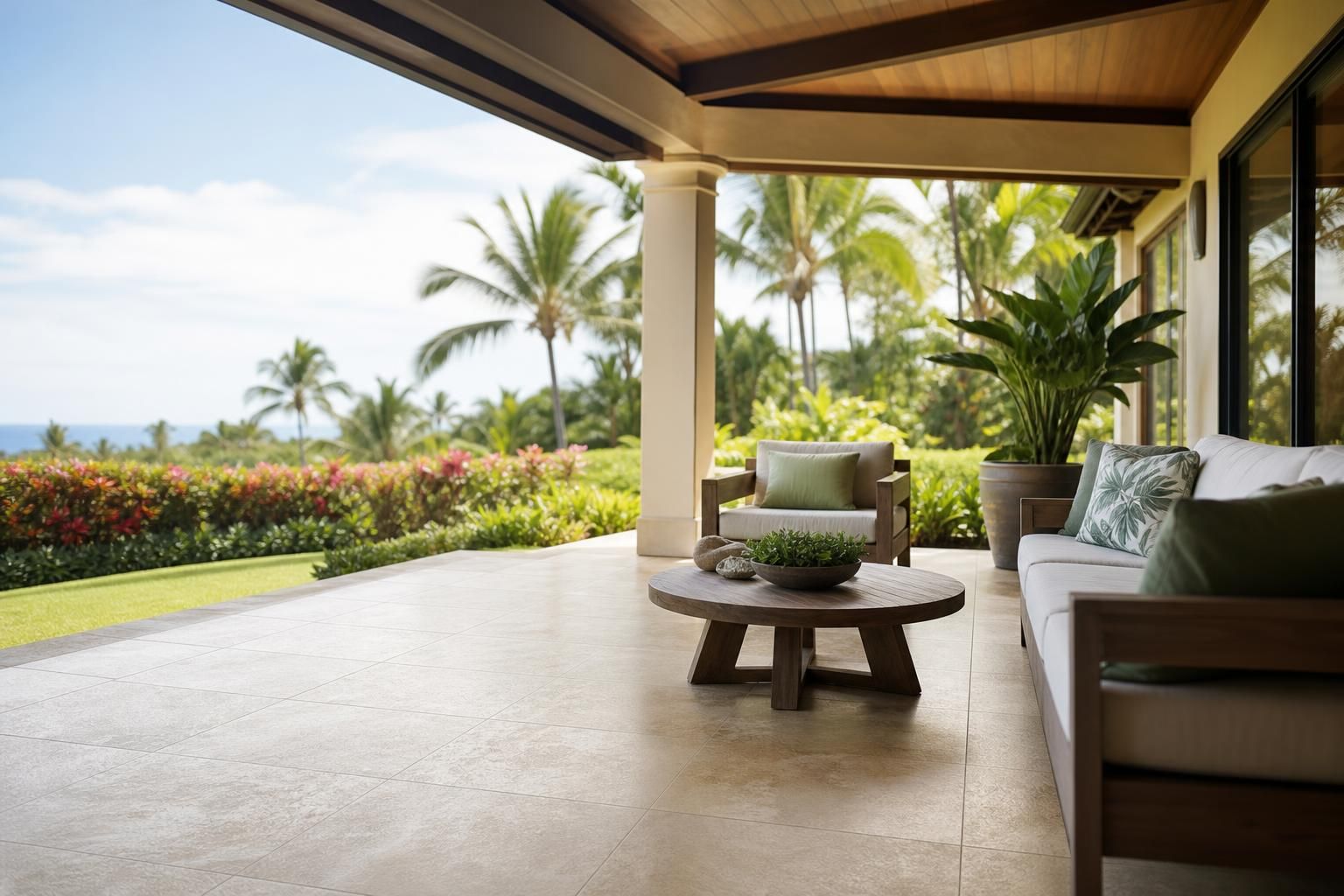
Key takeaway
For a covered, shaded lanai that stays out of direct rain and sun, waterproof vinyl plank with an SPC rigid core holds up well and matches the look of adjoining indoor floors. For a lanai that gets direct sun, blowing rain, or standing water, porcelain tile is the more durable choice, since vinyl's wear layer and seams aren't built to take constant UV and water exposure. The right pick depends on how exposed the space actually is, not just whether it's labeled "waterproof."
Key takeaways
- Covered, shaded lanais can use SPC waterproof vinyl plank; sun- and rain-exposed lanais should use porcelain tile instead.
- "Waterproof" vinyl plank means the core resists water damage, not that it's rated for direct outdoor sun and weather.
- Installation starts from $8/sq ft, including demo of old flooring, leveling (incl. self-leveling material), and baseboard, regardless of which material you choose, with demo of old lanai flooring included.
Why a Lanai Isn't Just Another Room
A lanai sits in the gap between indoor and outdoor space. It's usually roofed, but the sides are open or screened, which means the floor deals with humidity swings, wind-driven rain, and in many Oʻahu homes, direct afternoon sun for part of the day. Indoor-rated materials that work fine in a living room can fail here faster — not because they get wet once, but because they cycle between wet and dry, hot and cool, day after day. That's the real design question: how much weather does this specific lanai actually see?
Waterproof Vinyl Plank for Covered, Shaded Lanais
On a lanai that's well-covered by roof overhang and doesn't get direct sun for more than an hour or two a day, waterproof vinyl plank — especially SPC rigid core — is a practical option. The core itself won't swell or delaminate from moisture the way laminate or engineered wood can, which is the main reason it's recommended for Hawaii's humidity in the first place; see this breakdown on vinyl plank in high-humidity climates for how that holds up indoors and in semi-outdoor spaces. The tradeoff is UV: most vinyl plank isn't warranted for direct, sustained sunlight, and prolonged exposure can fade the wear layer or cause planks to expand at the seams over time.
Many condo lanais fall into exactly this covered category, which is why it's often the same material used just inside the sliding door — a continuous look between the living room and the lanai is one reason it shows up so often in condo flooring projects on Oahu.
When Tile Is the Better Call
If the lanai gets rain splash, pooling water, or hours of direct sun, porcelain tile is the safer long-term choice. Tile doesn't fade from UV, doesn't expand and contract the way plastic-based vinyl does in heat, and can be installed with a slope and drainage path that vinyl plank simply isn't designed for. The main costs are a harder, colder surface underfoot and a more involved installation, since tile on a lanai usually needs a waterproofing membrane under it, not just over a standard subfloor.
A few signs you're better off with tile instead of vinyl:
- The lanai has no roof overhang, or the overhang is shallow and sun reaches most of the floor midday.
- Rain regularly blows in and pools near the edges.
- The lanai connects directly to a pool deck or ground-level slab exposed to the elements.
Flooring Options for a Lanai, Side by Side
| Material | Handles direct sun/rain? | Feel underfoot | Typical maintenance |
|---|---|---|---|
| SPC waterproof vinyl plank | No — best for covered, shaded lanais | Warmer, slightly cushioned | Sweep and mop; avoid pooling water |
| Porcelain tile | Yes | Harder, cooler | Occasional grout cleaning |
| Laminate | No — not recommended outdoors or in wet-prone areas | Warm | Prone to swelling if exposed to moisture |
| Natural wood decking | No — degrades with humidity and sun | Warm | High upkeep, refinishing needed |
Waterproofing and Subfloor Prep Matter More Than the Material
Whichever flooring you choose, the substrate underneath does a lot of the real work. On an open or semi-open lanai, that usually means a proper waterproofing membrane at the slab level before any finish flooring goes down, plus attention to slope so water drains away from the house rather than toward the door threshold. The same waterproofing logic used in wet-area bathroom remodeling applies here — the membrane and drainage plan matter as much as whether the finish layer is vinyl or tile.
What It Costs to Floor a Lanai
For homeowners, in-stock waterproof vinyl plank is priced at $2.79 per square foot at H&W Flooring, with installation from $8 per square foot, including demo of old flooring, leveling (incl. self-leveling material), and baseboard, on top of that. If there's existing flooring to remove first, demo is included in the installation rate. Licensed contractors buying in volume get tiered wholesale pricing at $2.79, $2.59, and $2.39 per square foot as order size crosses $5,000, $15,000, $100,000, and $200,000 thresholds. Tile pricing is priced by the box and scales with the tile selected, so it's worth getting a specific quote once you know whether the lanai calls for tile or vinyl.
External Climate Context
Hawaii's combination of high humidity and strong year-round UV is well documented by federal weather and health agencies, which is part of why material choice for semi-outdoor spaces matters more here than in drier mainland climates. The National Weather Service tracks Hawaii's consistently high UV index levels, and the Environmental Protection Agency notes that UV exposure accelerates degradation of many plastics and coatings, which is the mechanism behind vinyl plank's sun limitations. Flooring wear-layer and core standards referenced by manufacturers are generally based on testing protocols from ASTM International.
Frequently Asked Questions
Q: Can you put regular vinyl plank flooring on an outdoor lanai?
Not on a fully open, sun-exposed lanai — most vinyl plank isn't rated for direct UV and weather. On a covered, shaded lanai with minimal direct sun, waterproof SPC vinyl plank generally holds up well.
Q: Is tile or vinyl plank better for a Hawaii lanai?
Tile is better for lanais with direct sun, rain, or pooling water, since it won't fade or expand the way vinyl can. Vinyl plank is a fine, more budget-friendly choice for covered lanais that stay mostly dry and shaded.
Q: Does a lanai floor need a waterproofing membrane underneath?
Yes, if the lanai is exposed to rain or connects to an outdoor area, a waterproofing membrane and proper slope at the slab level should go in before the finish flooring, regardless of whether you choose tile or vinyl.
Q: How much does it cost to put waterproof vinyl plank on a lanai?
At H&W Flooring, retail waterproof vinyl plank is $2.79 per square foot, with installation from $8 per square foot, including demo of old flooring, leveling (incl. self-leveling material), and baseboard; removing old flooring first is included in that rate.
Q: Will laminate flooring work on a lanai?
No — laminate uses a wood-fiber core that swells when exposed to humidity and moisture, which makes it a poor fit for lanais even when covered. Waterproof vinyl plank or tile are better suited to that environment.