Is Vinyl Plank Flooring Good for High Humidity Climates?
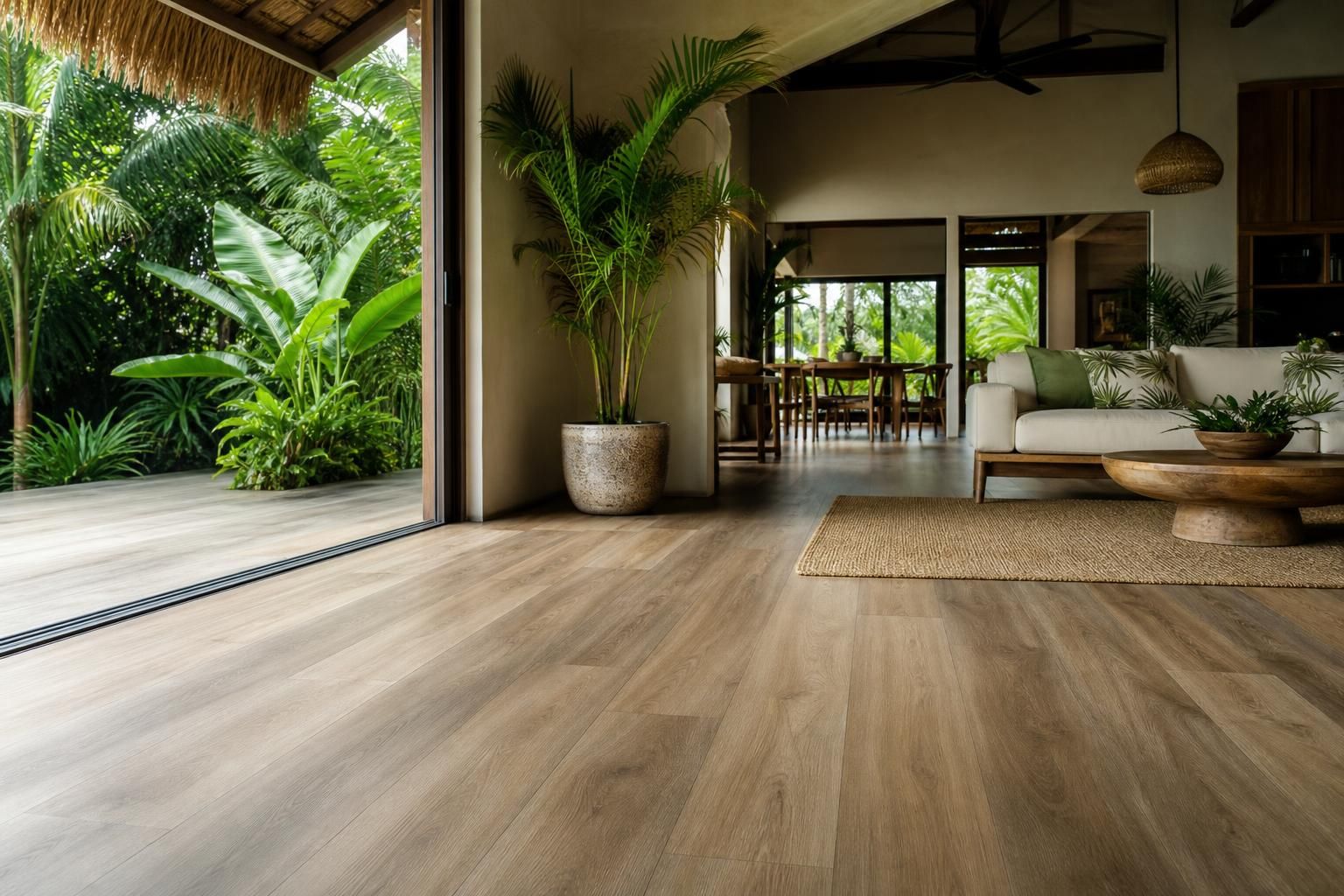
Key takeaway
Yes — waterproof vinyl plank, especially SPC (stone polymer composite) rigid core, is one of the better flooring choices for high-humidity climates because its core layer is non-organic and doesn't absorb moisture, swell, or feed mold the way wood or laminate can. It won't warp from ambient humidity swings, and it tolerates the occasional standing water from a leak or spill far better than hardwood. The tradeoff isn't the plank itself — it's making sure the subfloor, adhesive, and room ventilation underneath it are handled correctly, since trapped moisture under any flooring can still cause problems.
Key takeaways
- SPC and WPC vinyl plank cores are moisture-inert — they don't swell, cup, or rot in humid air the way wood-based floors can.
- Humidity doesn't ruin vinyl plank, but trapped moisture under it (from a bad subfloor or vapor barrier) can still cause mold or adhesive failure.
- In Honolulu, retail waterproof vinyl plank runs $2.79/sq ft at H&W Flooring, with installation from $8/sq ft, including demo of old flooring, leveling (incl. self-leveling material), and baseboard — a cost most contractors treat as cheap insurance against humidity-related callbacks.
Why Vinyl Plank Handles Humidity Better Than Wood or Laminate
Solid hardwood is hygroscopic — it absorbs and releases moisture from the surrounding air, expanding and contracting with the seasons. In a climate like Hawaii's, where relative humidity routinely sits in the 60-80% range year-round, that constant movement is what causes cupping, gapping, and buckling in wood floors over time. Laminate, which uses a wood-fiber core board under a printed layer, has the same vulnerability if moisture gets past the wear layer at a seam.
Vinyl plank — particularly rigid SPC core products — is built from limestone composite and PVC, materials that don't absorb water at the molecular level the way wood fiber does. That's the core reason the EPA's guidance on indoor moisture and mold control treats material choice as one of the simpler fixes available to homeowners in humid regions: non-porous, inorganic flooring materials simply give mold nothing to grow on, even when ambient moisture is high.
Hawaii's Humidity Numbers, and What They Mean for Flooring
Honolulu's average relative humidity typically stays in the 65-75% range for most of the year, per NOAA's climate data for the islands, with trade-wind patterns keeping moisture levels fairly constant rather than seasonal. That steady-state humidity is actually easier on flooring than a mainland climate that swings from dry winters to humid summers — wood floors there see more dramatic expansion and contraction cycles. In Hawaii, the bigger risk to flooring isn't the air humidity itself; it's slab moisture coming up from below, especially in older concrete homes without a vapor barrier, and standing water in kitchens, lanais, and bathrooms.
Where Moisture Actually Gets Trapped
The plank surface is waterproof on nearly every vinyl product sold today, but three spots underneath it are where problems start:
- Concrete slabs without a vapor barrier — moisture vapor transmission from the ground can accumulate under certain adhesives over years, even though it won't damage the vinyl itself.
- Transition seams at wet areas — showers, tubs, and lanai doorways need properly sealed transitions, not just butted planks.
- Subfloor rot carried over from a prior wood or carpet install — if old water damage wasn't addressed before the new floor went down, covering it with vinyl doesn't fix it.
This is why a install that includes checking and prepping the subfloor matters more in humid climates than the plank specification itself. Builders who only swap the surface material without addressing an unaddressed moisture source are treating the symptom, not the cause.
SPC vs. WPC vs. Standard Vinyl Plank in Wet Conditions
Not all "waterproof" vinyl plank is built the same way. For a full breakdown of core types, see this comparison of SPC and vinyl plank options, but the short version for humid climates is:
- SPC (stone polymer composite) — the densest, most dimensionally stable core; holds up best under furniture load and heat near windows or lanai doors.
- WPC (wood polymer composite) — softer underfoot but slightly less rigid in high-heat, high-humidity rooms.
- Standard waterproof vinyl plank — waterproof at the surface but thinner cores that can feel less stable over an uneven slab.
In bathrooms, laundry rooms, and anywhere water sits directly on the floor regularly, waterproofing the seams and transitions matters as much as the plank choice itself — the surface material resists standing water, but grout lines, thresholds, and wall penetrations are where leaks actually travel.
Condos and Older Buildings: A Humidity-Specific Case
Oahu condos add another layer to this question: many were built decades ago with concrete slab construction and limited under-slab ventilation, and HOA rules often restrict what flooring types are even allowed because of sound transmission to units below. For buyers weighing options in these buildings, this guide to vinyl plank for Oahu condos covers how underlayment choice interacts with both humidity and the building's acoustic requirements — a combination condo owners don't usually have to think about in single-family homes.
What This Means for Installation Cost
Waterproof vinyl plank's humidity resistance doesn't eliminate the need for proper subfloor prep — it just means the plank itself isn't the weak point. At H&W Flooring, retail-priced waterproof vinyl plank sells for $2.79 per square foot, with installation from $8 per square foot, including demo of old flooring, leveling (incl. self-leveling material), and baseboard; that installation rate is what covers subfloor leveling, moisture checks, and correct transition work rather than just laying planks over whatever is already down. Demo of old flooring, when needed, is included in that rate. Contractors buying in volume for multi-unit humid-climate jobs work off tiered wholesale pricing rather than the retail rate.
Frequently Asked Questions
Q: Does humidity cause vinyl plank flooring to warp?
No. The PVC and limestone-composite cores used in waterproof vinyl plank don't absorb ambient moisture the way wood fiber does, so humidity swings alone won't cause warping or cupping.
Q: Is vinyl plank flooring safe for bathrooms in humid climates?
Yes, as long as seams and transitions are properly sealed — the plank surface is waterproof, but grout lines and thresholds are the actual entry points for water if not installed correctly.
Q: Does vinyl plank flooring grow mold in humid homes?
The vinyl itself is inorganic and doesn't feed mold growth, but mold can still form on dust or debris trapped under a poorly sealed edge, which is why clean installation matters more than the material in humid regions.
Q: Is SPC vinyl plank better than standard vinyl plank for humidity?
SPC's denser, more rigid core holds up better under heat and moisture near windows, lanai doors, and other spots exposed to repeated temperature and humidity shifts, compared to thinner standard vinyl plank.
Q: Do I need a vapor barrier under vinyl plank in a humid climate?
On concrete slabs without an existing vapor barrier, adding one or using a moisture-rated underlayment is a common precaution, especially in older homes where ground moisture can migrate upward over time.