What's Included in a Flooring Installation Quote?
Key takeaway
A complete flooring installation quote should itemize material cost per square foot, labor for installation, demolition and haul-away of the old floor, and any subfloor prep or moisture barrier the job needs. If a quote only lists one lump-sum number, you can't tell whether demo, trim, or transitions are already paid for or about to show up as an add-on later. Reading a quote line by line is the only way to compare two bids fairly.
Key takeaways
- A real quote breaks out material, labor, demo/haul-away, and prep as separate lines — not one number.
- Installation labor is quoted per square foot — H&W Flooring's is from $8 per square foot, including demo of old flooring, leveling (incl. self-leveling material), and baseboard.
- Demo and haul-away of old flooring should be clearly listed — H&W Flooring includes it in the installation rate.
The Core Line Items Every Quote Should Have
Any flooring quote, whether for a condo bedroom or a whole-house remodel, should separate at least four things: materials, labor, demolition, and prep. Materials are priced per square foot and depend on the product — waterproof vinyl plank, laminate, hardwood, or tile all price differently. Labor is a separate per-square-foot rate for installing the new floor. Demo is the cost to remove and dispose of whatever's down now. Prep covers anything the subfloor needs before new flooring can go over it, from leveling compound to a moisture barrier in a slab-on-grade condo.
H&W Flooring, for example, quotes retail luxury vinyl plank at $2.79 per square foot, with installation from $8 per square foot, including demo of old flooring, leveling (incl. self-leveling material), and baseboard — two clear numbers, not one bundled figure. Seeing material, labor, and demo broken out this way lets a homeowner check the math and know exactly what they're paying for, rather than trusting a single total.
Materials: What You're Actually Buying Per Square Foot
The material line should name the product, not just "flooring." A vinyl plank quote should specify whether it's standard luxury vinyl or SPC rigid core, since the two have different subfloor tolerances and warranty expectations — a distinction covered in more depth in the difference between SPC and WPC flooring. Pricing also shifts depending on who's buying: a homeowner doing one room pays retail, while a licensed contractor buying in volume typically qualifies for tiered wholesale pricing once their purchase crosses certain thresholds. If you're a contractor and a supplier quotes you a flat retail rate regardless of volume, that's worth asking about directly.
Labor: Why "Starting At" Matters
Installation labor is almost never a single flat number across every job, which is why reputable quotes say "starting at" a per-square-foot rate rather than promising a fixed price before anyone has seen the space. Layout complexity, the number of transitions between rooms, stair nosing, and how flat the existing subfloor is all affect the final labor rate. A straightforward rectangular living room costs less to install than a condo with multiple small rooms, closets, and doorway transitions. If you're planning to run flooring continuously between rooms, how vinyl plank transitions between rooms is worth reading before you get quotes, since transition strips and thresholds are sometimes priced separately from the main labor line.
Demo and Subfloor Prep: The Line Item People Forget
Pulling out old carpet, tile, or vinyl and hauling it away is real labor and real dump fees, and it should be clearly stated on the quote — at H&W Flooring it's included in the installation rate rather than a surprise add-on. A quote that skips demo either means you're expected to clear the floor yourself, or it's about to be added as a surprise once work starts. Subfloor prep is the other line people miss: a slab with high moisture content, an uneven wood subfloor, or old adhesive residue can all require extra work before new flooring goes down. This is especially true in bathrooms and other wet areas, where waterproofing the substrate protects both the new floor and the structure underneath — the Environmental Protection Agency notes that controlling moisture at the source is central to preventing mold growth in any building, which is exactly what proper waterproofing in a wet area is doing.
What a Quote Should Tell You About Timing
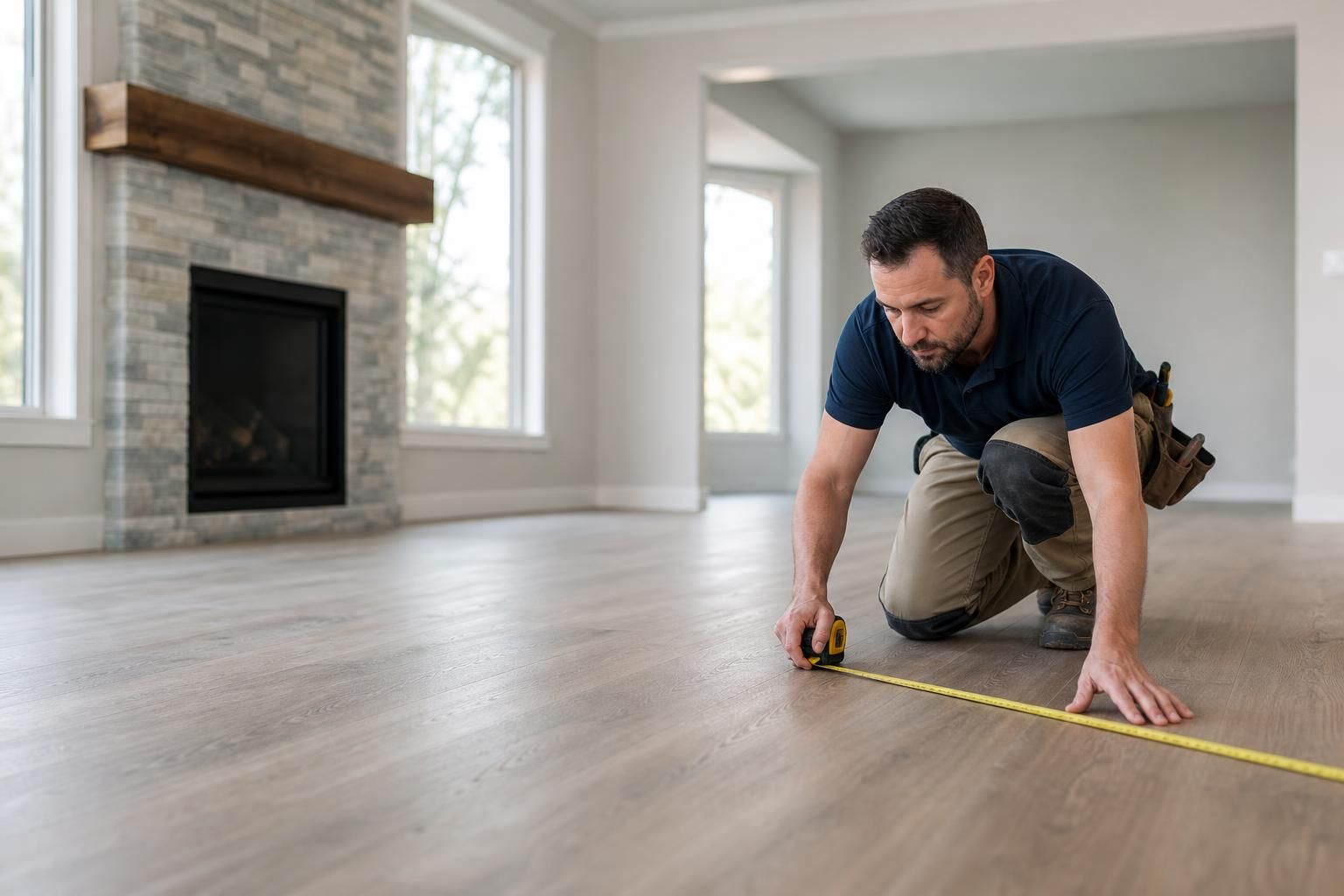
Beyond pricing, a complete quote should state how it was priced and how long the price is good for. A written quote delivered within 48 hours of a site visit or measurement is a reasonable standard — it gives the contractor time to calculate material and labor accurately without dragging the decision out for weeks. If you're still in the early research phase, getting a flooring installation quote in Honolulu walks through what to expect from the measuring visit itself.
Comparing Two Quotes Side by Side
The fastest way to catch a lowball or an inflated bid is to line up two quotes and check that each one covers the same scope:
- Same square footage and the same product (don't compare vinyl plank to laminate)
- Material and labor listed as separate per-square-foot rates
- Demo and haul-away clearly stated — included in the install rate (as at H&W Flooring) or priced separately, never omitted
- Subfloor prep or moisture barrier addressed explicitly, especially for condos on a concrete slab
- Payment terms spelled out, including secure, easy payment options rather than vague "cash only" language
The Better Business Bureau recommends getting itemized written estimates before any home improvement work begins, precisely so scope and price can be verified after the fact rather than disputed later. If a contractor's bid is going toward a larger remodel, it's also worth seeing how flooring costs stack up against the rest of the project, as laid out in what a kitchen remodel really costs in flooring terms.
Verifying Who You're Hiring
A quote is only as good as the company standing behind it. In Hawaii, licensed contractors can be verified directly through the Hawaii Department of Commerce and Consumer Affairs, which is also the body that determines whether a buyer qualifies for contractor wholesale pricing on materials. Beyond licensing, it's reasonable to ask whether the crew doing the work is in-house or subcontracted day labor, since that affects accountability if something goes wrong — a question explored further in DIY versus hiring a contractor for vinyl plank flooring.
Frequently Asked Questions
Q: Does a flooring quote usually include furniture moving?
Not automatically — it depends on the contractor, so ask explicitly whether moving furniture out of the work area is included in labor or billed separately.
Q: Should demo and haul-away always be a separate line item?
Not necessarily. Demo and disposal of the old floor involves its own labor and dump costs; whether a quote lists it separately or includes it (as H&W Flooring's installation rate does), you should confirm it's actually covered rather than assumed.
Q: Why do two quotes for the same room come back at different prices?
Differences usually come from the product tier, whether demo and prep are included, and how the contractor accounts for layout complexity like transitions, stairs, or an uneven subfloor — not just a difference in markup.
Q: Is installation labor ever a flat per-square-foot rate?
Labor is typically quoted as "starting at" a per-square-foot rate because the final cost depends on subfloor condition and room layout, which can't be fully assessed until the space is measured.
Q: How quickly should I expect a written quote after a site visit?
A written quote within 48 hours of the measurement is a reasonable standard for most residential flooring jobs.