SPC vs. WPC Flooring: What's the Difference?
Key takeaway
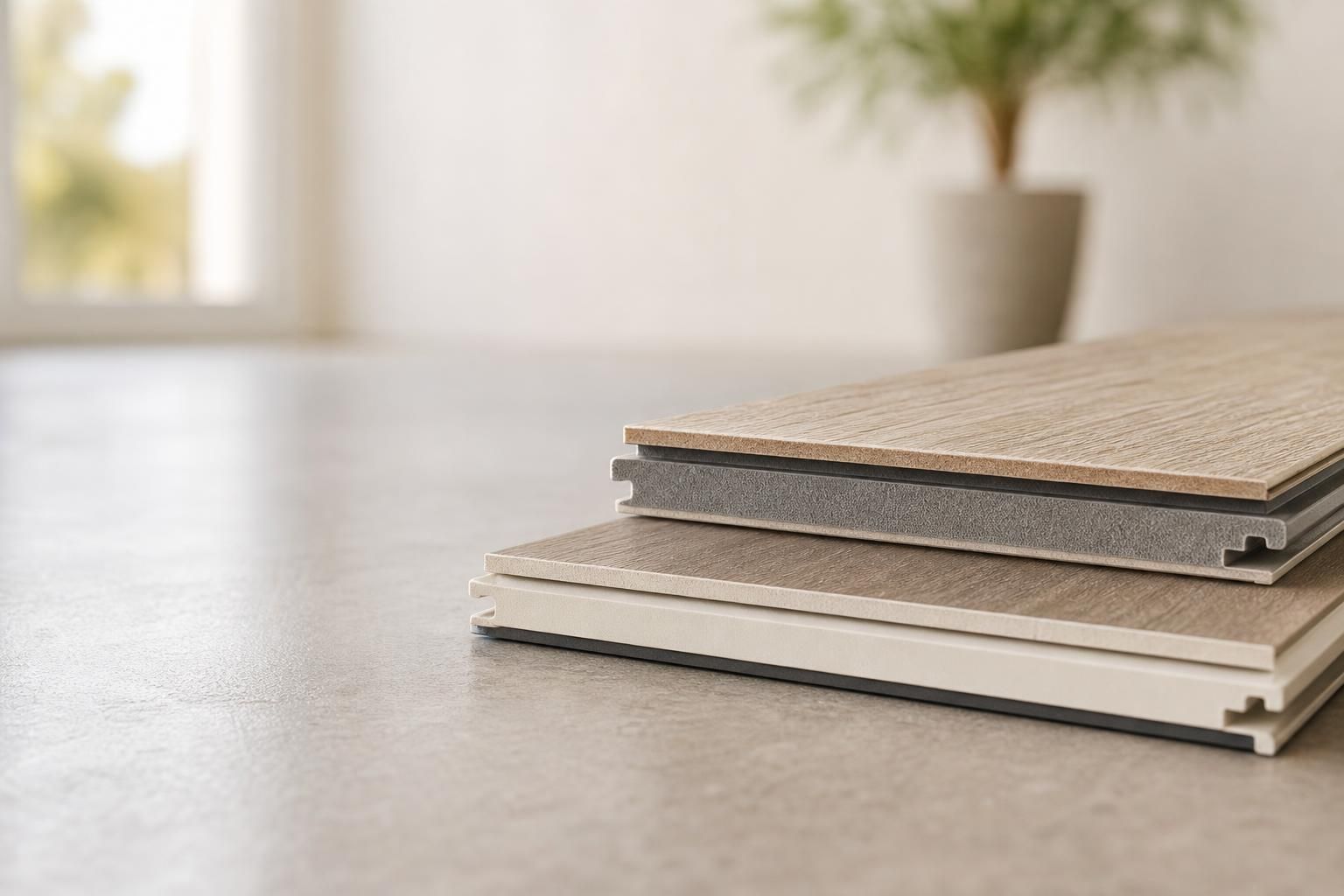
SPC (stone plastic composite) and WPC (wood plastic composite) are both rigid-core waterproof vinyl plank floors, but their cores are made from different materials. SPC uses a limestone-and-plastic composite core that is denser, thinner, and more dent-resistant, while WPC uses a foamed wood-plastic composite core that is thicker, softer underfoot, and slightly more forgiving on uneven subfloors. Both are 100% waterproof on the surface, but SPC generally outperforms WPC on commercial-grade durability and resistance to furniture dents.
Key takeaways
- SPC's limestone-composite core is denser and more dent-resistant, making it the better pick for kitchens, rentals, and high-traffic condos.
- WPC's foamed core is softer and quieter underfoot but compresses more easily under heavy furniture or appliances.
- Both are waterproof vinyl plank floors, not solid stone or solid wood, and both install over concrete slabs common in Honolulu homes.
What SPC and WPC Actually Stand For
SPC stands for stone plastic composite (sometimes called stone polymer composite). The rigid core is made from limestone powder, PVC, and stabilizers compressed into a dense board. WPC stands for wood plastic composite — a core of PVC, foaming agents, and wood or bamboo fiber, giving it a lighter, slightly spongy feel compared to SPC.
Neither contains actual quarried stone slabs or solid lumber. They're composite cores engineered to sit underneath a printed vinyl wear layer, which is why both fall under the broader category of rigid-core luxury vinyl plank rather than traditional vinyl sheet goods. For a deeper look at how rigid-core vinyl differs from standard flexible vinyl plank, see this contractor's guide to SPC flooring.
Core Density and Thickness
This is the most measurable difference between the two. SPC cores are typically thinner and denser — often in the 4mm to 7mm range for the core itself — because limestone composite packs more mass into less space. WPC cores run thicker, often 5mm to 8mm, because the foaming process used to create the wood-plastic blend adds volume without adding density.
The practical effect: SPC resists point-load dents (think a refrigerator leg or a dropped dumbbell) better than WPC, because there's less give in the core. WPC feels warmer and quieter when walked on, since the foamed core absorbs some sound and cushions footsteps, but that same softness means heavy furniture can leave a lasting impression over time.
Water Resistance: Where They're Actually Equal
Both SPC and WPC are waterproof at the plank level — the core itself does not swell, warp, or disintegrate when exposed to water, unlike laminate or engineered hardwood with a wood-based core. The real waterproofing in any installation comes from the installation method: tight seams, proper underlayment, and correctly treated transitions and perimeters. A floor that's waterproof at the plank but poorly sealed at a shower threshold or sliding door will still let water underneath.
For wet areas specifically — bathrooms, laundry rooms, lanai transitions — the waterproofing detail work matters more than whether the core is SPC or WPC. General guidance on moisture performance in these zones is covered in this overview of waterproof flooring for Oahu buyers.
Durability and Wear Layer
The wear layer — the clear protective top coating over the printed design — determines scratch and scuff resistance far more than whether the core underneath is SPC or WPC. A WPC plank with a thick wear layer can outlast an SPC plank with a thin one. Shoppers comparing products should check wear layer thickness (commonly listed in mils) independently of the core type; a primer on what that spec means and why it matters is in this guide to vinyl plank wear layers.
Side-by-Side Comparison
| Feature | SPC (Stone Plastic Composite) | WPC (Wood Plastic Composite) |
|---|---|---|
| Core material | Limestone powder + PVC | Foamed PVC + wood/bamboo fiber |
| Core density | Dense, rigid | Lighter, slightly compressible |
| Typical core thickness | ~4mm–7mm | ~5mm–8mm |
| Dent/point-load resistance | Higher | Lower |
| Underfoot feel | Firmer, less sound-dampening | Softer, quieter |
| Best-fit use cases | Rentals, kitchens, high-traffic commercial | Bedrooms, living rooms, lower-impact residential |
Which One Fits Oahu Homes and Jobs
For Oahu's concrete-slab construction, both SPC and WPC install fine as a floating floor over a properly prepped slab — neither requires the plywood subfloor that some engineered wood products need. The deciding factor is usually traffic and furniture load rather than climate, since Hawaii's humidity doesn't meaningfully differ in its effect on either core type (both resist swelling the same way).
Condo owners weighing resilient flooring options against sound-transmission rules in their association's house rules may want to compare SPC and WPC alongside other resilient choices in this roundup of condo flooring that actually works on Oahu. Contractors buying for rental turnovers or multi-unit jobs typically lean SPC for the dent resistance; homeowners doing a primary bedroom or living room sometimes prefer WPC's softer feel.
H&W Flooring stocks waterproof vinyl plank at a published retail price of $2.79 per square foot, with contractor wholesale tiers starting at the same $2.79 rate and stepping down to $2.59 and $2.39 per square foot at higher volume thresholds — so buyers comparing SPC and WPC products can see exact per-square-foot numbers rather than estimating from a sample board.
Standards and Outside Testing
Flooring core materials like these are evaluated against industry test methods for things like dimensional stability and indentation resistance, many of which are published by ASTM International, a standards organization that sets test protocols used across the flooring industry. Indoor air quality concerns around any vinyl-based flooring — including off-gassing and ventilation during installation — are addressed in general indoor air guidance from the U.S. Environmental Protection Agency.
Frequently Asked Questions
Q: Is SPC or WPC better for a kitchen?
SPC is generally the better choice for kitchens because its denser core resists dents from dropped items, rolling appliance carts, and chair legs better than WPC's softer, foamed core.
Q: Does WPC feel different to walk on than SPC?
Yes — WPC's foamed core gives it a slightly softer, quieter underfoot feel, while SPC feels firmer and more solid, closer to walking on a rigid tile-like surface.
Q: Are both SPC and WPC waterproof?
Both core types are waterproof and won't swell or warp from surface water exposure, but actual wet-area performance depends on installation details like seam sealing and transition work, not just the core material.
Q: Can SPC and WPC be installed over a concrete slab?
Yes, both are designed to float over a properly leveled and cleaned concrete slab without requiring a plywood subfloor, which is common in Hawaii's slab-on-grade construction.
Q: Which one costs more, SPC or WPC?
Pricing varies more by wear layer thickness, brand, and finish than by core type alone, so it's more useful to compare specific products' published per-square-foot prices than to assume one core type is always cheaper.