Is SPC Flooring More Durable Than Laminate Flooring?
Key takeaway
Yes — SPC (stone plastic composite) flooring is generally more durable than laminate because its rigid limestone-and-polymer core resists water, impact, and subfloor imperfections in ways laminate's wood-fiber core cannot. Laminate can still outperform SPC on surface scratch resistance depending on the wear layer, but SPC wins decisively in any area exposed to moisture, humidity swings, or heavy foot traffic.
Key takeaways
- SPC's core is waterproof; laminate's fiberboard core swells and delaminates if water gets underneath or into the seams.
- SPC handles Hawaii's humidity and wet areas (entries, laundry, lanai-adjacent rooms) better; laminate is better reserved for dry, climate-controlled rooms.
- Both materials are rated by wear layer thickness, not core type — always compare wear layer mil ratings, not just "SPC vs. laminate," when judging scratch and scuff resistance.
What's Actually Different Inside the Two Products
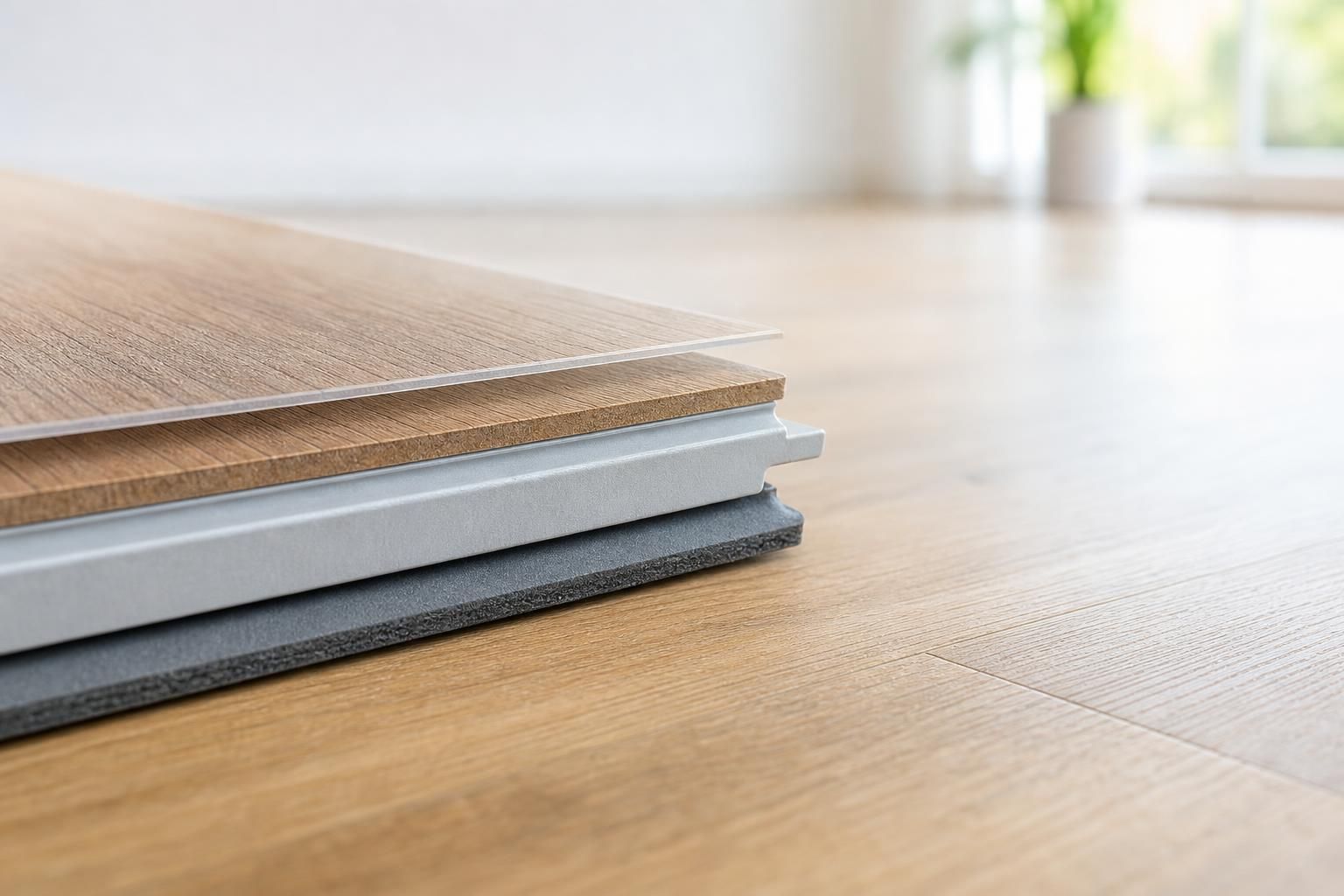
Laminate flooring is built around a high-density fiberboard (HDF) core — essentially compressed wood fiber — topped with a printed image layer and a clear wear layer, usually melamine or aluminum oxide. SPC flooring replaces that wood-fiber core with a dense composite of limestone powder, PVC, and stabilizers, then adds the same type of printed design layer and a clear wear layer on top, often with a cushioned underlayment already attached.
That core swap is the whole story. Wood fiber absorbs water and swells; limestone-polymer composite does not absorb water at all. This is why SPC is classified as genuinely waterproof, while laminate is at best water-resistant for a limited time at the surface — a distinction worth understanding in more depth in what rigid core vinyl plank flooring is actually made of.
Water and Humidity: Where the Gap Is Widest
This is the category where the durability difference stops being theoretical. Laminate's HDF core will swell, bubble, or delaminate if water sits on a seam for any length of time, and even "water-resistant" laminate lines only buy a few hours of protection before moisture reaches the core. SPC's core is inert to water indefinitely — it can sit submerged without swelling, which is why it's the material of choice for bathrooms, laundry rooms, and entries.
In a Honolulu home with trade winds pushing humidity through louvered windows, or a condo with a lanai door that gets rain-blown spray, that gap matters daily, not just during a flood. The EPA's guidance on controlling indoor moisture notes that sustained humidity and moisture intrusion are primary drivers of material degradation and mold risk in building materials — exactly the failure mode laminate's wood-fiber core is vulnerable to and SPC's mineral core isn't.
Impact, Dents, and Subfloor Tolerance
SPC's rigid core also resists dents and impacts better than laminate in most comparable price tiers, because the limestone composite doesn't compress under point loads the way fiberboard can. Dropped tools, furniture legs, and rolling office chairs are less likely to leave permanent marks in SPC.
SPC is also more forgiving of a slightly imperfect subfloor. The rigid core bridges minor dips and ridges without telegraphing them to the surface or stressing the locking joints, while laminate is more prone to joint separation over an uneven base. That said, neither product is a substitute for proper leveling — it's just that SPC has more margin for error before problems show up.
Scratch Resistance: Where Laminate Can Compete
Laminate isn't outclassed everywhere. Its melamine or aluminum oxide wear layer can be extremely hard and scratch-resistant — often harder to the touch than a comparable vinyl wear layer — which is why laminate still holds up well in dry living rooms and bedrooms with normal foot traffic and no standing water risk.
The practical takeaway: don't judge scratch resistance by "SPC vs. laminate" as categories. Judge it by the wear layer spec on the specific product, measured in mils for vinyl or by AC rating for laminate. A thin wear layer on either material will scratch faster than a thick one on the other.
Lifespan in Practice
| Factor | SPC Flooring | Laminate Flooring |
|---|---|---|
| Core material | Limestone/PVC composite | Wood fiberboard (HDF) |
| Water exposure | Waterproof, indefinite | Water-resistant, hours only |
| Humidity tolerance | High — stable in swings | Lower — can swell/warp |
| Impact/dent resistance | Generally higher | Moderate |
| Subfloor imperfection tolerance | Higher | Lower |
| Surface scratch resistance | Good, varies by wear layer mil | Can be excellent, varies by AC rating |
| Best-fit rooms | Kitchens, baths, entries, lanai-adjacent rooms | Bedrooms, living rooms, dry zones |
For a sense of how laminate actually performs over years of real Hawaii use rather than lab conditions, see how long laminate flooring tends to last in Honolulu homes. The short version: it depends heavily on which rooms it's installed in and how much moisture those rooms see.
Warranty Language Tells You a Lot
Manufacturers write warranties around what they expect to fail. SPC warranties typically cover water damage and core integrity without exclusions for moisture, while laminate warranties almost always exclude water damage outright or limit it to brief spills wiped up immediately. Reading the fine print on what a vinyl plank flooring warranty actually covers is a faster way to judge real-world durability expectations than marketing copy, because warranty terms reflect what the manufacturer has actually tested and is willing to stand behind.
Where This Matters Most for Oahu Homes
Bathrooms and other wet areas are the clearest case for choosing SPC over laminate, since standing water and high humidity are the exact conditions laminate's core can't tolerate. If you're specifically weighing whether laminate belongs in a bathroom at all versus defaulting to SPC, that question is addressed directly in this breakdown of laminate flooring in bathrooms.
For condo owners dealing with shared plumbing lines, upstairs neighbors, and limited access to subfloors for repairs, the stakes of a water-related core failure are higher — a slow leak that goes unnoticed for weeks can ruin laminate but leave SPC largely unaffected. H&W Flooring sells waterproof SPC-core luxury vinyl plank at a published retail price of $3.99 per square foot, with a limited-time Black Friday promotion at $2.49 per square foot, specifically because that durability gap is the deciding factor for most Oahu buyers choosing between the two materials.
Material standards for resilient flooring products, including wear layer and dimensional stability testing, are published by ASTM International, which is a useful reference if you want to compare spec sheets across brands rather than relying on marketing claims alone.
Frequently Asked Questions
Q: Is SPC flooring waterproof or just water-resistant?
SPC flooring is fully waterproof at the core level because its limestone-polymer composite does not absorb water, unlike laminate's wood-fiber core, which only resists water at the surface for a limited time.
Q: Does SPC flooring cost more than laminate?
SPC typically costs somewhat more per square foot than comparable laminate because of its composite core and often-integrated underlayment, though pricing varies by brand, thickness, and wear layer.
Q: Can laminate flooring be used in a kitchen if SPC is more durable?
Laminate can be used in a kitchen if spills are wiped up quickly and the room stays generally dry, but any area with regular water exposure around sinks, dishwashers, or exterior doors favors SPC's waterproof core.
Q: Which material is better for a rental or condo with multiple tenants?
SPC is generally the safer choice for rentals and condos because it tolerates inconsistent maintenance and occasional water exposure far better than laminate, reducing the risk of core damage between tenants.
Q: Does SPC flooring feel different underfoot than laminate?
SPC is typically firmer and slightly cooler underfoot due to its mineral-based core, while laminate can feel marginally warmer and softer because of its wood-fiber composition, though both depend on the underlayment used.