How Much Does It Cost to Waterproof a Shower?
Key takeaway
Waterproofing a shower is priced by the job, not by a flat number, because it's really three separate line items stacked together: demo of the old surround, the waterproofing membrane and substrate prep, and the finish material that goes on top. On Oʻahu, published contractor rates give you a real starting point — H&W Flooring lists installation labor from $8 per square foot, including demo of old flooring, leveling (incl. self-leveling material), and baseboard, with vinyl and SPC finish material starting at $2.79 per square foot retail or as low as $2.39 per square foot at the top wholesale tier. The membrane and prep step itself scales with shower size, substrate condition, and whether you're waterproofing for tile or for a vinyl wet-area system.
Key takeaways
- Shower waterproofing cost breaks into three parts: demo, membrane/prep, and finish material — price each separately instead of asking for one number.
- Installation labor is priced from $8/sq ft, including demo of old flooring, leveling (incl. self-leveling material), and baseboard, as a published rate; membrane and prep are priced by the job because substrate condition varies.
- Contractors buying vinyl/SPC finish material in volume move from $2.79/sq ft retail down to wholesale tiers as low as $2.39/sq ft, which changes the math on multi-unit jobs.
What "waterproofing a shower" actually covers
A shower waterproofing job isn't one task — it's a sequence, and each step has its own cost driver:
- Demo: removing old tile, mortar bed, or a failed pan down to the substrate.
- Substrate prep: leveling, patching, and confirming the subfloor and walls can accept a membrane.
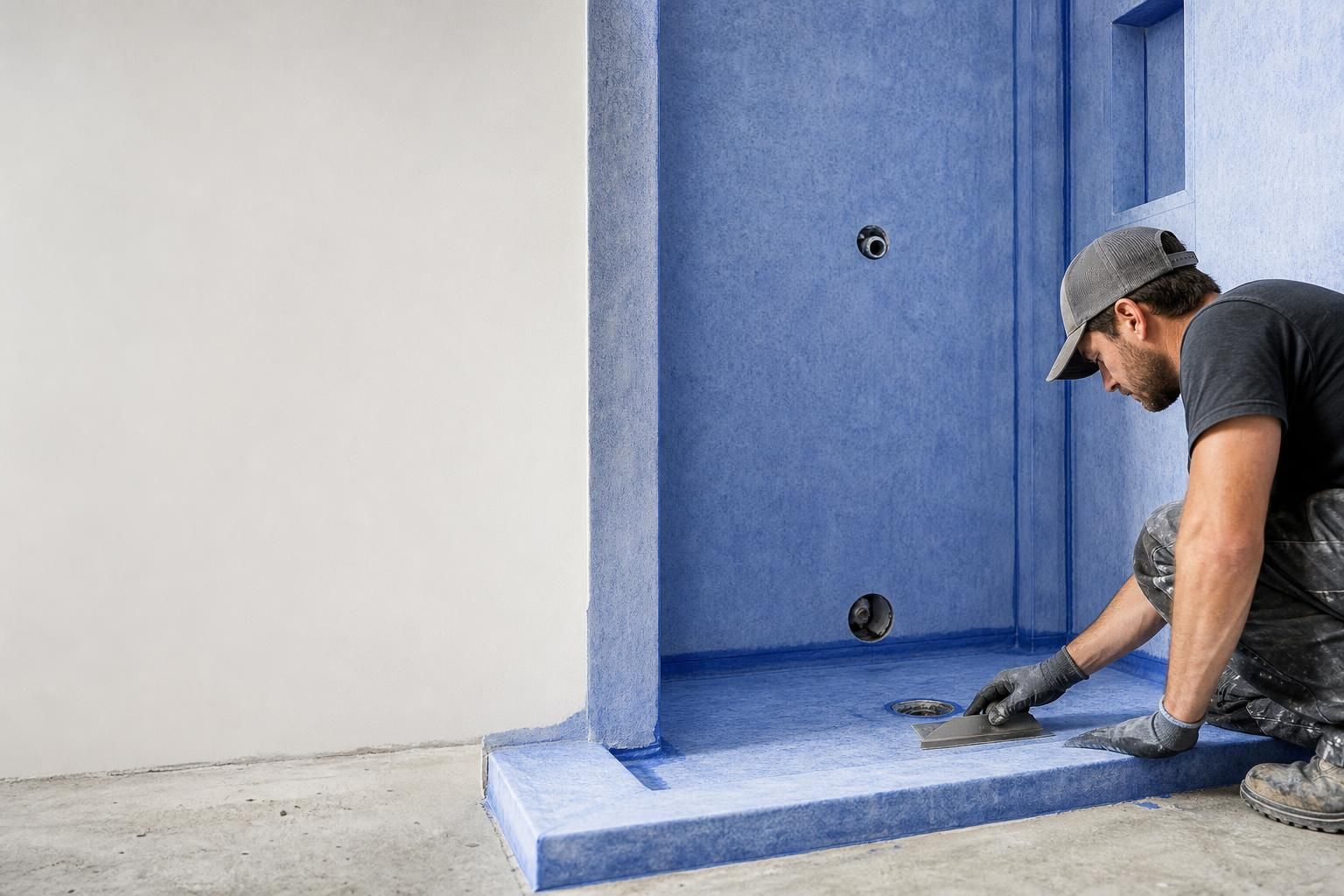
- Membrane application: a liquid, sheet, or foam-board waterproofing layer at the pan, walls, and curb, with special attention to corners, the drain, and any niche.
- Finish installation: tile, or a waterproof vinyl/SPC wall and floor system, set on top of the cured membrane.
Skipping or shortcutting the membrane step is the single biggest reason showers fail early — the EPA's guidance on moisture and mold control points to trapped moisture behind wall assemblies as a primary driver of mold growth, which is exactly what a shower membrane is designed to stop.
Cost drivers side by side
| Cost component | Basis | Who it typically applies to |
|---|---|---|
| Demo & haul-away | Included in H&W Flooring's installation rate | Any remodel removing an old shower surround |
| Installation labor | From $8/sq ft (includes demo, leveling, baseboard), published by H&W Flooring | Setting new waterproof vinyl or SPC surround |
| Waterproofing membrane & prep | Priced by the job — scales with shower size and substrate condition | Every wet-area job before any finish goes on |
| Vinyl/SPC finish material — retail | Starts at $2.79/sq ft, published by H&W Flooring | Homeowners buying for a single bathroom |
| Vinyl/SPC finish material — wholesale | Tiered at $2.79, $2.59, and $2.39/sq ft by order size | Licensed contractors buying by the job or in volume |
Reading the table left to right is the honest way to price a shower: add up what's actually being demoed, what the membrane step requires, and what finish material you're setting — instead of accepting a single blended figure that hides which part is driving the cost.
Why membrane pricing doesn't come as a flat rate
Demo and installation labor scale cleanly with square footage, which is why they can be published as flat per-square-foot rates. Membrane work doesn't behave the same way. A shower with a simple rectangular pan, no niche, and sound substrate takes a fraction of the labor of one with a custom curb, a bench, or subfloor damage discovered mid-demo. That's why waterproofing membrane and prep get quoted per job after a site look, rather than as a published per-square-foot number — the variables are the substrate, not just the square footage.
The Tile Council of North America publishes handbook details on shower pan and membrane assemblies that most licensed contractors reference when specifying a wet-area system, and the substrate condition described in those assemblies is exactly what changes labor time on a real job.
Vinyl/SPC surrounds versus traditional tile
Waterproof vinyl plank and SPC aren't just floor products — used correctly on wet-area walls and pan surrounds, they reduce the number of grout lines that need sealing compared to tile, which is one reason remodel crews are specifying them more often in wet areas. They still sit on top of the same waterproofing membrane a tile shower would use; the membrane step doesn't go away just because the finish is vinyl instead of tile. For a broader look at what an insured remodeling crew typically walks a homeowner through on a wet-area job, see what to expect from a remodeling contractor in Māpunapuna.
What changes the number for contractors buying at volume
A homeowner waterproofing one shower buys finish material at the retail rate. A contractor running several units — a condo renovation, a multi-bath remodel, a portfolio of rental turnovers — buys at wholesale, and the tier they land in depends on order size. Published tiers move from $2.79/sq ft down to $2.59/sq ft and $2.39/sq ft as order value crosses set thresholds. Understanding how contractor pricing works for flooring in Hawaii matters here because the same vinyl or SPC product used for a wet-area surround is priced on the same tier schedule as any other flooring order — waterproofing work doesn't reset the pricing structure, it just adds the membrane and prep line items on top.
For contractors who haven't set up a trade account yet, it's worth reading what wholesale flooring actually means for Hawaii contractors before pricing a bid, since the tier a job qualifies for can swing material cost by more than a dollar a square foot.
DIY versus hiring an insured crew
Building codes in most Hawaii jurisdictions require wet-area waterproofing to meet recognized assembly standards, and the International Code Council publishes the plumbing and building code language that inspectors reference for shower pan and membrane requirements. A failed inspection on a DIY membrane job usually means tearing out finish material that's already set — which turns a one-time membrane cost into a demo-and-redo cost. That risk is a big part of why most shower waterproofing gets bid as a full job rather than split between a DIY membrane and a hired finish crew.
Frequently Asked Questions
Q: What is the average cost per square foot to waterproof a shower?
There isn't one flat per-square-foot rate for the whole job because membrane and prep pricing depends on substrate condition, not just size. What can be quoted flatly is the adjacent step: installation labor from $8/sq ft, including demo of old flooring, leveling (incl. self-leveling material), and baseboard, a published rate from H&W Flooring.
Q: Does waterproofing cost change if I use vinyl instead of tile?
The membrane step underneath is the same either way — vinyl and SPC finishes still require a waterproofed substrate. What changes is the finish material cost, which for vinyl/SPC starts at $2.79/sq ft retail and drops to wholesale tiers as low as $2.39/sq ft for contractors buying in volume.
Q: Can I waterproof a shower myself to save money?
You can, but most jurisdictions require the assembly to meet code-referenced waterproofing standards, and a failed inspection typically means removing finish material that's already installed. Hiring an insured crew to handle membrane and finish together avoids that redo risk.
Q: Why do contractors get a different price than homeowners for the same job?
Contractors buying finish material at volume qualify for tiered wholesale pricing, while a homeowner buying for a single shower pays the retail rate. The tier a contractor lands in depends on total order value, not the size of any one shower.
Q: What's the biggest hidden cost in shower waterproofing?
Substrate damage found during demo — rot, subfloor deterioration, or a failed old pan — since it adds prep work beyond what a flat demo rate covers. That's the main reason membrane and prep get priced per job after a site look rather than as a fixed number.