Remodeling Contractor in Māpunapuna: What to Expect
Key takeaway
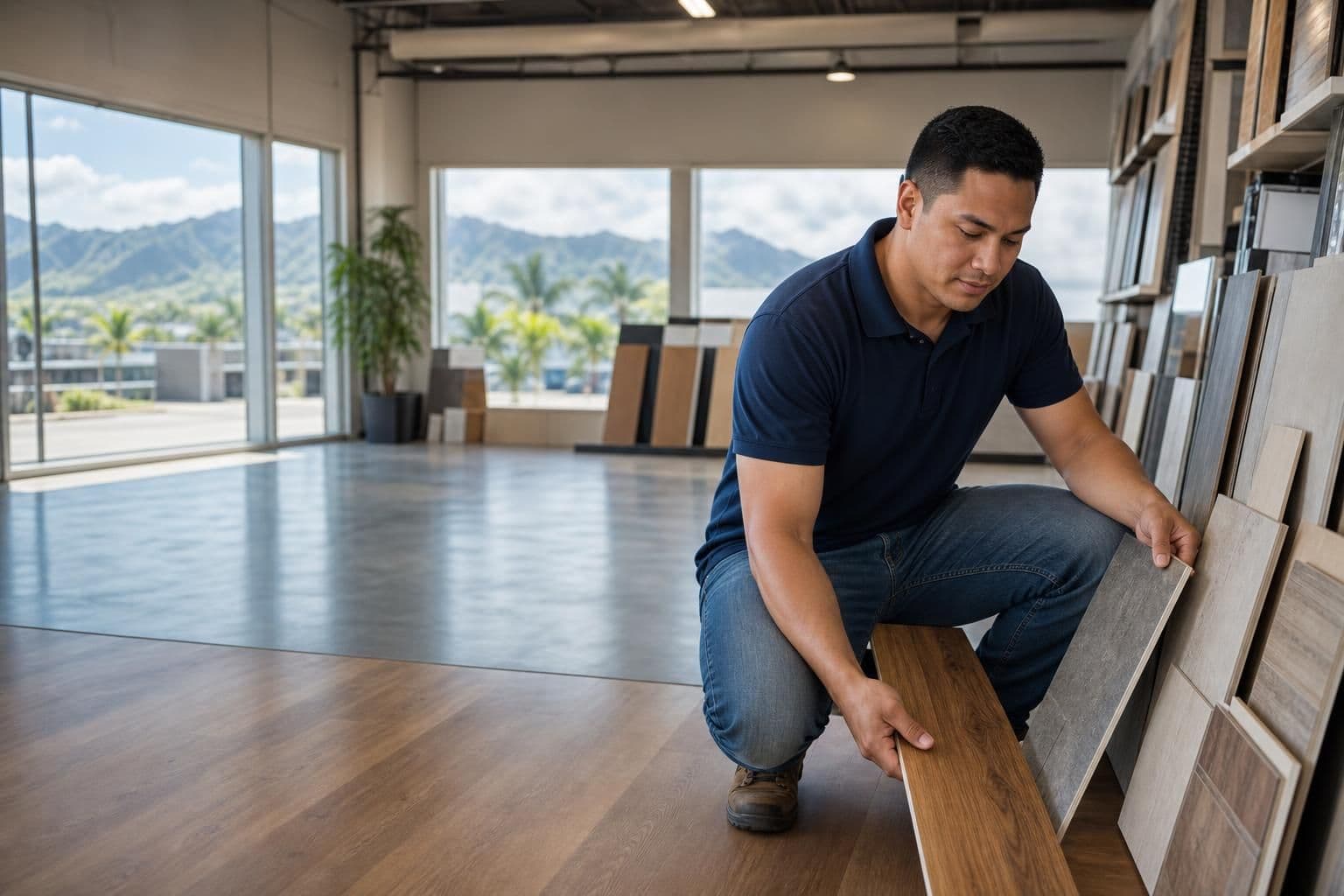
A remodeling contractor in Māpunapuna is typically a flooring-focused business that pairs a stocked warehouse with its own installation crew, rather than a general contractor who subcontracts every trade. H&W Flooring is one example on Oʻahu — a family-run operation that sells waterproof vinyl plank, laminate, hardwood, and tile out of its Māpunapuna warehouse and installs it with an in-house crew instead of day labor. Knowing that distinction matters because it changes who shows up at your door, how fast materials arrive, and what you pay per square foot.
Key takeaways
- Māpunapuna's warehouse zoning lets flooring contractors stock full pallets on Oʻahu, so same-day pickup or delivery is realistic instead of a 6-8 week mainland shipping wait.
- Ask any remodeling contractor whether installers are employees or subcontracted crews — it affects accountability, scheduling, and who supervises the job site.
- Published price ranges (for example, vinyl plank from $3.99/sq ft with installation around $3/sq ft) let you budget a room before a quote appointment, though you should confirm current numbers directly with the contractor.
Why Māpunapuna Is a Flooring Industry Hub
Māpunapuna is a light-industrial and warehouse district squeezed between the H-1 freeway and Honolulu's airport corridor. That zoning is exactly why flooring wholesalers and contractors cluster there instead of in retail strip malls: warehouse space allows pallet-scale storage of vinyl plank, SPC, laminate, and tile that a small showroom couldn't hold. For a homeowner or contractor searching for a remodeling contractor in this area, the practical upside is inventory sitting on the shelf rather than on a container ship somewhere between the mainland and Honolulu Harbor.
What "Remodeling Contractor" Means at a Flooring Warehouse
Not every remodeling contractor operates the same way. Some are general contractors who bid a job and then hire subcontracted crews for each trade — flooring, drywall, plumbing. Others, like flooring-first businesses, run their own installation teams and handle a narrower scope: flooring replacement, wet-area waterproofing for bathrooms and showers, and the tile or vinyl work tied to a room remodel. The tradeoff is specialization — you get consistent installers who know the specific waterproofing membranes and vinyl click-lock systems they sell, supervised by the owners rather than rotating day labor. If your project is a whole-home renovation involving structural or electrical work, you'll still need a licensed general contractor for those trades; a flooring-focused remodeler is the right fit specifically for floors, tile, and wet-area waterproofing.
Retail and Wholesale Pricing Are Two Different Conversations
A flooring warehouse serving Māpunapuna typically runs two price books at once: retail pricing for a homeowner doing one room, and tiered wholesale pricing for licensed contractors buying by the pallet or job lot. At H&W Flooring, waterproof vinyl plank starts from $3.99 per square foot at retail, with installation running around $3 per square foot — though both figures should be confirmed at the time of your project, since material costs shift. Contractors buying in volume typically move to a lower per-square-foot tier once they're purchasing for multiple units or a full remodel, which is a different pricing structure than a single-room retail quote. If you're not sure which category you fall into, or how wholesale tiers are typically structured, this breakdown of how wholesale flooring pricing works walks through the mechanics in more detail.
Verifying a Contractor's License Before You Hire
Hawaiʻi requires contractors performing work above a certain dollar threshold to hold a state license issued through the Department of Commerce and Consumer Affairs. Before signing a contract, you can look up any contractor's license number and standing through the Hawaiʻi DCCA's professional and vocational licensing search, which shows whether a license is active, expired, or has any disciplinary history. This step matters as much for a flooring-specific remodeler as it does for a whole-home general contractor — an active license is the baseline, not a bonus.
Typical Scope of a Flooring-Focused Remodel
A remodeling contractor working out of a flooring warehouse usually handles projects in this rough sequence:
- Site measurement and material selection — measuring square footage and picking a vinyl plank, laminate, hardwood, or tile product from in-stock inventory.
- Subfloor prep — removing old flooring, checking for moisture issues, and leveling as needed before new material goes down.
- Wet-area waterproofing — for bathrooms or shower surrounds, installing a waterproofing membrane before tile or waterproof vinyl goes over it.
- Installation — laying vinyl plank, SPC, laminate, or tile with the contractor's own crew rather than subcontracted labor.
- Trim and transitions — baseboards, thresholds, and transition strips between rooms or flooring types.
Waterproof vinyl plank and SPC (stone plastic composite) products are common choices for this scope because their core layer resists standing water better than traditional laminate, which matters in bathrooms, kitchens, and ground-floor units prone to humidity. The Resilient Floor Covering Institute publishes general product-category standards for vinyl and resilient flooring if you want to compare specs across manufacturers.
Why Stock and Lead Time Change the Timeline
A remodeling contractor that also runs the warehouse can often start a job faster than one waiting on a special order. If the vinyl plank or tile you want is already stocked in Māpunapuna, same-day pickup or delivery removes the biggest scheduling bottleneck on most remodels — waiting for material. Competitors shipping product from the mainland routinely quote lead times of several weeks, which can stall a bathroom or condo remodel far longer than the install itself takes. For a contractor juggling multiple units or a subcontractor deadline, that difference in lead time is often the deciding factor in who gets the order.
Frequently Asked Questions
Q: What does a remodeling contractor in Māpunapuna typically specialize in?
Most are flooring-focused businesses that combine a warehouse of in-stock vinyl plank, laminate, hardwood, and tile with an in-house installation crew, plus related wet-area waterproofing work — rather than full-scope general contracting across every trade.
Q: Is it cheaper to buy flooring wholesale instead of retail?
Wholesale tiers are generally available to licensed contractors buying in volume, while retail pricing applies to homeowners doing a single room; the per-square-foot rate is typically lower at wholesale tiers because of the order size, not because the material itself changes.
Q: How do I confirm a Hawaiʻi contractor's license is valid?
You can search the contractor's license number through the Hawaiʻi DCCA's professional and vocational licensing lookup, which shows current status and any disciplinary history before you sign a contract.
Q: Does waterproof vinyl plank actually work in bathrooms?
Waterproof vinyl plank and SPC products have a core layer designed to resist water penetration, which is why they're commonly installed in bathrooms and wet areas, but a proper waterproofing membrane under the flooring is still standard practice around showers and tubs.
Q: Why does same-day material pickup matter for a remodel?
Material lead time is often the longest delay in a flooring remodel; a contractor who stocks product locally can start prep and installation sooner than one waiting weeks for a special order to ship in.