Can Vinyl Plank Flooring Be Installed Over Radiant Heat?
Key takeaway
Yes, vinyl plank flooring — including SPC rigid core — can be installed over both hydronic (water-based) and electric radiant heat systems, as long as the system's surface temperature stays within the flooring manufacturer's limit, which is typically around 85°F (29°C). Going above that threshold risks softening the vinyl, causing planks to expand, curl at the seams, or loosen from the subfloor. The heat source itself doesn't rule out vinyl plank; the installed temperature does.
Key takeaways
- Keep radiant floor surface temperature at or below about 85°F (29°C) — check the specific product's spec sheet before installing.
- SPC rigid core vinyl plank handles radiant heat more predictably than flexible WPC vinyl because its stone-composite core resists expansion.
- Ramp up a new radiant system gradually over a day or two rather than switching it to full heat immediately after installation.
How Radiant Heat Systems Interact With Vinyl Plank
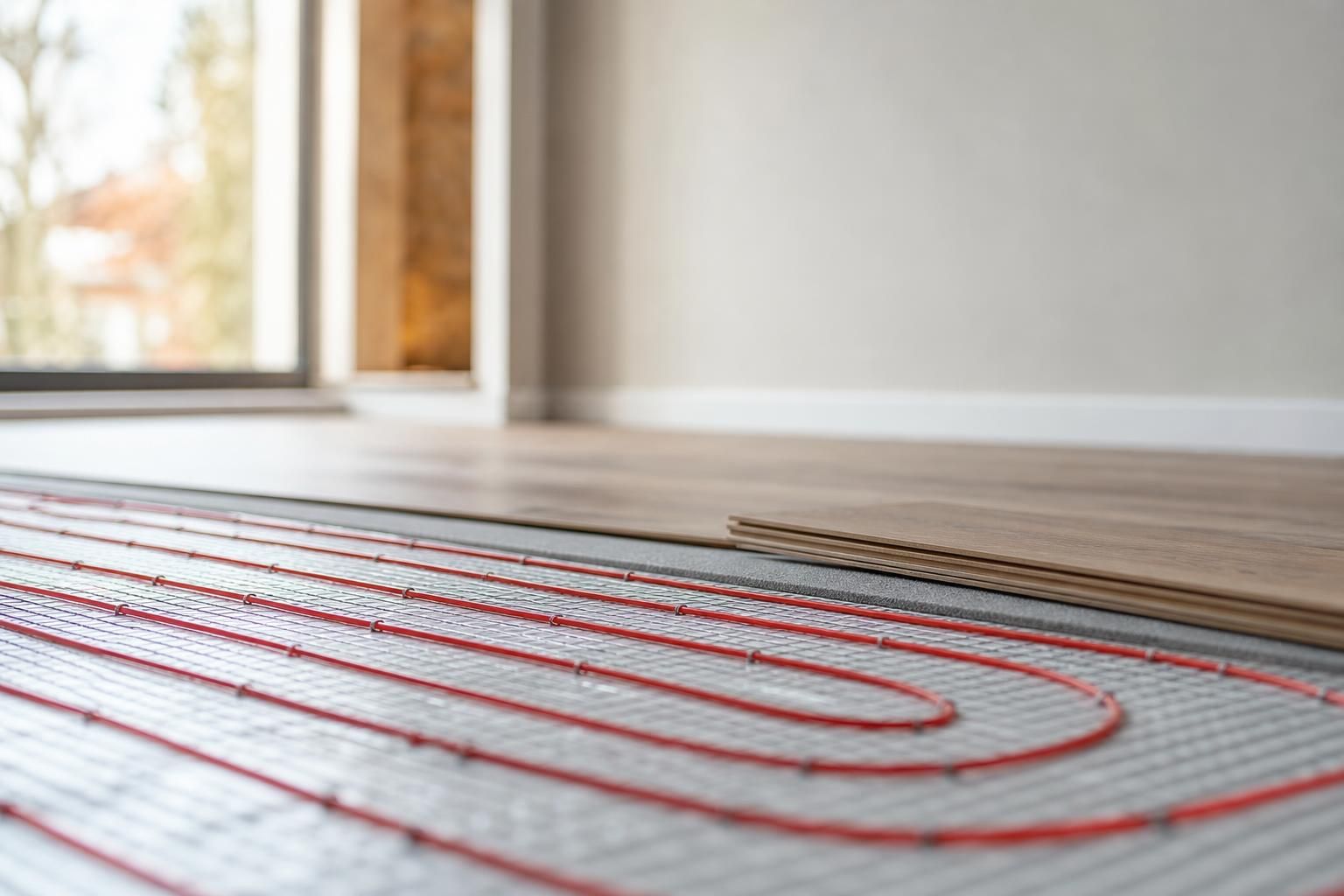
Radiant heat comes in two common forms: hydronic systems, which circulate heated water through PEX tubing embedded in a slab or underlayment, and electric systems, which use resistance wire mats laid under the finished floor. Both heat the floor from below rather than blowing warm air into a room, which is part of why they pair well with dense, dimensionally stable flooring like vinyl plank. The U.S. Department of Energy explains that radiant systems warm objects and surfaces directly, which is efficient but also means the flooring material itself experiences sustained, direct heat exposure rather than occasional contact — a key reason manufacturers publish strict temperature ceilings for vinyl products.
In Honolulu, full hydronic systems under a home are uncommon given the climate, but electric floor-warming mats do show up in bathroom remodels where a homeowner wants a warm floor underfoot after a shower. The same temperature-limit principle applies whether it's a slab-wide hydronic loop on the mainland or a small electric mat under a condo bathroom floor here.
Why the Temperature Limit Matters More Than the Heat Source
Vinyl plank, including waterproof and SPC products, is a petroleum-based material that softens at elevated temperatures. Most manufacturers cap continuous surface temperature at approximately 85°F because above that range, the wear layer and core can lose rigidity, adhesive bonds in glue-down installations can weaken, and click-lock seams can separate under repeated expansion and contraction. This is a mechanical limit, not a marketing number — it reflects how far the vinyl compound can flex and recover before deformation becomes permanent.
Before installing over any radiant system, check the specific product's technical data sheet for its stated maximum floor temperature rather than assuming a single industry-wide figure applies. The Resilient Floor Covering Institute notes that resilient flooring, including vinyl, should only be installed over radiant systems that can be controlled and verified at the floor surface — not just set by a thermostat reading room air temperature.
Click-Lock vs. Glue-Down Over a Heated Subfloor
Both installation methods can work over radiant heat, but they behave differently as the floor warms and cools.
- Click-lock (floating) vinyl plank isn't attached to the subfloor, so it can expand and contract slightly as a unit without stressing an adhesive bond. This makes it a common choice over radiant systems because the floor "floats" above the heat source.
- Glue-down vinyl plank bonds directly to the subfloor, which transfers heat more efficiently but requires an adhesive rated for elevated temperatures — a standard vinyl adhesive can break down under sustained radiant heat.
If you're deciding between the two methods for your project generally, not just for a radiant-heat room, this breakdown of click lock versus glue-down vinyl plank covers the tradeoffs in more depth.
Underlayment and Subfloor Considerations
Radiant heat needs to transfer through whatever sits between the heat source and the vinyl surface, so underlayment choice matters more here than in a standard install. Thick foam-backed underlayment, which is often chosen for sound dampening or cushioning, can insulate against heat transfer and trap warmth closer to the vinyl's underside than intended — pushing the wear layer past its rated temperature even if the system thermostat shows a safe reading. Thinner, heat-conductive underlayment (or no underlayment at all, if the product has an attached pad) is generally the safer pairing.
If you're removing old flooring to expose a radiant system before a new install, doing it carefully matters — damaged PEX tubing or electric mats are expensive to repair. A guide on removing old flooring before installing vinyl plank walks through that process without disturbing what's underneath.
Humidity, Hawaii Conditions, and Radiant Heat Together
Oahu's climate rarely calls for whole-home radiant heat, but the same heat-and-moisture principles that make vinyl plank a strong choice in humid environments apply here too. Vinyl's closed-cell, waterproof core doesn't absorb moisture or swell the way laminate or hardwood can, which is also why it tolerates the thermal cycling of a radiant system better than wood-based products. For more on how vinyl plank performs generally in Hawaii's humidity, see this look at vinyl plank flooring in high-humidity climates.
Installation Cost Considerations
Installing vinyl plank over an existing radiant system, or prepping a subfloor for one, generally costs more than a standard install because of the extra care needed around tubing or electric mats, plus any underlayment changes. H&W Flooring prices installation from $8 per square foot, including demo of old flooring, leveling (incl. self-leveling material), and baseboard — actual cost for a radiant-heat room depends on the condition of the existing system and whether rerouting or testing is needed before the new floor goes down.
Frequently Asked Questions
Q: What temperature is safe for vinyl plank flooring over radiant heat?
Most manufacturers set a maximum surface temperature of around 85°F (29°C) for vinyl plank. Exceeding that limit risks softening the material, loosening adhesive, or separating click-lock seams.
Q: Is SPC vinyl plank better than standard vinyl for radiant heat?
SPC rigid core vinyl plank tends to perform more predictably over radiant heat than flexible WPC vinyl because its stone-composite core resists expansion and contraction better under sustained warmth.
Q: Do I need a special underlayment for vinyl plank over radiant heat?
Yes — thick, insulating underlayment can trap heat against the vinyl's underside and push it past its rated temperature. A thinner, heat-conductive underlayment, or none if the product has an attached pad, is usually the safer choice.
Q: Can I install vinyl plank over an existing electric floor-warming mat in a bathroom?
Generally yes, as long as the mat's output stays within the vinyl product's maximum surface temperature and the mat is functioning properly before the new floor goes down. Testing the system and checking for damage before installation is important since repairs afterward are far more disruptive.
Q: Should I run a new radiant heat system at full temperature right after installing vinyl plank?
No — it's best to ramp the system up gradually over a day or two rather than switching immediately to full heat. This lets the vinyl acclimate and reduces the risk of thermal shock to the planks or adhesive.