Can You Put Vinyl Plank Flooring Over Tile?
Key takeaway
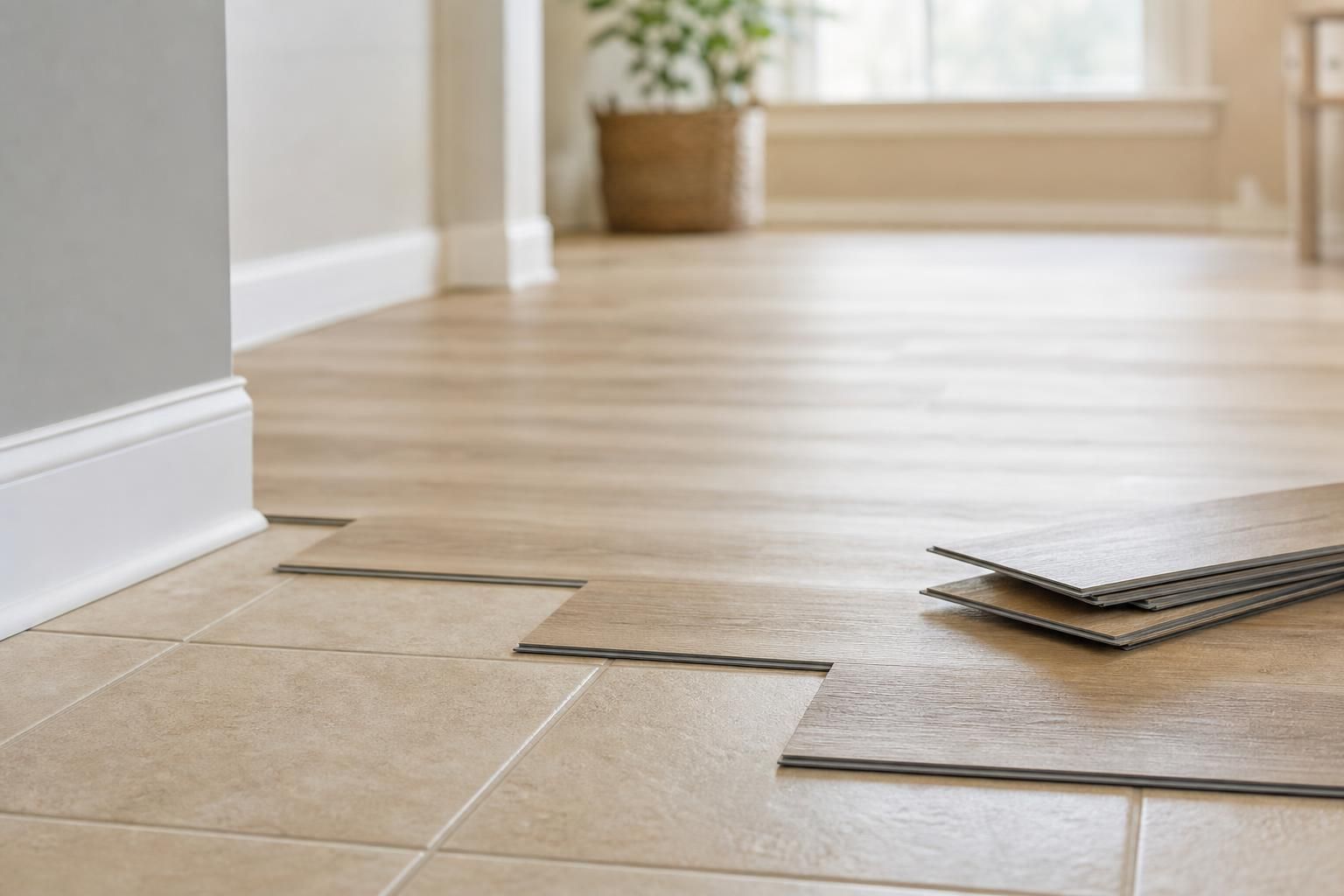
Yes — vinyl plank, including rigid SPC-core products, can usually be installed directly over existing tile as long as the tile is solidly bonded, reasonably flat, and doesn't have deep or cracked grout lines that will telegraph through the new floor. Skipping tile removal avoids demo work entirely, which H&W Flooring includes in its installation rate, but the substrate still needs a flatness check first. Whether it's the right call depends more on the tile's condition than on the fact that it's tile at all.
Key takeaways
- Vinyl plank can go over tile if it's stable, flat, and the grout lines are filled or ground down first.
- Skipping tear-out saves demo labor, but loose, cracked, or deeply grouted tile usually needs to come out anyway.
- On multi-unit or contractor jobs, tile condition varies unit to unit, so it's worth checking each floor before locking in a wholesale order.
When Existing Tile Is a Good Base
Tile makes a workable substrate for vinyl plank when it meets a few conditions:
- No cracked, hollow-sounding, or loose tiles — a hollow sound when tapped usually means the tile has debonded from the slab underneath.
- Grout lines no deeper than roughly 1/8 inch, or filled flush with a flooring-grade patching compound.
- Overall flatness within the tolerance used for resilient flooring substrates — ASTM International publishes the F710 standard contractors reference for acceptable subfloor flatness before installing resilient products like vinyl plank.
Rigid SPC-core vinyl plank tends to bridge minor tile imperfections better than thin, flexible luxury vinyl plank, because the rigid core spans small dips and ridges instead of flexing into them. That's one reason SPC has become the default choice for over-tile installs rather than older flexible vinyl.
When You Should Remove the Tile Instead
Some situations call for tear-out even though overlay is technically possible:
- Cracked or shifting tile. If tiles are visibly cracked or move underfoot, the substrate underneath has already failed and needs to be addressed directly.
- Wide or deep grout joints. Large-format tile with wide grout lines can leave a visible ridge pattern through vinyl plank if it isn't skimmed first, especially under raking light.
- A wet-area waterproofing overhaul. If a bathroom or laundry area is also getting new waterproofing membrane work, it usually makes more sense to remove the tile as part of that scope rather than build vinyl over a floor that's about to be opened up anyway. This is the kind of decision that comes up early in a broader remodeling project scoped out room by room.
- Height clearance problems. Adding vinyl plank over tile raises the finished floor height, which can create issues at doorways, cabinet toe-kicks, or transitions to adjoining rooms that were already at tile height.
Checking Flatness and Moisture Before You Commit
Two things matter more than the tile itself: flatness and moisture. A long straightedge laid across the tile will reveal dips or humps that need patching before vinyl plank goes down — gaps under the straightedge beyond the ASTM tolerance mentioned above are the trigger to patch, not skip.
Moisture is the other variable, particularly in ground-floor slabs and older Oahu buildings near the water table. Trapped moisture under a floor covering can encourage mold growth if it isn't addressed, and the EPA's guidance on moisture and mold notes that controlling moisture at the source is the most reliable way to prevent it — a relevant point when sealing a new floor layer over an existing tile substrate.
What This Means for Contractors Buying at Volume
For licensed contractors renovating multiple condo units or a full building, tile condition rarely looks the same unit to unit — one unit might have flat, bonded tile ready for overlay, while the next has hollow spots that need tear-out. That variability affects the labor side of a bid more than the material side, but it still matters when placing a wholesale order, since contractor pricing in Hawaii is typically structured in volume tiers rather than a flat per-box rate. H&W Flooring's wholesale tiers for DCCA-verified contractors step down from $2.79 to $2.59 to $2.39 per square foot as order volume crosses the $5,000, $15,000, $100,000, and $200,000 thresholds, so getting an accurate per-unit substrate read before ordering helps avoid mismatched material counts partway through a job.
If you're newer to buying this way, it's worth understanding how wholesale flooring accounts work for contractors before submitting a bulk order, since the tiered pricing assumes a single order rather than several smaller ones stitched together.
Cost Shape: Overlay vs. Tear-Out
Neither path has a single universal price, since it scales with square footage and site conditions, but the cost shape is straightforward to describe. Installing over sound tile means paying for vinyl plank material and installation labor — H&W Flooring lists installation from $8 per square foot, including demo of old flooring, leveling (incl. self-leveling material), and baseboard — which would cover tile removal if it turned out to be needed. Removing the tile first adds demo work (included in H&W Flooring's installation rate), plus any patching or leveling the exposed subfloor needs (also covered, including self-leveling material). On a retail vinyl plank price of $2.79 per square foot, that means the decision to keep or remove the tile shifts the project's labor total more than it shifts the material total.
Frequently Asked Questions
Q: Do you need to remove grout lines before installing vinyl plank over tile?
Not always — shallow grout lines can be left as-is, but lines deeper than about 1/8 inch should be filled with a flooring-grade patching compound so they don't telegraph through the new floor over time.
Q: Does vinyl plank over tile raise the floor height noticeably?
Yes, by roughly the thickness of the vinyl plank and any underlayment used, which can affect clearance at doors, cabinets, and transitions to adjoining rooms at the original tile height.
Q: Is SPC vinyl plank better than flexible luxury vinyl plank for going over tile?
Generally yes — SPC's rigid core bridges small dips and grout-line imperfections in the tile better than thinner, flexible luxury vinyl plank, which is more likely to flex into those irregularities.
Q: How do you know if tile is too unstable to build over?
Tap the tile and listen for a hollow sound, which usually indicates it has debonded from the slab; cracked or shifting tiles are a similar red flag that the substrate needs attention before any overlay.
Q: Does skipping tile removal save money on a flooring project?
It avoids the demo work, which H&W Flooring includes in its installation rate, but if the tile turns out to be loose, cracked, or badly out of flatness, removal becomes necessary anyway regardless of the upfront savings.