How to Remove Old Flooring Before Installing Vinyl Plank
Key takeaway
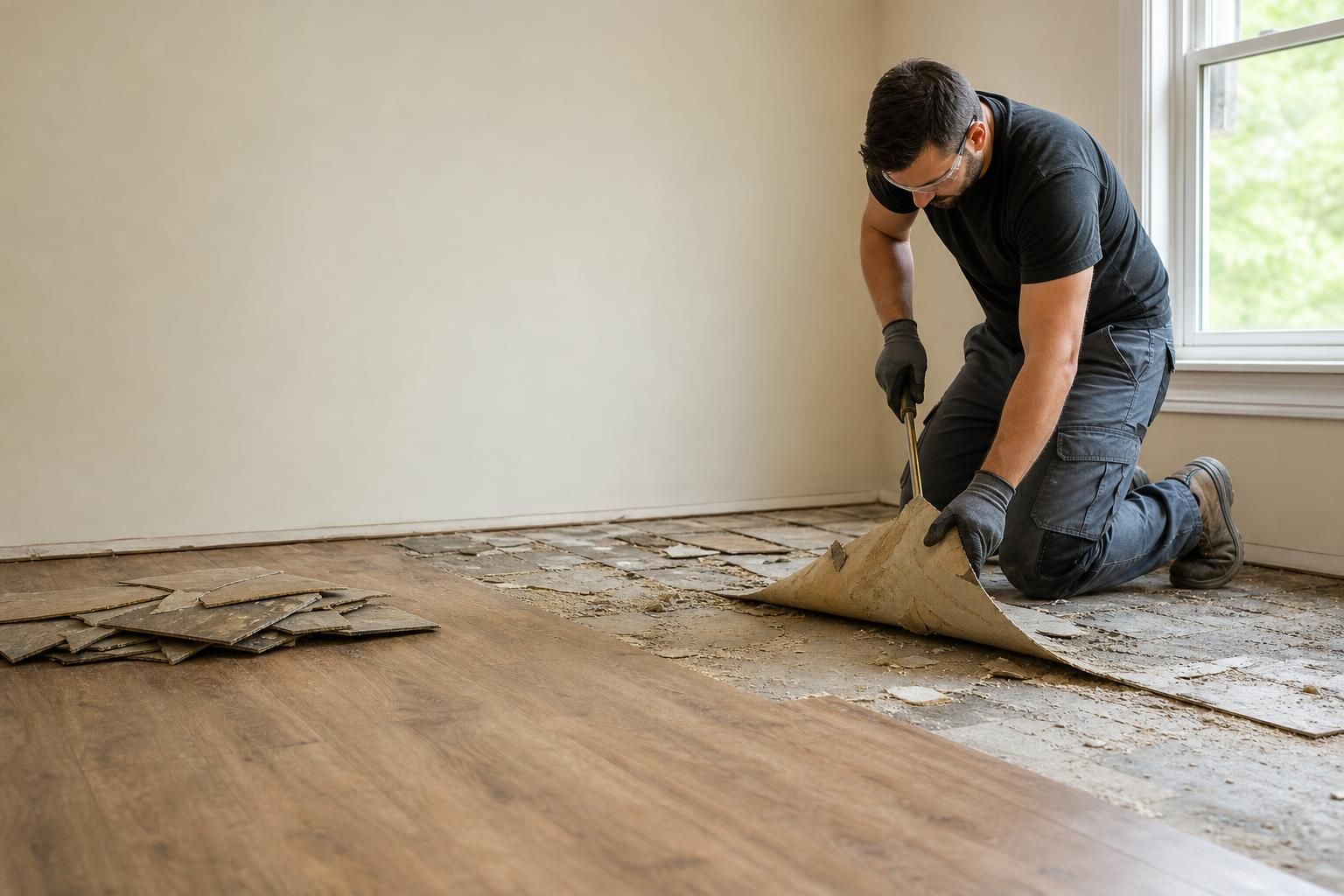
Removing old flooring before installing vinyl plank means pulling up the existing carpet, tile, or sheet vinyl, scraping or grinding off leftover adhesive, and checking the subfloor for moisture and flatness before anything new goes down. The exact steps change depending on what's underneath — carpet comes up in minutes, while glued-down tile or old vinyl tile can take a full day and may require testing for asbestos if the home was built before 1980. Skipping this step is the single most common reason a new vinyl plank floor telegraphs bumps, separates at the seams, or fails early.
Key takeaways
- Carpet and pad pull up fast with a utility knife and pliers; glued-down tile, linoleum, or old vinyl take far longer and often need a floor scraper or rented grinder.
- Homes built before 1980 should be checked for asbestos in old vinyl tile or linoleum before any cutting, sanding, or scraping — per the EPA, disturbing it is what creates risk, not the intact material itself.
- Demo and haul-away is typically priced by the square foot elsewhere — H&W Flooring includes it in its installation rate — which is worth comparing against the cost of your own time, a dumpster rental, and dump fees.
Check What You're Dealing With First
Before buying tools or scheduling a dumpster, identify the existing floor layer by layer. Pry up a corner near a closet or under a baseboard to see what's actually glued or nailed down — sometimes there's more than one old floor stacked underneath the visible one, which is common in older Oʻahu homes and condos that have been through a few remodels.
- Carpet and pad: lifts by hand once tack strips are exposed; tack strips and staples come out with pliers or a pry bar.
- Sheet vinyl or vinyl tile: usually glued; some pry up in sheets, others require scraping.
- Ceramic or porcelain tile: set in thinset or mortar; needs a demolition hammer or chisel and is the slowest to remove.
- Engineered or solid hardwood: nailed or glued; pry bars and a flat bar work plank by plank.
- Laminate: floating, usually no glue — it snaps apart and lifts out quickly.
If the home or building was built before 1980, stop before cutting into old vinyl tile, sheet vinyl, or the mastic underneath it. Some of these products contained asbestos, and the fibers only become a hazard when the material is cut, sanded, or ground. The EPA's guidance on asbestos recommends having suspect material tested by a lab rather than guessing, and leaving it undisturbed (or having it professionally abated) if results come back positive.
Tools for a DIY Removal
For a single room, a homeowner can usually get by with:
- Utility knife (cutting carpet and pad into strips)
- Pliers or a pry bar (pulling staples, tack strips, nails)
- Floor scraper, either hand-pushed or a rented walk-behind model (lifting glued tile or vinyl and scraping adhesive residue)
- Heat gun (softening old adhesive or vinyl tile for easier lifting)
- Shop vacuum with a HEPA filter (dust control, especially with tile or old vinyl)
- Heavy-duty contractor bags or a rented dumpster (debris)
Glued-down flooring is the part that turns a weekend project into a multi-day one. A manual scraper works but is slow going over a large room; a rented power scraper or floor grinder speeds this up considerably but adds rental cost and generates more dust, which is where that shop vacuum earns its keep.
Prepping the Subfloor Once the Old Floor Is Out
Pulling up the old floor is only half the job — what's left behind determines how the new vinyl plank performs. Two things matter most:
Flatness. Vinyl plank, especially rigid SPC core, needs a reasonably flat subfloor to lock together properly and avoid peaking at the seams. Manufacturers generally reference a flatness tolerance in the range of 3/16 inch over a 10-foot span, though the exact spec varies by product — check the installation instructions for the specific plank being installed. High spots get sanded or ground down; low spots get filled with a floor patch compound.
Moisture and old adhesive. Concrete slabs in Hawaiʻi homes can hold residual moisture, and leftover adhesive ridges from old tile or vinyl will show through a new floor if not scraped reasonably smooth. This is also the point to decide on underlayment, especially over concrete or in older units — see this breakdown of underlayment options for vinyl plank for what actually adds value versus what's unnecessary with click-lock SPC.
Condo subfloors deserve extra attention since many Oʻahu buildings have house rules about underlayment thickness and sound ratings; a contractor-focused guide to vinyl plank in Oahu condos covers those requirements in more detail.
Wet Areas Need an Extra Step
If the old flooring being removed was in a bathroom, laundry room, or kitchen, check the subfloor and any wall-floor transitions for water damage once the old material is up — stained or soft subfloor material should be replaced, not covered. This is also the moment to address waterproofing at tile transitions and tub surrounds before the new floor goes down, since it's far harder to fix once vinyl plank is installed over it. For background on why waterproof core flooring holds up in humid, wet-prone spaces, see this piece on vinyl plank performance in high-humidity climates.
Disposal: Dumpster, Dump Run, or Hire It Out
Old flooring is heavy and bulky — a single room of tile and thinset can weigh several hundred pounds. Options generally fall into three categories:
- Self-haul: bag or bundle debris and make multiple trips to a transfer station or landfill; cheapest but labor- and time-intensive.
- Dumpster rental: one drop-off/pickup fee, no repeat trips, but it sits in a driveway or parking stall for days.
- Demo and haul-away service: a flooring company removes the old material and hauls it off as part of the job. H&W Flooring, for example, includes this in its installation rate, which folds removal, debris bagging, and disposal into the job rather than three separate chores.
For a small room, DIY removal is reasonable for most people with a free weekend. For whole-home or multi-unit jobs — or any job involving suspected asbestos-containing material — hiring it out is usually faster and safer than renting equipment and hauling debris yourself. The OSHA page on flooring and surfacing material hazards also outlines dust and cutting hazards relevant to tile and old adhesive removal, worth a skim before taking a grinder to a floor.
Frequently Asked Questions
Q: Can vinyl plank be installed directly over old vinyl flooring?
In many cases yes, as long as the old vinyl is a single layer, fully adhered, and flat — not cushioned or peeling. If there are multiple layers, bubbling, or visible damage, removing it first gives a more reliable, longer-lasting result.
Q: How do I know if my old flooring contains asbestos?
You can't tell by looking — vinyl tile, sheet vinyl, and the mastic beneath them made before 1980 sometimes contained asbestos. The EPA recommends having a sample tested by an accredited lab before cutting, sanding, or scraping it.
Q: Do I need to remove carpet tack strips before installing vinyl plank?
Yes. Tack strips, staples, and any remaining nails need to come out completely, since vinyl plank requires a smooth, debris-free subfloor to lock together and lie flat.
Q: What's the difference between removing laminate and removing glued-down tile?
Laminate is a floating floor, so it usually unsnaps and lifts out in minutes with no adhesive involved. Glued-down tile is set in thinset or mastic and typically requires a scraper, demolition hammer, or rented grinder, which is why it takes considerably longer.
Q: Is it cheaper to remove old flooring myself or pay for demo and haul-away?
DIY removal costs less in cash but more in time, tool rental, and dump fees, especially for tile or multiple layers. A demo and haul-away service, whether priced per square foot or included in the install rate as at H&W Flooring, is often worth it for larger rooms or whole-home jobs where the labor and disposal logistics add up quickly.