DIY vs. Hiring a Contractor for Vinyl Plank Flooring
Key takeaway
Most homeowners can install click-lock vinyl plank flooring themselves in a single room if the subfloor is flat and dry, but a contractor is worth hiring for whole-home jobs, uneven concrete slabs, tricky transitions, or any wet area that needs waterproofing. The deciding factors are subfloor condition, square footage, and how much your time is worth compared to professional install rates, which at H&W Flooring start from $8 per square foot, including demo of old flooring, leveling (incl. self-leveling material), and baseboard.
Key takeaways
- DIY works best for flat, dry subfloors under roughly 300–400 sq ft; anything larger or uneven favors a contractor.
- Professional installation at H&W Flooring is from $8/sq ft, including demo of old flooring, leveling (incl. self-leveling material), and baseboard, and covers prep that DIYers skip.
- Bathrooms, laundry rooms, and other wet areas need waterproofing details most first-time installers get wrong.
What a DIY Vinyl Plank Install Actually Requires
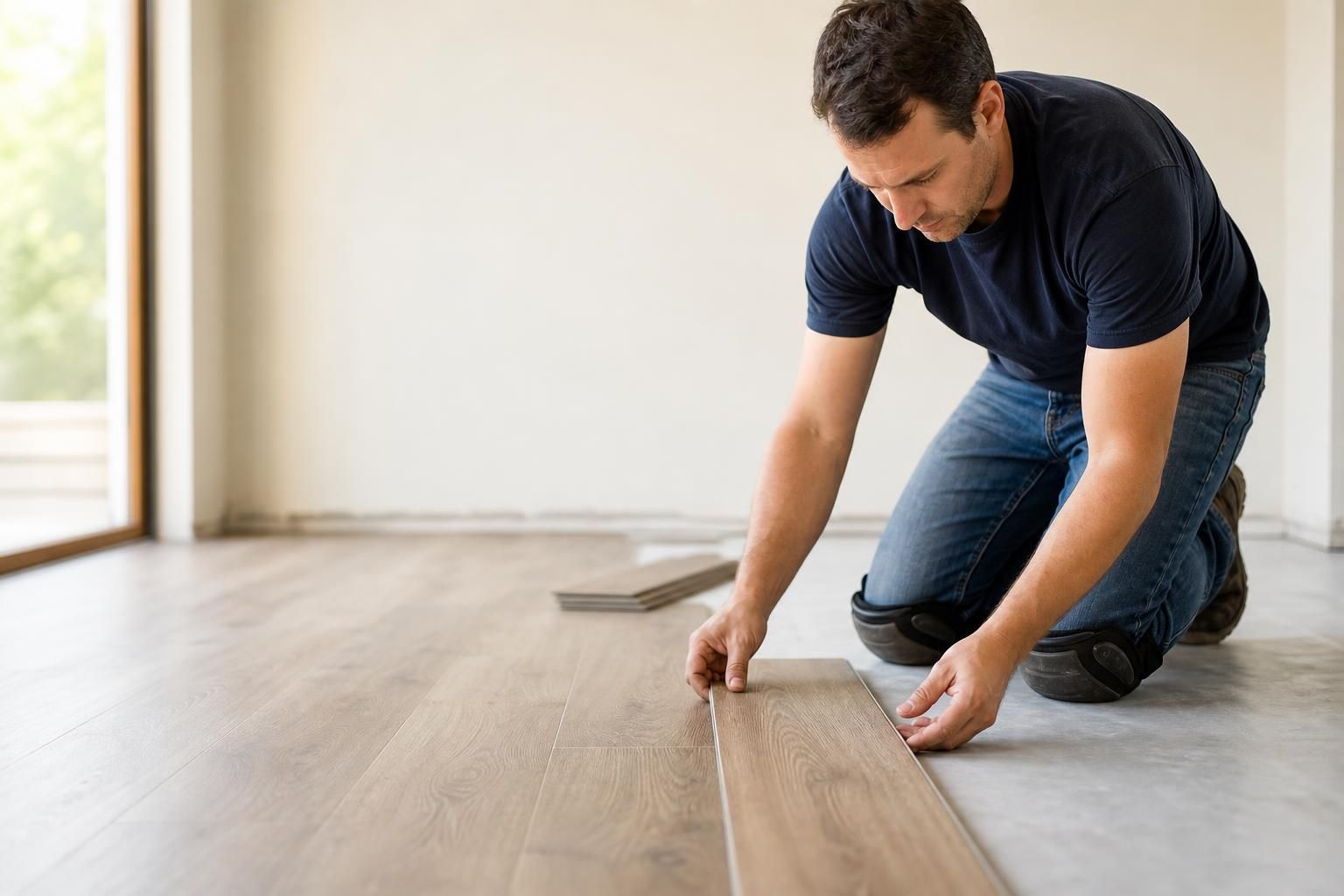
Click-lock luxury vinyl plank is designed for floating installation, which is why it's the most DIY-friendly flooring category on the market. You don't glue it down or nail it — planks snap together and float over the subfloor, usually with a thin foam or attached underlayment pad. The core tools are a utility knife or vinyl cutter, a rubber mallet, spacers for the expansion gap, and a straightedge.
The part DIYers underestimate isn't the clicking-together — it's subfloor prep. Vinyl plank is unforgiving of an uneven base; most manufacturers specify flatness tolerances around 3/16 inch over a 10-foot span, and gaps or humps beyond that will telegraph through the planks or cause locking joints to pop apart over time. If you're pulling out old flooring first, knowing how to remove old flooring before installing vinyl plank correctly prevents a lot of these prep headaches before they start.
When Hiring a Contractor Pays Off
A contractor earns their fee in the parts of the job that aren't visible in the finished floor: moisture testing concrete slabs, leveling compound where needed, cutting clean transitions around cabinets and door jambs, and squaring the first row so the pattern doesn't drift across a large room. On Oahu, where many homes and condos sit on concrete slabs, moisture readings matter more than they do on mainland wood-frame construction — a slab that tests too wet can trap moisture under certain vinyl products and void the warranty.
Installation labor from $8/sq ft, including demo of old flooring, leveling (incl. self-leveling material), and baseboard, covers standard floating-floor installation; glue-down applications and stair nosing may be priced separately because the scope varies by job. If you're demoing existing flooring as part of the project, H&W Flooring's installation rate already includes demo, which is often cheaper than renting a dumpster and doing it yourself when you factor in disposal fees and truck time.
Where DIY Gets Risky: Wet Areas and Condos
Bathrooms, laundry closets, and lanai transitions are where amateur installs fail first. Vinyl plank itself is waterproof, but the floor assembly around it — thresholds, toilet flanges, shower curbs — isn't automatically waterproof just because the plank is. Without proper sealing at penetrations and transitions, water can still migrate underneath the floor and sit against the subfloor or, in a condo, potentially affect the unit below.
Condo installs carry an extra layer of complexity: many Oahu associations have sound-transmission or underlayment requirements written into the house rules, and some buildings require proof of insurance before a contractor can work in common-area elevators or hallways. If you're planning a unit remodel, it's worth reviewing what to look for in vinyl plank flooring for Oahu condos before you buy material, since not every product satisfies every building's rules.
A Simple Way to Decide
Use this rough framework before you commit to either path:
- Under 300 sq ft, flat subfloor, no wet areas: DIY is reasonable if you're comfortable with basic tools and have a weekend to spare.
- Concrete slab with visible unevenness or past water issues: hire a pro for moisture testing and leveling.
- Any bathroom, laundry room, or wet area: hire a pro familiar with waterproofing details at thresholds and fixtures.
- Whole-home or multi-room project: a pro crew finishes in days what a DIYer might spend weeks on, and consistent seams across large areas are harder to achieve solo.
- Rental property or condo with resale in mind: professional installation protects warranty coverage, which matters more when you're not living with the result day to day.
If your project spans multiple rooms with different flooring needs, it also helps to understand how vinyl plank flooring transitions between rooms, since mismatched heights at doorways are one of the most common DIY mistakes.
Climate and Material Considerations Specific to Hawaii
Hawaii's humidity doesn't threaten vinyl plank the way it threatens solid hardwood, but it does affect acclimation time and installation technique. The Environmental Protection Agency notes that indoor relative humidity above roughly 50-60% creates conditions favorable to mold growth, which is one reason trapped moisture under a floating floor is a real concern in island homes, not just a mainland manufacturer's boilerplate warning. Letting planks sit in the room for the manufacturer-recommended acclimation period before installing — whether you DIY or hire out — reduces the chance of gaps or buckling later. For general product standards, the Resilient Floor Covering Institute publishes installation guidelines manufacturers reference for floating floor systems.
Frequently Asked Questions
Q: Is vinyl plank flooring really a good DIY project for beginners?
Yes, for a single flat room without major subfloor issues — click-lock systems don't require glue or nails and the learning curve is manageable in a weekend. Larger rooms, concrete slabs, or wet areas raise the difficulty and risk significantly.
Q: How much does professional vinyl plank installation cost compared to DIY?
Professional installation at H&W Flooring is from $8 per square foot, including demo of old flooring, leveling (incl. self-leveling material), and baseboard, while DIY mainly costs the material plus tools you may need to buy or rent. The gap narrows once you factor in a DIYer's time, mistakes, and potential subfloor prep that a contractor would catch upfront.
Q: Can I install vinyl plank flooring over old tile or linoleum myself?
Often yes, as long as the existing floor is flat, well-bonded, and not visibly damaged, since vinyl plank can float over many hard surfaces. If the old flooring is cracked, uneven, or you're unsure what's underneath, removing it first is safer and is worth researching before you start.
Q: Do bathrooms need a different installation approach than other rooms?
Yes — the plank itself is waterproof, but thresholds, toilet flanges, and wall-floor joints need proper sealing to keep water from getting underneath the floor. This is one of the areas where hiring an experienced installer makes the biggest practical difference.
Q: Will a DIY install void the flooring's warranty?
It depends on the manufacturer, but many warranties specify subfloor flatness, moisture limits, and acclimation requirements that a DIYer who skips them can unknowingly violate. Reading the installation instructions before you start — not after a problem appears — is the only way to know you're staying within warranty terms.