Is Vinyl Plank Flooring Worth It?
Key takeaway
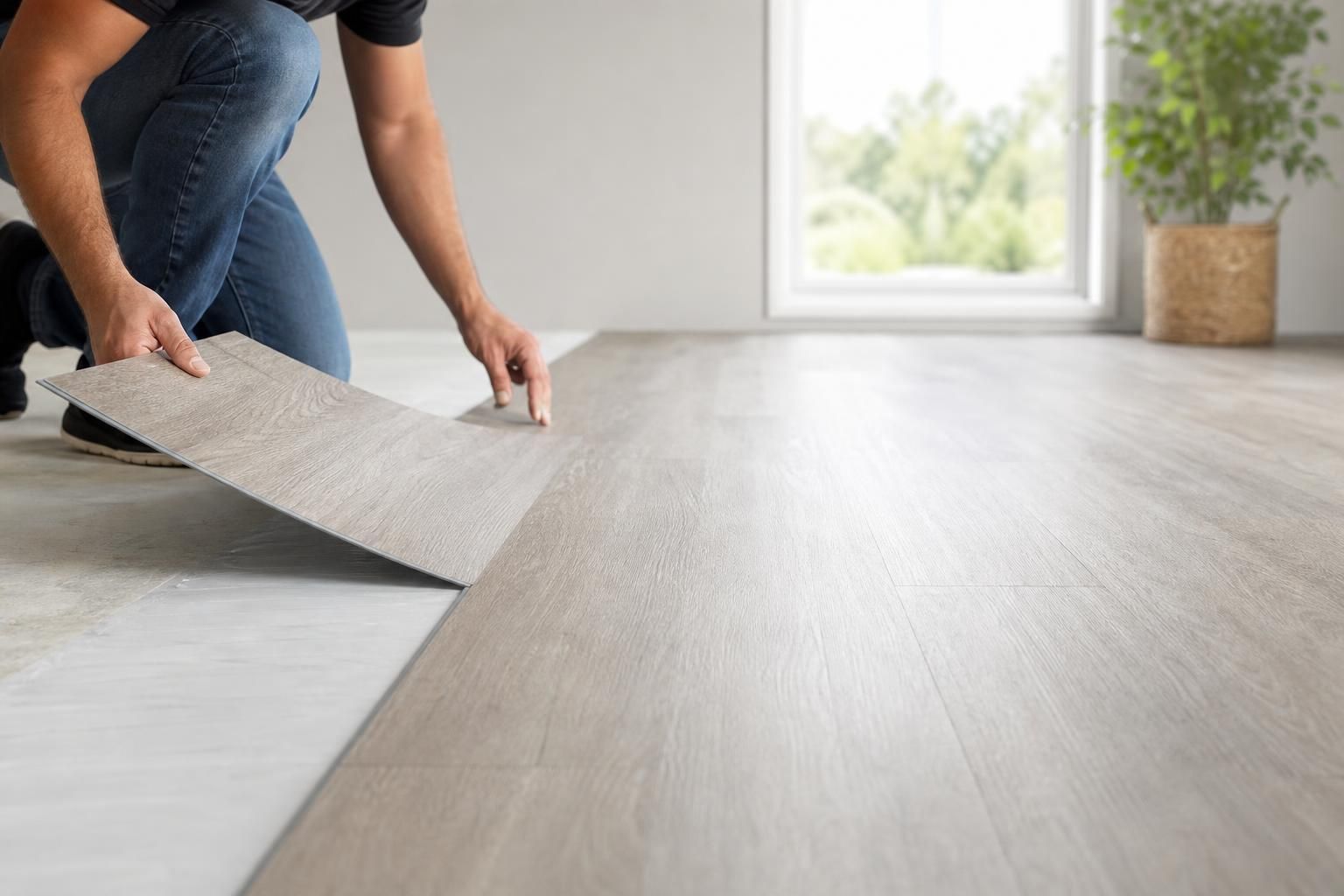
For most Oʻahu homes, yes — waterproof vinyl plank flooring is worth it because it costs less than hardwood or tile installed, resists humidity and salt-air moisture better than wood, and holds up to pets, sand, and foot traffic without the refinishing costs of other floors. It isn't the right call for every room (a formal entry that will never see water may still suit real hardwood), but for kitchens, bathrooms, rentals, and whole-condo remodels in a tropical climate, it's generally the more practical long-term choice.
Key takeaways
- Retail luxury vinyl plank runs about $2.79 per square foot, with installation from $8 per square foot, including demo of old flooring, leveling (incl. self-leveling material), and baseboard — so a materials-plus-labor budget is easy to estimate before you commit.
- Waterproof cores (especially SPC rigid core) make vinyl plank far more tolerant of Hawaii's humidity and the occasional wet-area leak than solid hardwood or laminate.
- The "worth it" math changes if you're gutting a room — demo of old flooring is included in H&W Flooring's installation rate, so it doesn't add a separate cost.
What vinyl plank actually costs in Hawaii
The honest answer to "is it worth it" starts with real numbers, not national averages that don't apply to an island market. H&W Flooring publishes retail luxury vinyl plank at $2.79 per square foot, with installation from $8 per square foot, including demo of old flooring, leveling (incl. self-leveling material), and baseboard — figures that don't move depending on who's asking or how the conversation goes. Contractors buying in volume see tiered wholesale pricing instead, stepping down from $2.79 to $2.59 and $2.39 per square foot as order size crosses $5,000, $15,000, $100,000, and $200,000 thresholds.
Demo of existing flooring, when you're replacing something rather than installing over bare subfloor, is included in the installation rate. That's worth budgeting for up front rather than discovering it as a surprise line item mid-project, since removing old tile or glued-down flooring is its own job before new material goes down.
Durability: how it holds up in a humid, sandy climate
Vinyl plank's core selling point is what it's made of. Waterproof vinyl plank — particularly SPC (stone plastic composite) rigid core — uses a dense limestone-and-polymer core that doesn't swell, cup, or delaminate when it gets wet, unlike solid hardwood or many laminates. If you want the layer-by-layer breakdown of wear layer, core, and backing, this guide to what vinyl plank flooring is made of covers the construction in detail.
That construction matters more in Hawaii than almost anywhere else in the continental U.S. Indoor humidity here regularly sits in a range that causes wood flooring to expand and contract seasonally, and the EPA's guidance on indoor moisture notes that persistent moisture and humidity are the primary drivers of mold growth in homes — a real concern for solid wood floors near windows, lanais, or bathrooms. Vinyl plank's sealed, waterproof surface doesn't give mold the organic material or moisture pathway it needs to take hold the way wood or wood-look laminate can.
Wear layer thickness is the other durability variable, and it's not uniform across the category — a thin promotional-grade plank and a commercial-grade plank can look identical in a showroom photo but perform very differently under furniture and foot traffic. The differences in vinyl plank flooring grades explain why two products at a similar price point can age completely differently in a busy household.
Where it beats — and doesn't beat — other flooring
Vinyl plank earns its reputation in wet and high-traffic areas, but it's not automatically the best choice everywhere in a home.
- Bathrooms and laundry rooms: waterproof cores handle incidental splashing and spills well, though the perimeter seal and underlying waterproofing at walls and drains still matter more than the plank itself.
- Kitchens and entries: dense cores resist dropped pans, sand, and grit far better than laminate's printed wear layer.
- Lānai-adjacent rooms: indoor vinyl plank is not rated for direct sun and weather exposure the way exterior decking is — whether vinyl plank can go outdoors in Hawaii is a separate question with a different answer.
- Formal living areas with no moisture exposure: solid hardwood can still make sense here if long-term refinishing cost isn't a concern.
Industry standards bodies like ASTM International publish test methods for flooring wear resistance and static load, which is part of why "vinyl plank" isn't one product — grade and construction determine whether a floor is worth it for a specific room, not the category name alone.
Installed cost vs. DIY cost
Part of "is it worth it" is whether you install it yourself. Vinyl plank's click-lock systems make it one of the more DIY-friendly floors on the market, which is why many homeowners do take it on themselves for a single room. But acclimation time, subfloor flatness, and cut precision around transitions all affect how a floor performs over years, not just how it looks on install day — details covered in how to acclimate vinyl plank flooring before installing it.
Whether professional installation is worth the from-$8-per-square-foot rate depends on the scope. A straightforward single room with square walls is a reasonable DIY candidate. A whole condo with multiple room transitions, stairs, or wet-area waterproofing is where comparing DIY against hiring a contractor for vinyl plank flooring tends to tip toward professional installation, since redoing a bad DIY job costs more than doing it right once.
Maintenance and long-term cost of ownership
Vinyl plank's lower maintenance burden is where a lot of its long-term value shows up. It doesn't need refinishing, waxing, or periodic resealing the way hardwood or natural stone does — routine cleaning with manufacturer-approved products is generally sufficient. In salt-air coastal homes, that matters more than the sticker price, since hardwood near an open lānai or beach-facing window can need refinishing far sooner than it would inland. The U.S. Department of Housing and Urban Development has noted humidity and coastal exposure as factors that shorten the service life of some flooring materials, which lines up with why waterproof cores are the dominant choice in island homes rather than an upsell.
Frequently Asked Questions
Q: Is vinyl plank flooring worth it compared to hardwood?
For wet areas, high humidity, and busy households, yes — waterproof vinyl plank typically costs less installed than hardwood and resists moisture damage that causes hardwood to cup or warp. Hardwood can still make sense in low-moisture formal spaces where refinishing is an acceptable long-term cost.
Q: Does vinyl plank flooring lower a home's resale value?
Vinyl plank is widely accepted by buyers as a durable, low-maintenance flooring choice, especially in kitchens and bathrooms, and is not generally viewed as a downgrade compared to laminate. Grade and installation quality matter more to resale perception than the material category itself.
Q: How long does vinyl plank flooring actually last?
Lifespan depends heavily on wear layer thickness and foot traffic, with commercial-grade products built to outlast promotional-grade ones by a wide margin. Choosing the right grade for the room's traffic level matters more than the "vinyl plank" label alone.
Q: Is SPC vinyl plank worth paying more for than standard vinyl plank?
SPC's rigid limestone-composite core resists dents, temperature swings, and subfloor imperfections better than flexible vinyl plank, which matters in rooms with uneven concrete slabs common in older Hawaii homes. It's generally worth the difference in kitchens, entries, and any room with in-floor heating or cooling considerations.
Q: What's the real cost difference between buying vinyl plank retail versus wholesale?
Retail luxury vinyl plank is priced at $2.79 per square foot, while licensed contractors buying in volume move through wholesale tiers of $2.79, $2.59, and $2.39 per square foot as order size increases. The wholesale tiers require a verifiable Hawaii contractor license, not just project size.