Can Vinyl Plank Flooring Be Installed Over Plywood?
Key takeaway
Yes, vinyl plank flooring — including rigid SPC core products — can be installed directly over plywood as long as the plywood is a sound, smooth, exterior-grade or sanded-face sheet, properly fastened with no gaps or squeaks, and checked for moisture before installation. Plywood is actually one of the more forgiving subfloors for vinyl plank because it's dimensionally stable and accepts fasteners or adhesive well. The main failure points are unfilled seams, soft or delaminated spots, and skipping the moisture check in humid island conditions.
Key takeaways
- Use 3/4-inch, sanded, exterior-grade (exposure-rated) plywood in good condition — not interior-grade or particleboard.
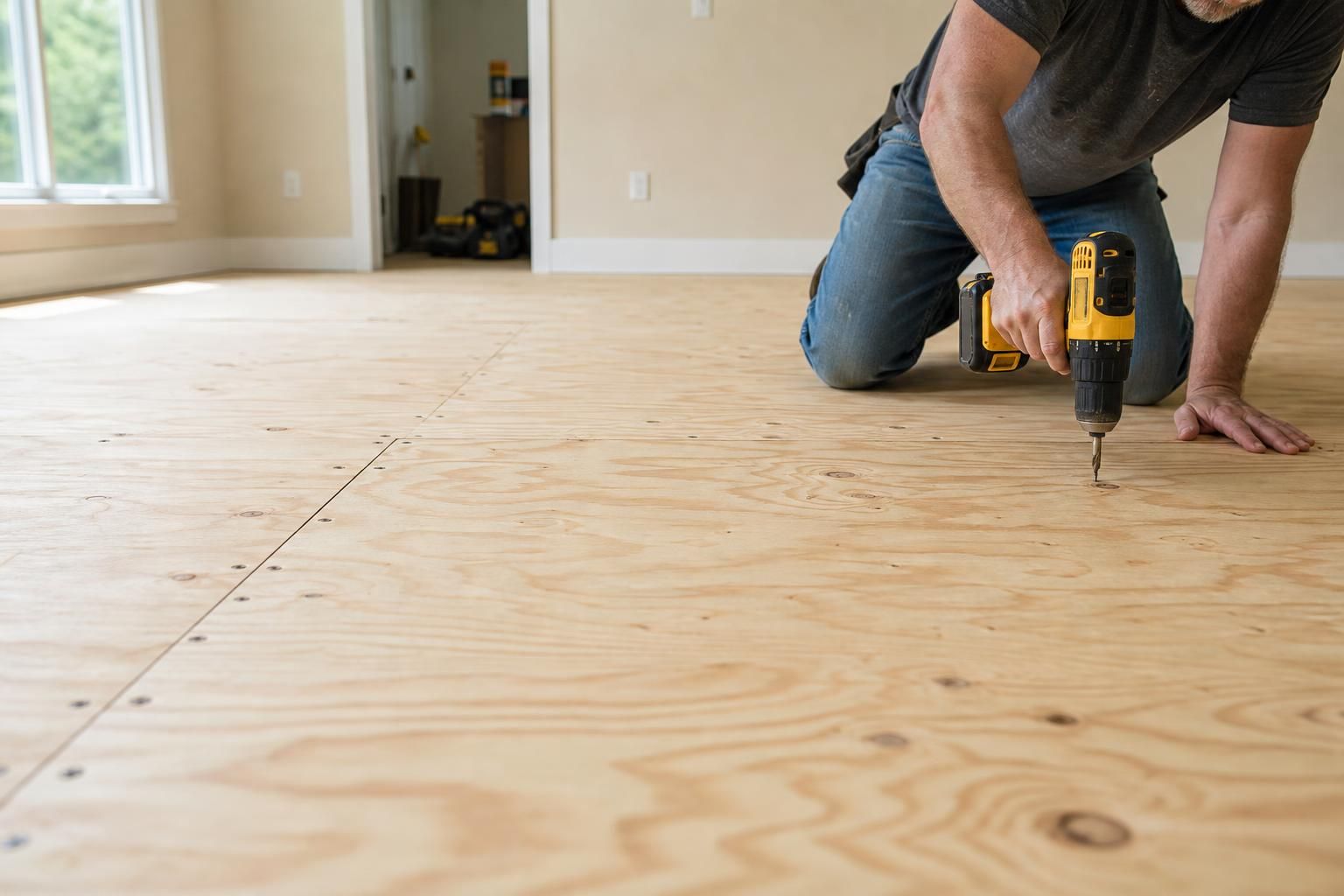
- Fill seams and gaps larger than 1/8 inch, sand high spots, and re-fasten any squeaky areas before the first plank goes down.
- Check subfloor moisture and let plywood acclimate; Hawaii's humidity makes this step more important than it would be on the mainland.
What Kind of Plywood Works Under Vinyl Plank
Not all plywood is equal. Exterior-grade or "exposure 1" plywood, at least 3/4-inch thick and with a sanded face, is the standard recommendation because it resists delamination from occasional moisture exposure better than interior-grade sheets. APA – The Engineered Wood Association publishes grading standards that distinguish exterior and exposure-rated panels from interior-only ones, which is the spec worth checking before you buy subfloor material. Particleboard and OSB are sometimes acceptable depending on the vinyl manufacturer's warranty terms, but plywood is generally the safer, more predictable base, especially in older Oahu homes where the original subfloor was never meant to carry a floating floor.
Subfloor Prep Steps Before Installation
Vinyl plank is unforgiving of an uneven subfloor — bumps and ridges telegraph through thin, flexible planks over time. Before installation:
- Inspect every sheet for soft spots, delamination, or water staining and replace any that fail a firm-press test.
- Re-screw or re-nail loose panels to the joists to eliminate squeaks and flex.
- Fill seams, gouges, and gaps wider than 1/8 inch with a flooring-grade patch compound.
- Sand down any raised seams or high spots so the surface is flat within the vinyl manufacturer's tolerance.
- Sweep and vacuum thoroughly — even small debris under rigid-core vinyl plank can telegraph as a visible bump.
If the existing floor already has water damage from a prior leak or flood, it needs to be addressed before new flooring goes down rather than covered up; our guide on repairing water-damaged vinyl plank flooring covers how to tell if damage has reached the subfloor itself.
Moisture Is the Real Variable in Hawaii
Plywood itself handles vinyl plank well, but moisture trapped underneath it is the most common cause of later problems — cupping, adhesive failure, or odor. Oahu's year-round humidity means subfloor moisture content and ambient humidity deserve more attention here than in drier climates; NOAA's National Weather Service data for Honolulu consistently shows relative humidity well above mainland averages most months, which is part of why acclimating flooring materials on-site before installation matters. A moisture meter reading on the plywood, plus a few days of acclimation for the vinyl planks in the room they'll be installed in, is standard practice before any crew starts laying flooring over plywood in a humid environment.
Thickness, Underlayment, and SPC Considerations
Rigid SPC vinyl plank has enough internal stability to bridge very minor subfloor imperfections, but it still needs a flat surface and benefits from a thin foam or cork underlayment for sound dampening and slight cushioning — check whether the product you're buying already has an attached pad, since doubling up isn't usually necessary. If you're unsure which grade or core type suits a plywood subfloor versus a slab, the differences between wear layers and core constructions are broken down in our guide to vinyl plank flooring grades, and the underlying material composition is explained further in what vinyl plank flooring is made of.
What It Costs to Install Vinyl Plank Over Plywood
For homeowners buying at retail, H&W Flooring sells in-stock waterproof vinyl plank at $2.79 per square foot, with installation from $8 per square foot, including demo of old flooring, leveling (incl. self-leveling material), and baseboard — leveling (including self-leveling material) is part of that rate. If the plywood is sitting under old flooring that has to come out first, demo is included in the installation rate. Licensed contractors buying in volume pay tiered wholesale pricing instead: $2.79/sq ft under $5,000, $2.59/sq ft from $5,000–$15,000, and $2.39/sq ft above $15,000, scaling further at the $100,000 and $200,000 volume thresholds. Contractors sourcing plywood-compatible vinyl plank for multiple units or spec homes can review how wholesale pricing works on Oahu before placing a bulk order.
Frequently Asked Questions
Q: Do I need to remove old flooring to get down to the plywood first?
Only if the existing floor is failing, uneven, or incompatible — many vinyl plank products can go over a single layer of sound existing flooring. If removal is needed, demo and haul-away is typically priced by the square foot rather than estimated as a flat fee.
Q: Can I install vinyl plank over plywood in a bathroom or wet area?
Yes, but the plywood needs to be in good condition with properly sealed seams at penetrations like toilet flanges and drains, since vinyl plank is water-resistant on the surface but seams and edges still need attention in wet areas.
Q: How do I know if my plywood subfloor is too uneven for vinyl plank?
Most vinyl plank manufacturers specify a flatness tolerance, often around 3/16 inch over a 10-foot span; a straightedge laid across the floor will reveal gaps or high spots beyond that range that need sanding or patching first.
Q: Is OSB an acceptable substitute for plywood under vinyl plank?
OSB is sometimes acceptable depending on the specific vinyl product's installation guidelines, but it tends to swell more at cut edges when exposed to moisture, which makes plywood the more predictable choice in humid climates.
Q: Does installing over plywood instead of concrete change the installation cost?
It can, since plywood subfloors sometimes need more seam-filling and fastening work than a slab, but the published installation rate is still from $8 per square foot, including demo of old flooring, leveling (incl. self-leveling material), and baseboard, regardless of subfloor type.