How Do I Repair Water Damaged Vinyl Plank Flooring?
Key takeaway
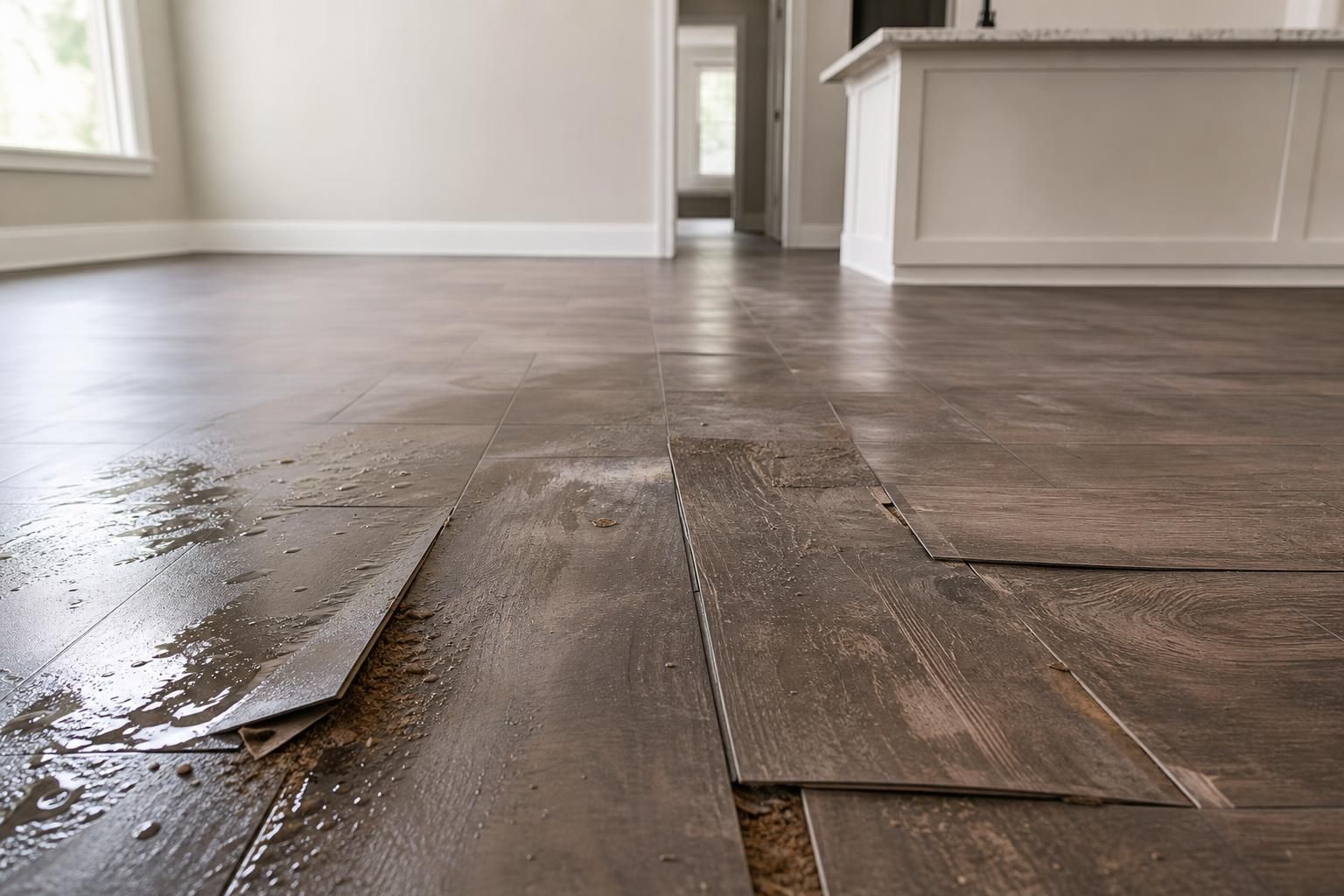
Repairing water damaged vinyl plank flooring means drying the area within 24-48 hours, inspecting for swelling or delamination at the seams, and replacing only the affected planks rather than the whole floor — vinyl plank is engineered to be repaired plank-by-plank because it floats or clicks together instead of being glued down as one sheet. If the subfloor underneath has absorbed water, that layer needs to dry completely before new planks go back in, or the damage will recur.
Key takeaways
- Pull baseboards and fans within the first day to dry the subfloor, not just the surface, before replacing anything.
- Swollen, cupped, or separated planks rarely flatten back out — plan to replace them individually rather than wait and see.
- Keep a few leftover planks from the original installation; matching a discontinued color later is the hardest part of this repair.
How to tell if vinyl plank flooring actually has water damage
Waterproof vinyl plank resists moisture better than laminate or hardwood, but "waterproof" describes the plank itself, not the seams, the underlayment, or the subfloor beneath it. Signs of real damage include planks that have lifted or peaked along the edges, a soft or spongy feel underfoot, a musty smell that doesn't go away after airing out the room, or discoloration bleeding through the wear layer. If you're not sure whether what you're seeing is water damage or routine wear, it's worth comparing against the surface scuffs covered in this guide to fixing a scratched vinyl plank floor, since scratches and water damage call for different fixes.
A moisture meter reading on the subfloor is the most reliable way to confirm standing moisture rather than guessing from how the floor looks. The EPA's mold and moisture guidance notes that materials should be dried within 24 to 48 hours of getting wet to limit mold growth, which is the same window that matters for vinyl plank underlayment and subfloors.
Step-by-step repair process
- Stop the water source first. A repair done while a leak is still active will fail again within weeks.
- Remove standing water and dry the area. Use fans and a dehumidifier aimed at the floor, not just the room, for at least 24-48 hours.
- Pull up the affected planks. Click-lock planks near a wall or doorway can usually be unzipped row by row without damaging the rest of the floor.
- Inspect and dry the subfloor. Plywood or concrete underneath needs to read dry on a moisture meter before anything new goes down over it.
- Check for mold on the underlayment or subfloor. Visible mold should be cleaned or the material replaced before reinstalling flooring.
- Replace only the damaged planks. Install new matching planks and click them back into the existing field.
- Reset baseboards and transitions. These hide the edges of the repair and also help seal the perimeter against future spills.
When replacement is unavoidable
Planks that have cupped (edges turning up) or crowned (center bulging) have usually absorbed moisture into the core and won't lie flat again once dried — reinstalling them flat is not realistic, even with weight or heat. SPC rigid-core vinyl plank resists this kind of warping better than standard flexible vinyl plank because the stone-composite core doesn't swell the way a foam or felt-backed product can, which is part of why SPC has become the default choice for wet areas and ground-floor units on Oʻahu. If you're sourcing replacement planks to match an existing floor, checking stock before ordering matters — a supplier that keeps product in stock locally, like the options listed in this rundown of wholesale vinyl plank sources on Oahu, can get you matching planks the same day instead of waiting on a mainland shipment.
What happens if the subfloor itself was damaged
Plywood subfloor that's been wet for more than a day or two can delaminate, soften, or start to smell even after the surface dries. Concrete slabs don't rot, but they can trap moisture that later shows up as efflorescence (a white mineral residue) or an ongoing musty smell under new flooring if it's covered before it's fully dry. The CDC's guidance on mold and moisture points out that hidden moisture behind or under finished surfaces is one of the most common reasons mold problems recur after a visible repair looks finished — which is why checking the subfloor, not just the plank, is the step people skip.
Preventing repeat damage in wet areas
Bathrooms, laundry rooms, and lanai-adjacent rooms are where water damage shows up again and again, usually at the same seam or threshold. Waterproofing the transition at tub surrounds, shower pans, and exterior doors before flooring goes back down addresses the actual entry point instead of just the symptom. For homes near the ocean or with frequent humidity swings, this guide on maintaining vinyl plank flooring in a beach house covers the maintenance habits that keep seams sealed between repairs.
DIY repair vs. calling a professional
Replacing a handful of planks in a dry, accessible area is a reasonable DIY project for someone comfortable with basic tools and a utility knife. It stops being a weekend project when the water came from a slab leak, when more than a room's worth of flooring is affected, or when mold is visible on the subfloor — at that point the moisture needs professional drying equipment and testing before any new flooring goes down, and the work often overlaps with general water-damage remediation rather than flooring alone.
Frequently Asked Questions
Q: Can water damaged vinyl plank flooring be dried out and reused?
Individual planks that are only wet on the surface and haven't cupped or delaminated can sometimes be dried and reinstalled. Once a plank has visibly warped or separated at the seams, it has usually absorbed moisture into the core and needs to be replaced instead.
Q: How long does it take for water to damage vinyl plank flooring?
Standing water can start affecting seams and the subfloor within 24 to 48 hours, which is the same window health agencies cite for mold risk after any material gets wet. Waterproof vinyl plank resists surface damage longer than laminate, but prolonged standing water will still find its way to seams and edges.
Q: Do I need to replace the whole floor if only one area has water damage?
No — click-lock vinyl plank is designed to be repaired section by section, so only the affected planks need to come up. The challenge is usually finding matching planks if the original style has been discontinued, which is why keeping a box of leftovers from the original install is worth the storage space.
Q: What's underneath the vinyl plank that could also need repair?
Plywood subfloor, concrete slab, or an underlayment pad can all hold moisture even after the visible flooring looks dry. A moisture meter reading on the subfloor, not just a visual check, is the only reliable way to confirm it's ready for new flooring.
Q: Is SPC vinyl plank more resistant to water damage than standard vinyl plank?
Yes — SPC's stone-composite core holds its shape better than standard flexible vinyl plank when exposed to moisture, which is why it's commonly recommended for bathrooms, laundry rooms, and ground-floor units in humid climates.