How Do I Maintain Vinyl Plank Flooring in a Beach House?
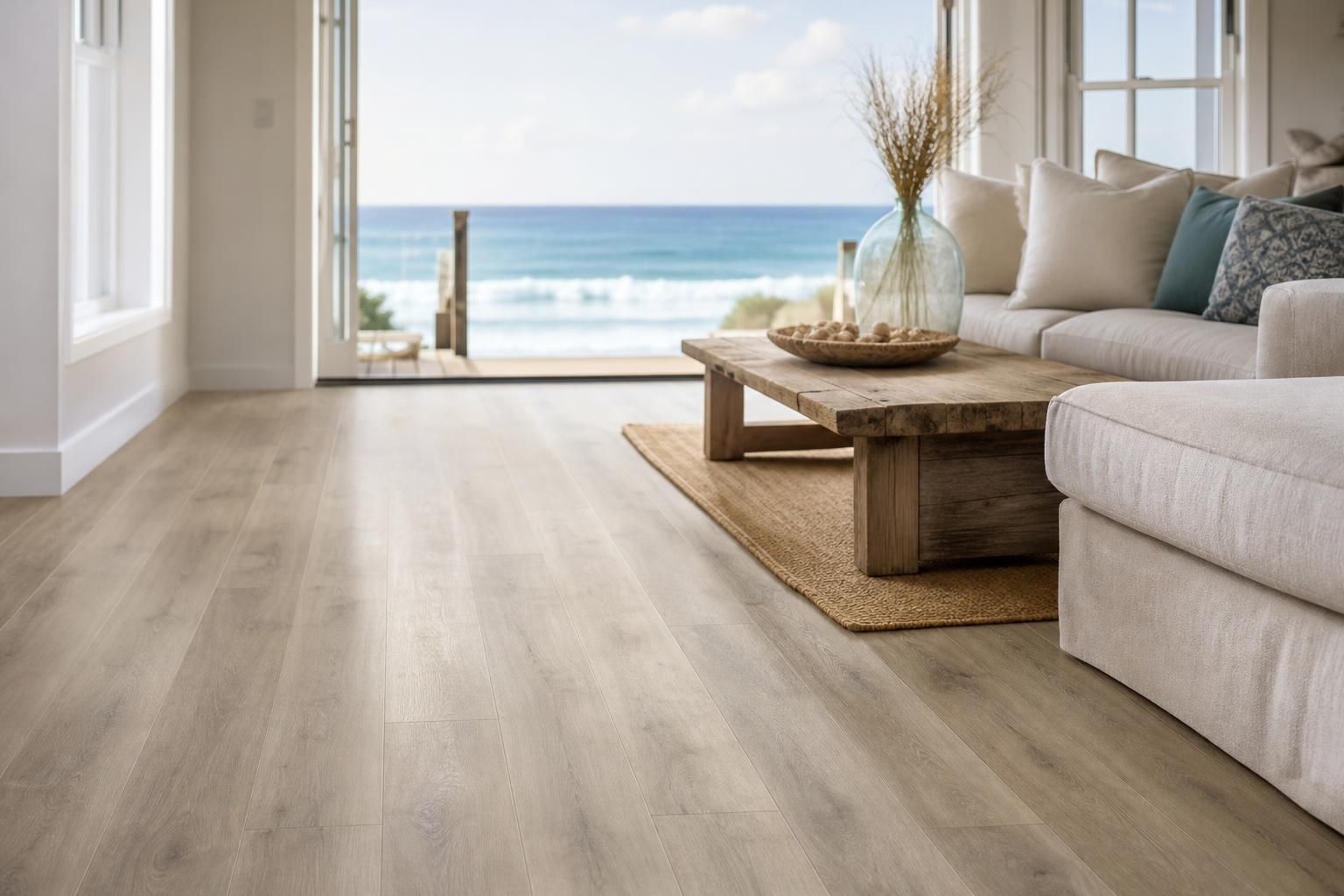
Key takeaway
Waterproof vinyl plank handles beach-house conditions better than almost any other flooring, but it still needs regular sand and grit removal, a damp (not soaked) mop with a pH-neutral cleaner, and attention to humidity so moisture doesn't get trapped underneath or around edges. The core is waterproof, but standing salt water, gritty sand, and constant high humidity can still dull the wear layer, stain grout lines in tile transitions, or stress seams over time. Treat it like a durable surface that still benefits from routine care, not a floor you can ignore.
Key takeaways
- Sweep or vacuum sand and salt grit daily in high-traffic beach-access rooms — grit acts like sandpaper on the wear layer.
- Use a damp mop with a pH-neutral cleaner; avoid steam mops, wax, and oil-based soaps, which can cloud the finish or affect click-lock seams.
- Keep indoor humidity in a reasonable range and wipe up standing water promptly, especially near sliders, lanais, and pet or shower areas.
Why beach houses are tougher on flooring than inland homes
Coastal homes deal with three things an inland house rarely sees at the same intensity: airborne salt, fine sand, and sustained high humidity from open windows and lanai doors. Salt residue left on a floor can dry into a slightly abrasive film, and sand tracked in on feet or towels behaves like grit paper under furniture legs and foot traffic. None of this damages a quality waterproof vinyl plank's core, which is built to resist water intrusion, but it does accelerate wear on the top finish layer if it's not managed. Oʻahu's year-round humidity adds another layer — vinyl plank is a strong choice specifically because it resists the swelling and cupping that solid hardwood suffers in humid, high-moisture climates, but "water-resistant structure" doesn't mean the surface never needs cleaning.
Daily and weekly cleaning that actually matters
Most beach-house flooring problems come down to grit, not water. A simple routine handles the bulk of it:
- Daily: Sweep or dry-vacuum entryways, lanai thresholds, and bedroom doorways where sand collects. Use a vacuum with a bare-floor or hard-floor setting — beater bars designed for carpet can scuff the finish.
- Weekly: Damp-mop with a manufacturer-approved, pH-neutral vinyl floor cleaner diluted per label directions. Avoid vinegar-and-water mixes; repeated use of acidic solutions can dull the protective finish over years.
- As needed: Wipe salt spray or ocean-water tracks immediately rather than letting them dry into a film on the surface.
Never use a steam mop. The heat and pressure can force moisture into seams and edges, and most vinyl plank warranties specifically exclude steam-cleaning damage.
Managing humidity and trapped moisture
Vinyl plank's water resistance is about the plank itself, not the subfloor or the air in the room. Chronic high indoor humidity can still encourage mold or mildew to grow on baseboards, behind furniture, or in corners where airflow is poor — a well-documented concern in any damp indoor environment, according to the U.S. Environmental Protection Agency's mold guidance. Running a dehumidifier or air conditioning during the muggiest stretches, and keeping lanai doors from staying open for hours in heavy humidity, helps protect baseboards, trim, and any adjoining carpet or wood flooring even though the vinyl plank itself is largely unaffected. If the home was installed with proper acclimation before the floor went down — a step covered in how to acclimate vinyl plank before installation — thermal movement issues tend to be minimal even with Oʻahu's swings between a dry season and wetter months.
Protecting seams, edges, and transitions
Click-lock seams and transition strips between rooms are the most vulnerable points for water or sand to work into over time, especially near sliding glass doors that open directly onto a lanai or pool deck. Standing water left along a seam for extended periods — not a quick splash, but water sitting for hours — can eventually seep below the surface layer. Wipe spills promptly and check transition strips near exterior doors periodically to confirm they're still seated tightly. If you're planning a room-to-room transition near a wet-prone entry, it's worth reviewing how vinyl plank transitions between rooms before installation so the detailing matches how the space actually gets used. Glue-down installations generally resist edge lifting near high-moisture zones better than floating click-lock floors in extreme cases; the tradeoffs are covered in click-lock versus glue-down vinyl plank.
Furniture, sand chairs, and outdoor gear
Beach gear is often the real culprit behind scuffs. Sand-crusted chair legs, coolers dragged across the floor, and wet beach bags set directly on vinyl plank all contribute to premature wear. A few habits prevent most of it:
- Use felt or rubber furniture pads under chair and table legs, and check them periodically — sand can embed in felt pads and turn them into sandpaper.
- Keep a boot tray or mat at the lanai door for wet gear instead of setting it on the floor.
- Rinse sand off pet paws before they come inside if the household includes dogs that run on the beach.
What salt and sand won't do to a quality waterproof floor
It's worth being specific about what a true waterproof vinyl plank — particularly SPC rigid core — actually resists versus what it doesn't. The rigid core and waterproof wear layer prevent water from swelling or warping the plank the way it would damage solid hardwood or laminate with a wood-fiber core. What it won't prevent is surface-level wear from grit acting like an abrasive, or cosmetic dulling if harsh cleaners strip the finish's UV and scratch coating. Coastal exposure data from agencies like NOAA consistently shows that salt air accelerates wear on unprotected surfaces generally, which is part of why cleaning routine matters more in a beach house than it would ten miles inland.
Frequently Asked Questions
Q: Can I mop vinyl plank flooring with vinegar in a beach house?
Occasional diluted vinegar is generally fine, but repeated use as a regular cleaner can dull the finish over time. A pH-neutral vinyl-specific cleaner used weekly is the safer long-term choice.
Q: Does salt air damage waterproof vinyl plank flooring?
Salt air itself doesn't penetrate the waterproof core, but dried salt residue acts like fine grit underfoot and on furniture legs, which can scratch the surface finish if it isn't swept or wiped up regularly.
Q: Is a steam mop safe for vinyl plank in a humid coastal home?
No. Steam mops push heat and moisture into seams and edges, which can affect adhesive bonds in glue-down floors and stress click-lock joints, and most manufacturer warranties exclude steam-cleaning damage.
Q: How often should I clean vinyl plank floors near a lanai or beach entrance?
Daily sweeping or vacuuming at entry points is reasonable for a beach house, since sand accumulates faster there than almost anywhere else in the home, with a full damp-mop weekly.
Q: Will high humidity cause vinyl plank flooring to warp?
Quality waterproof vinyl plank resists the swelling and cupping that affects solid hardwood in humid climates, though proper acclimation before installation and reasonable indoor humidity control still help long-term stability.