Vinyl Plank vs. Vinyl Sheet Flooring: What's the Difference?
Key takeaway
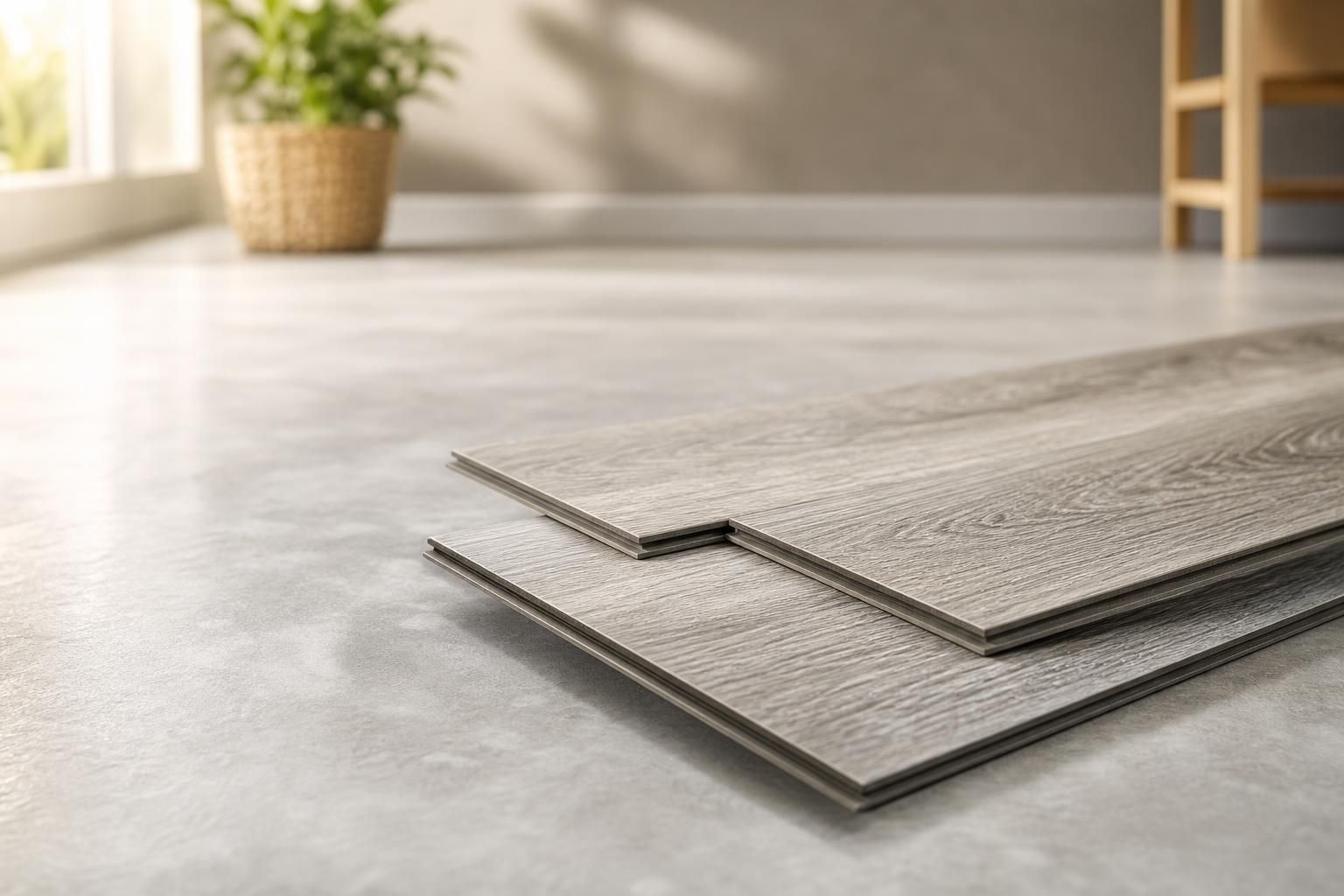
Vinyl plank flooring is made of rigid, interlocking planks (often with an SPC or WPC core) that click together like a puzzle and mimic the look of individual hardwood boards, while vinyl sheet flooring comes in large rolls that are cut and glued or loose-laid in one continuous piece per room. Plank is easier for a homeowner to install or repair one piece at a time; sheet has fewer seams, which matters in rooms that flood often. The right choice depends on room size, moisture exposure, and whether you want a DIY-friendly product or a seamless surface for a bathroom or laundry.
Key takeaways
- Vinyl plank installs in individual pieces (click-lock or glue-down); vinyl sheet is one continuous roll with few or no seams.
- Sheet vinyl resists water intrusion better at the surface because it has fewer joints, but a properly installed waterproof vinyl plank performs just as well in wet areas.
- Retail luxury vinyl plank runs $2.79 per square foot at H&W Flooring, with installation from $8 per square foot, including demo of old flooring, leveling (incl. self-leveling material), and baseboard — sheet vinyl pricing is typically quoted by the roll rather than a flat per-square-foot rate.
How Each Product Is Built
Vinyl plank is a layered product: a backing layer, a rigid or semi-rigid core (SPC, standing for stone plastic composite, or WPC, a wood plastic composite), a printed vinyl design layer, and a clear wear layer on top. Because the core is rigid, planks can span small subfloor imperfections without telegraphing them to the surface. Vinyl sheet, by contrast, is a flexible, homogeneous or layered material manufactured in wide rolls — usually 6 or 12 feet — with the pattern printed or inlaid through the material and a thinner protective wear layer. The flexibility that makes sheet vinyl roll up for shipping is the same property that makes it dent and tear more easily under point loads like furniture legs. For a deeper look at what's actually inside a plank, see what vinyl plank flooring is made of.
Installation Differences
Vinyl plank is installed piece by piece, either as a floating click-lock floor or glued directly to the subfloor, and either method lets an installer swap out a single damaged plank later without touching the rest of the room. Vinyl sheet is installed as one piece (or a few large seamed pieces for bigger rooms), glued down or loose-laid with adhesive only at the perimeter and seams. Sheet installation requires precise cutting around toilets, cabinets, and door jambs in a single pass — a mistake means recutting the whole sheet, not one plank. The tradeoffs between the two common plank methods are covered in click-lock versus glue-down vinyl plank, which matters whether you're a homeowner doing a bedroom or a contractor planning a multi-unit job.
Waterproofing and Wet Areas
Both products can be fully waterproof, but they get there differently. A quality waterproof vinyl plank uses a sealed SPC or WPC core that doesn't swell when water sits on it, with the main vulnerability being water working into the seams between planks if the click-lock joint isn't properly engaged. Vinyl sheet has no joints at all in a single-piece room, which is why it's long been the default in commercial bathrooms and laundromats. In practice, for a residential bathroom or condo wet area, a correctly installed waterproof plank with tight seams performs on par with sheet — the deciding factor is usually look and feel rather than moisture risk. The distinction between "water-resistant" and genuinely "waterproof" products is explained further in water-resistant versus waterproof flooring, and it's worth reading before assuming any vinyl product is automatically safe for a wet room.
Cost Comparison
| Factor | Vinyl Plank | Vinyl Sheet |
|---|---|---|
| Material pricing | H&W Flooring sells retail luxury vinyl plank at $2.79/sq ft | Priced by the roll, not a flat per-sq-ft retail figure |
| Installation | From $8/sq ft (includes demo, leveling, baseboard) | Typically quoted per job due to seaming and cutting labor |
| Repair cost | Single plank can be replaced | Often requires patching or full sheet replacement |
| Demo of old flooring | Included in install rate | Similar demo scope, priced by the job |
| Best DIY fit | High — click-lock planks are built for DIY | Low — large sheets are hard to handle solo |
Wholesale buyers purchasing plank in volume also see tiered pricing — $2.79, $2.59, and $2.39 per square foot at increasing order thresholds — which isn't typically how sheet vinyl is sold to the trade, since it's priced by the roll and project size rather than a per-square-foot volume tier.
Durability, Maintenance, and Repair
Vinyl plank's wear layer thickness (commonly listed in mil) determines how well it resists scratches and dents, and because planks are discrete pieces, a gouged or water-damaged section can be pulled and replaced without disturbing the rest of the floor — a process covered in repairing water-damaged vinyl plank flooring. Vinyl sheet's weak points are usually at the seams and at transitions, where water or dirt can work underneath over time if the adhesive bond weakens. Sheet is also more prone to tearing from a dropped sharp object since there's no rigid core underneath it. Both materials are considered resilient flooring by industry standards groups like ASTM International, which publishes test methods for wear, indentation, and seam integrity that manufacturers reference on product data sheets.
Indoor Air and Material Considerations
Modern vinyl flooring, whether plank or sheet, is manufactured to meet indoor air quality standards tracked by agencies like the U.S. Environmental Protection Agency, which monitors volatile organic compound emissions from building materials. Lower-VOC formulations are now standard across most reputable vinyl product lines, and checking a manufacturer's data sheet for compliance is a reasonable step for anyone sensitive to new-floor odor, regardless of which format is chosen.
Which One Fits Your Project
Vinyl plank is the better fit for most Oahu homeowners doing a living room, bedroom, or whole-condo remodel, because it looks like hardwood, handles humidity swings well, and can be repaired piece by piece if a plank gets damaged. Vinyl sheet still earns its place in high-moisture commercial spaces or rentals where seamless water protection matters more than appearance. Contractors buying for multi-unit renovations typically stock plank because it ships flat, stores easily, and prices on a predictable per-square-foot wholesale tier — a structure explained in where to source vinyl plank wholesale on Oahu for anyone buying beyond a single room.
Frequently Asked Questions
Q: Is vinyl plank or vinyl sheet flooring more waterproof?
Both can be fully waterproof, but they achieve it differently — sheet vinyl has no seams in a single room, while vinyl plank relies on a sealed rigid core and tightly engaged click-lock joints. Properly installed, either option holds up in bathrooms, kitchens, and laundry rooms.
Q: Can I install vinyl plank flooring myself, but not vinyl sheet?
Vinyl plank's click-lock design is built for DIY installation since each piece locks into place without full-room cutting. Vinyl sheet is harder to DIY because a single large roll must be cut precisely in one pass around every fixture in the room.
Q: Which costs less, vinyl plank or vinyl sheet flooring?
Material and labor pricing for each is structured differently — vinyl plank is commonly sold and installed on a per-square-foot basis, while vinyl sheet is priced by the roll and the job. At H&W Flooring, retail vinyl plank is $2.79 per square foot with installation from $8 per square foot, including demo of old flooring, leveling (incl. self-leveling material), and baseboard.
Q: Does vinyl plank flooring look as realistic as hardwood?
Vinyl plank's individual board format, beveled edges, and printed wood-grain layer are designed specifically to mimic hardwood's look, which is why it's become the more popular residential choice over sheet vinyl in recent years.
Q: Can vinyl sheet flooring be repaired like vinyl plank?
Not as easily — a damaged plank can be pulled and swapped individually, while a torn or stained section of sheet vinyl usually requires patching a cut piece in or replacing the whole sheet.