Water-Resistant vs. Waterproof Flooring: The Real Difference
Key takeaway
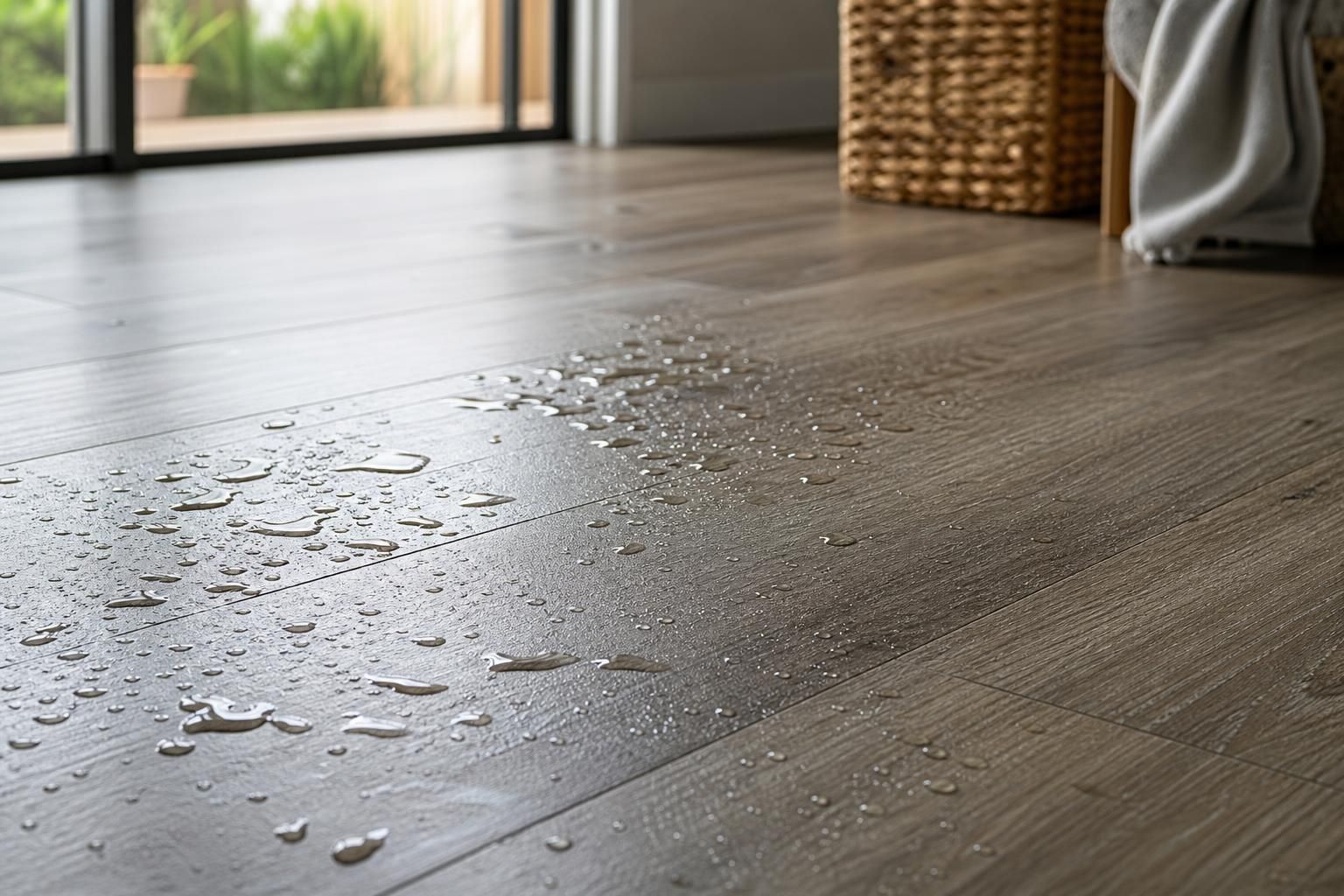
Water-resistant flooring slows down or limits moisture absorption for a short period, but water that sits on it long enough — or gets into the seams — can still swell, stain, or warp the material underneath. Waterproof flooring, by contrast, has a core material (usually SPC rigid vinyl or WPC composite) that will not swell or disintegrate even after prolonged water exposure, because the plank itself contains no wood pulp or paper to absorb moisture. The difference isn't marketing language; it's a structural fact about what's inside the plank.
Key takeaways
- "Water-resistant" means a surface treatment or coating buys you time to wipe up a spill; it is not rated for standing water or flooding.
- "Waterproof" means the plank's core material physically cannot absorb water, so it's safe for bathrooms, laundry rooms, lanais, and condo units.
- Always check what the core is made of (SPC, WPC, or wood/paper composite) rather than trusting the word "waterproof" on a display sign alone.
What "Water-Resistant" Actually Means
Water-resistant flooring includes most laminate, engineered hardwood, and some lower-grade vinyl products. These floors typically have a water-resistant top coating or a tighter click-lock seam that keeps a spilled glass of water from soaking in immediately. But the core board underneath is often wood fiber, particleboard, or a paper-based composite — materials that swell and delaminate once water sits for hours or gets past the seams. A water-resistant floor is fine for a kitchen where spills get wiped up quickly, but it is not designed for a bathroom floor, a mudroom, or anywhere water can pool.
What "Waterproof" Actually Means
Waterproof flooring is built from a core that contains no wood or paper at all. The two common types are:
- SPC (Stone Plastic/Polymer Composite): a dense, rigid core made of limestone powder and PVC resin. It won't swell, soften, or absorb moisture even if submerged.
- WPC (Wood Plastic Composite): a foamed core that's also moisture-proof, though generally softer and less dent-resistant than SPC.
Because neither core material can absorb water, waterproof vinyl plank can be installed below grade, in bathrooms, over concrete slabs, and in condo units where a neighbor's leak is a real risk. For a deeper look at how these cores are built, see what vinyl plank flooring is actually made of.
Side-by-Side Comparison
| Feature | Water-Resistant (laminate/engineered wood) | Waterproof (SPC/WPC vinyl plank) |
|---|---|---|
| Core material | Wood fiber, paper, or particleboard | Stone-polymer or foamed polymer composite |
| Standing water tolerance | Hours at most before swelling | Indefinite — core doesn't absorb water |
| Best use | Living rooms, bedrooms, dry kitchens | Bathrooms, laundry rooms, condos, lanais |
| Surface protection | Sealed coating or tight seams | Core itself is moisture-proof, plus a wear layer |
| Humidity/below-grade use | Not recommended | Suitable, including on concrete slabs |
Why the Difference Matters More in a Humid Climate
Hawaiʻi's humidity and the ocean proximity of most Oʻahu homes put constant, low-level moisture pressure on flooring that mainland buying guides don't account for. The National Oceanic and Atmospheric Administration tracks consistently high relative humidity across the islands, and that ambient moisture — separate from spills or leaks — can affect wood-based flooring over time even without a single dropped glass of water. That's one reason waterproof SPC core products have become the default recommendation for condos and ground-floor units here, rather than an upgrade reserved for bathrooms alone.
Reading the Label Correctly
Flooring packaging and sales language around "waterproof" isn't regulated the way food labeling is, so the word alone isn't proof of anything. What to check instead:
- Core composition — ask specifically whether it's SPC, WPC, or a wood/paper-based core.
- Installation guidance — manufacturers that back a true waterproof core will approve installation in full bathrooms and over concrete; water-resistant products usually carry exclusions for wet rooms.
- Test standards referenced — look for references to recognized test methods for water absorption and dimensional stability, such as those published by ASTM International, which maintains standard test methods used across the flooring industry.
Does Waterproof Flooring Prevent Mold?
No — waterproof flooring keeps water from damaging the plank itself, but it doesn't stop moisture from sitting on top of the floor, behind baseboards, or under appliances if a leak goes unnoticed. The Environmental Protection Agency notes that mold needs a moisture source and generally 24-48 hours to start growing on organic materials it contacts, which is why waterproof core flooring should still be installed with proper underlayment and sealed transitions in wet areas rather than treated as a substitute for fixing leaks. Choosing between plank grades for a wet-area job is also where vinyl plank flooring grades matter — a thicker wear layer resists scuffing from standing water and cleaning better than a thin residential-grade plank.
Where This Matters Most on Oʻahu
Bathrooms, laundry rooms, and lanais are the areas where the water-resistant-versus-waterproof distinction has real consequences, since these spaces see standing water, high humidity, or direct weather exposure. For outdoor-adjacent spaces specifically, see the breakdown of what flooring holds up best on a Hawaiʻi lanai, since UV exposure and moisture both factor into the choice there. Condo units are a second high-stakes case — a leak from a unit upstairs can sit against the floor for hours before anyone notices, which is exactly the scenario water-resistant cores aren't built to survive. H&W Flooring stocks waterproof SPC vinyl plank at $2.79 per square foot retail specifically because it's the product that holds up in these conditions without requiring a specialty "wet area" upcharge.
Frequently Asked Questions
Q: Is all vinyl plank flooring waterproof?
No. Some lower-grade or older vinyl products use a felt-backed or foam-backed construction that can still absorb moisture at the seams. Only vinyl plank with a solid SPC or WPC core is fully waterproof.
Q: Can I install water-resistant laminate in a bathroom?
It's not recommended. Water-resistant laminate can handle minor splashes if wiped up quickly, but standing water around a tub or shower will eventually swell the core and cause the seams to fail.
Q: Does waterproof flooring cost more than water-resistant flooring?
Not necessarily — pricing depends more on the plank's wear layer thickness and finish than on whether the core is waterproof. Buyers should compare per-square-foot pricing by product line rather than assuming waterproof always costs more.
Q: How can I tell if a plank's core is SPC or a wood-based composite?
Ask the retailer directly what the core material is made of, since packaging terms like "waterproof" aren't independently verified. A true SPC core will feel notably dense and rigid compared to a flexible wood-fiber laminate core.
Q: Does waterproof flooring need a special underlayment?
Most SPC vinyl plank comes with an attached pad or is rated for installation over a standard underlayment, but wet areas still need properly sealed transitions and baseboards to keep water from getting underneath the flooring system entirely.