Best Slip-Resistant Flooring for Bathrooms in Hawaii
Key takeaway
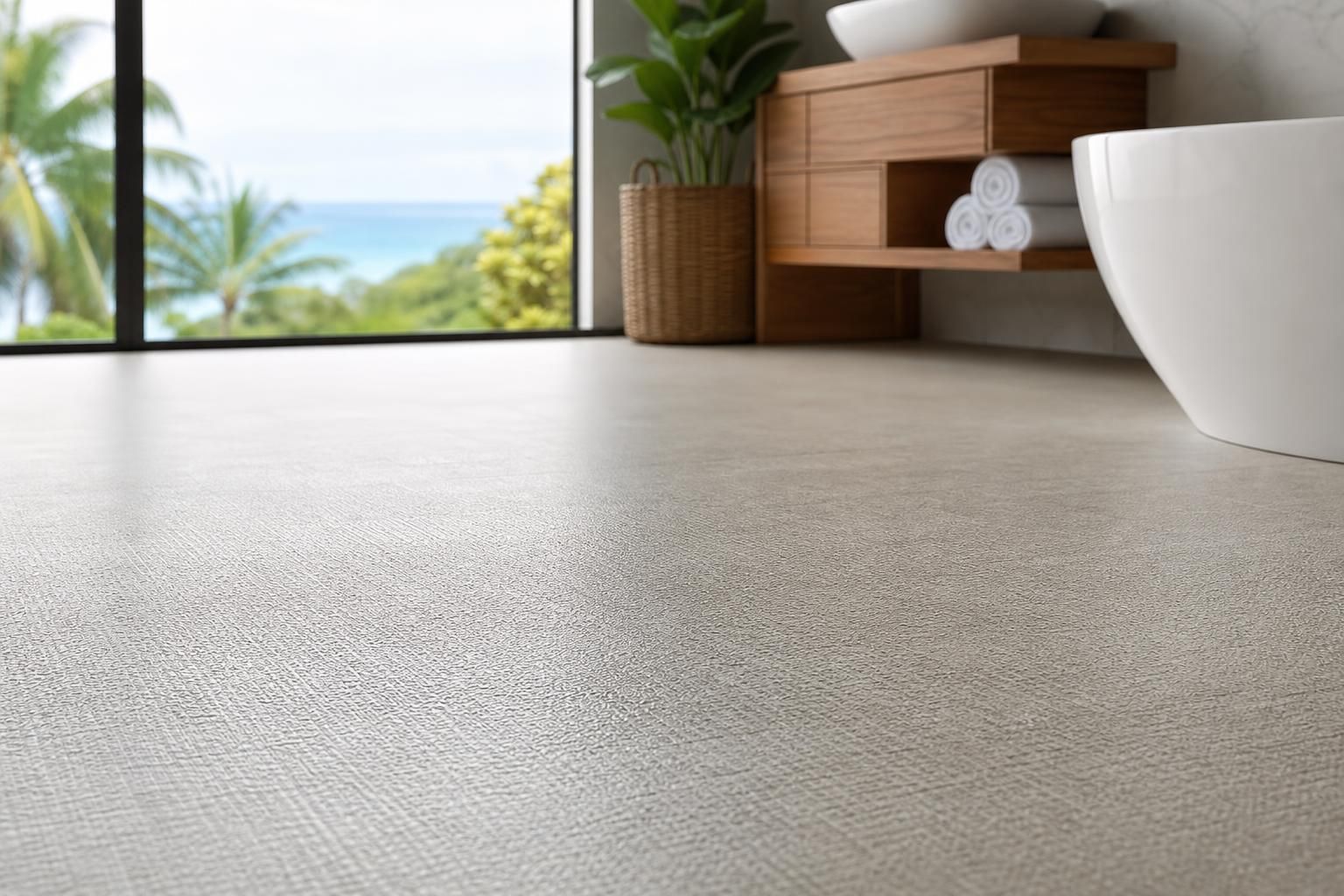
The most slip-resistant option for Hawaii bathrooms is a textured or embossed waterproof vinyl plank (ideally SPC rigid core) with a published DCOF rating of 0.42 or higher, installed over a fully waterproofed subfloor. Ceramic and porcelain tile can also work, but only if you choose a matte or textured finish rather than a polished one, since high-gloss tile gets dangerously slick when wet. In a humid island climate where bathrooms rarely dry out completely, the flooring's surface texture matters as much as its waterproof rating.
Key takeaways
- Look for a DCOF (dynamic coefficient of friction) of 0.42 or higher on the product spec sheet — this is the industry benchmark for wet-area flooring, not a marketing term.
- Textured, embossed waterproof vinyl plank is generally safer underfoot than smooth or polished tile, and it's also easier to clean along grout-free seams.
- Waterproofing the subfloor and seams matters as much as the surface texture; a slip-resistant plank over an unsealed floor still lets water travel to the subfloor.
What "Slip Resistant" Actually Means on a Spec Sheet
Flooring manufacturers test slip resistance using the dynamic coefficient of friction, or DCOF, which measures how much a surface resists sliding when wet. The current industry reference point, set by ANSI A326.3, calls for a minimum wet DCOF of 0.42 for flooring intended for level, interior wet areas like bathrooms. That number isn't a legal requirement for a private home, but it's the figure contractors and designers use as a practical floor for "is this safe when wet."
Vinyl plank products don't always publish a DCOF number the way tile does, so look instead at the surface description: embossed, textured, or "wood-grain registered" finishes grip better than smooth, high-gloss planks. SPC (stone plastic composite) core vinyl plank tends to come with more aggressive texture options because the rigid core holds an embossed pattern without flattening over time.
Why Humidity Changes the Calculus in Hawaii
Mainland slip-resistance guidance assumes a bathroom that dries out between uses. In Oahu condos and older single-wall homes, ambient humidity means bathroom floors can stay damp longer, and exterior-facing bathrooms near the coast pick up salt-air moisture too. That's a big reason water-resistant and waterproof flooring aren't interchangeable terms — a water-resistant laminate that's fine in a mainland guest bath can swell at the seams in a Hawaii bathroom that never fully dries.
Falls on wet floors are also a real, well-documented household risk, not just a marketing talking point. The CDC tracks falls as a leading cause of home injury across all age groups, and bathrooms are consistently one of the rooms where falls happen most because of the combination of hard surfaces and standing water. That's the practical reason to prioritize texture over looks when choosing bathroom flooring, especially in a household with kids or older residents.
Vinyl Plank vs. Tile for a Slip-Resistant Bathroom
Both materials can be made safely slip resistant, but they get there differently:
- Textured waterproof vinyl plank — grips well when wet because the texture is embossed into the surface itself, has fewer seams than tile (less grout to keep clean or reseal), and installs faster than tile in most bathrooms.
- Matte or textured porcelain/ceramic tile — can match or exceed vinyl's slip resistance if you specify a matte or "R10/R11" rated finish, but small-format tile with more grout lines actually helps traction by breaking up continuous smooth surface area.
- Polished or glazed tile — the look many homeowners want for a bathroom, but it's the worst choice for slip resistance; a glossy finish that's fine dry becomes genuinely hazardous wet.
If the bathroom already has laminate down and you're wondering whether it's salvageable, laminate in a bathroom is a different question from slip resistance — laminate's core issue is that its seams swell when water gets underneath, regardless of how textured the surface is.
The Waterproofing Layer Underneath
Surface texture solves slip risk at the top of the floor. It doesn't solve what happens if water gets past the plank seams and into the subfloor, which is a separate waterproofing problem. A proper wet-area installation treats the seams, transitions, and any floor penetrations (toilet flange, drain) as the points most likely to let water through, then seals or waterproofs them before the finish flooring goes down. For vinyl plank specifically, a moisture barrier underlayment protects the subfloor from the ambient dampness that's normal in a Hawaii bathroom, not just from standing spills.
This is also where remodeling scope tends to grow. A straightforward plank swap in a dry room might not need subfloor work, but a bathroom redo in a condo often turns up moisture damage around the tub or shower pan that has to be addressed before new flooring goes in — which is part of why condo bathroom and flooring remodels in Honolulu tend to run a wider cost range than a single bedroom.
What It Actually Costs to Get This Right
H&W Flooring publishes its pricing rather than quoting case-by-case. Retail waterproof vinyl plank runs $3.99 per square foot regular price, with a limited-time Black Friday promotion at $2.49 per square foot. Installation is quoted from $8 per square foot, and that figure is all-inclusive — it covers demolition and haul-away of the old flooring, leveling (including self-leveling compound where the subfloor needs it), and baseboard, so there's no separate line item added on for prep work in a typical bathroom. Contractors buying for multiple units get tiered wholesale pricing scaled to order volume; Hawaii-licensed contractors can request that pricing directly rather than working off the retail sheet.
Getting a Written Quote
Because bathroom floors often need demo and prep that aren't obvious until the old flooring comes up, a walkthrough is worth doing before committing to a material. Written quotes for bathroom and wet-area jobs are typically turned around within 48 hours of that walkthrough, which gives homeowners a real number to compare against before signing anything.
Frequently Asked Questions
Q: What DCOF rating is considered slip resistant for a bathroom floor?
A wet DCOF of 0.42 or higher is the industry benchmark set under ANSI A326.3 for level interior wet-area flooring. Products below that number are generally considered too slick for a bathroom when wet.
Q: Is vinyl plank or tile more slip resistant in a bathroom?
Textured, embossed waterproof vinyl plank and matte-finish tile can both be slip resistant; the deciding factor is surface finish, not material type. Polished or glazed tile is the least slip-resistant common option regardless of how durable it is.
Q: Can laminate flooring be used in a Hawaii bathroom for slip resistance?
Laminate's surface can be textured for grip, but its core swells when water reaches the seams, which is a bigger risk in Hawaii's humidity than in drier climates. A fully waterproof vinyl plank or tile is generally a safer long-term choice for a wet bathroom.
Q: Does grout help or hurt slip resistance on tile floors?
Grout lines actually help traction by breaking up a continuous smooth surface, which is part of why smaller-format tile can test as more slip resistant than large-format polished tile. The tile's own surface finish still matters more than grout layout.
Q: How much does it cost to replace bathroom flooring with slip-resistant vinyl plank in Honolulu?
Material runs $3.99 per square foot at regular retail, with a limited-time Black Friday price of $2.49 per square foot from H&W Flooring, and installation starts from $8 per square foot covering demo, leveling, and baseboard. A small bathroom's total cost depends mostly on square footage and whether the subfloor needs moisture repair before the new floor goes down.