Can Vinyl Plank Flooring Be Installed in a Garage?
Key takeaway
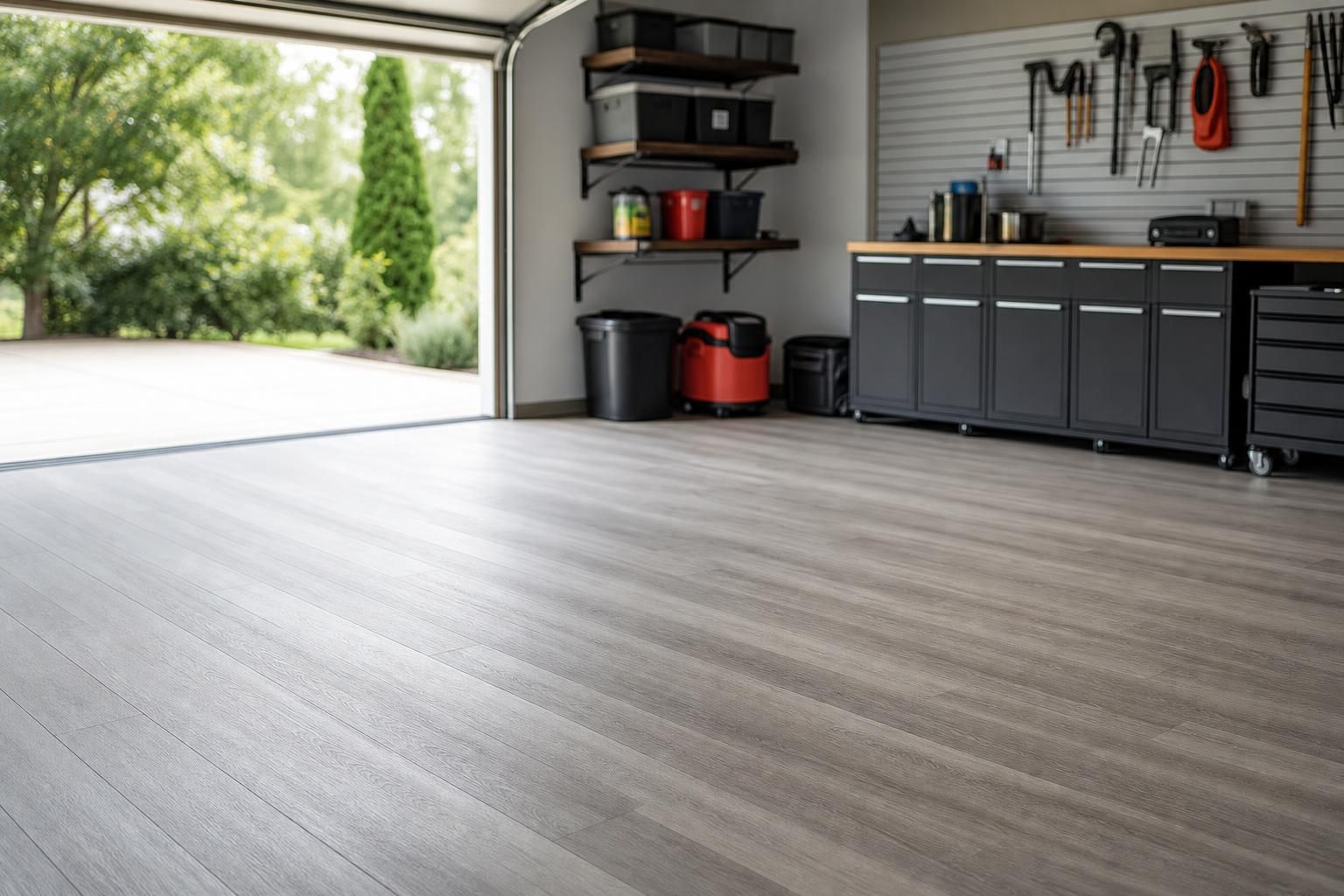
Yes, vinyl plank flooring can be installed in a garage, including an SPC rigid-core product, as long as the concrete slab is sound, reasonably flat, and free of active moisture problems. It holds up better than laminate or hardwood in a garage because it's fully waterproof, but it isn't built for the sustained weight of vehicle tires or heavy equipment the way epoxy or dedicated garage tile is. The right call depends on how the garage is actually used — parked cars and storage, or a converted living space.
Key takeaways
- SPC rigid-core vinyl plank handles garage humidity and occasional water fine, but it's not rated for constant vehicle traffic the way epoxy coatings are.
- A flat, dry concrete slab is non-negotiable — any dip beyond about 3/16 inch over 10 feet needs leveling compound before planks go down.
- If the garage has any history of flooding or standing water, a floating floor with a vapor-rated underlayment is safer than glue-down.
Why Vinyl Plank Holds Up Better Than Other Flooring in a Garage
Garages swing in temperature and humidity more than any other room in the house, and they're the most likely place for water to sit — from a leaking car, a washing machine, or just tracked-in rain. Vinyl plank, especially SPC construction with a stone-polymer composite core, is fully waterproof through the entire plank, not just sealed on top. That's different from laminate, which has a wood-fiber core that swells if water gets into the seams, or solid hardwood, which should never go in a garage at all. What Is Vinyl Plank Flooring Made Of? breaks down the layers in more detail, but the short version is: the waterproof core is what makes a garage install realistic in the first place.
What the Concrete Slab Needs to Be Ready
Most garage floor problems trace back to the slab, not the vinyl. Before any planks go down, the concrete needs to be:
- Flat — generally no more than 3/16 inch of variation over a 10-foot span; low spots get filled with leveling compound, high spots get ground down.
- Clean and free of oil or paint — residue from parked cars prevents adhesive or the plank's locking mechanism from sitting correctly.
- Dry, or at least not actively wet — a slab that's regularly damp from grade moisture or a high water table needs a vapor barrier under a floating floor rather than a glued-down install.
- Structurally sound — cracked or heaving slabs should be repaired first; vinyl plank will telegraph movement in the concrete underneath it over time.
On Oʻahu, slabs poured close to grade or near the coast are more prone to moisture migration, so a quick moisture check before installation is worth the extra step rather than finding out after the floor is down.
Floating vs. Glue-Down for a Garage Floor
A floating SPC floor (click-lock planks over underlayment, not attached to the slab) is usually the easier and more forgiving option for a garage. It handles minor slab imperfections better and is simpler to replace a damaged plank later. Glue-down vinyl plank bonds directly to the concrete and resists shifting under rolling loads like tool chests or workbenches, but it demands a near-perfect slab and more careful moisture testing since the adhesive sits in direct contact with the concrete.
For a garage that doubles as a workshop with rolling carts or a lot of foot traffic in and out, glue-down is generally the sturdier choice. For a garage used mainly for parking and storage, floating SPC is usually enough and costs less in labor.
Where Vinyl Plank Stops Making Sense in a Garage
Vinyl plank is not a substitute for epoxy or a dedicated garage floor coating if the space is a working garage with daily vehicle traffic, jack stands, or heavy machinery. Concentrated point loads — a jack under a car, a heavy tool cabinet on small casters — can dent or crack vinyl plank over time in a way that a coated or tiled concrete floor won't. It's a better fit for garages that function more like bonus rooms: a gym corner, a workshop with light use, or a converted space that still needs to look finished but doesn't see constant car traffic. If the garage is being fully converted to living space, it's worth thinking through the whole project rather than just the floor — is vinyl plank flooring worth it for that kind of conversion covers the cost-versus-durability tradeoff in more depth.
Grade and Thickness Matter More in a Garage
Not every vinyl plank product is built the same, and a garage is one of the places where skipping to a cheaper, thinner commercial grade can cause problems fast. Thicker SPC cores and a higher wear-layer rating resist denting and abrasion better, which matters if the garage sees rolling carts, dropped tools, or stored equipment. Vinyl plank flooring grades explains how wear layer and core thickness affect durability, which is worth checking before choosing a product for a garage specifically rather than defaulting to whatever's cheapest.
Pricing and Project Scope
H&W Flooring sells luxury vinyl plank at a published retail price of $2.79 per square foot, with installation from $8 per square foot, including demo of old flooring, leveling (incl. self-leveling material), and baseboard. Demo of an old garage floor covering is included in the installation rate. Hawaiʻi-licensed contractors doing garage conversions at volume buy on tiered wholesale pricing — $2.79, $2.59, or $2.39 per square foot depending on order size, with tiers starting at $5,000 and scaling up through $200,000 — rather than retail rates.
Before installation, the planks need to acclimate to the garage's temperature and humidity for a set period, which matters more in a garage than almost any other room because garages run hotter and more humid than conditioned interior spaces. How to acclimate vinyl plank flooring covers how long that takes and why skipping it causes gaps or buckling later.
Moisture intrusion through concrete slabs is a documented issue in flooring failures, which is part of why the EPA's guidance on moisture control in buildings recommends addressing the source of moisture before covering a slab with any finish flooring. Garage slabs in particular are more exposed to grade moisture than interior slabs under a conditioned home, which is why a moisture check before installation matters more here than in a bedroom or living room.
Frequently Asked Questions
Q: Does vinyl plank flooring need a vapor barrier in a garage?
If the slab tests damp or the garage sits close to grade, yes — a vapor-rated underlayment under a floating floor is the safer choice. A dry, well-sealed slab with no history of moisture issues may not need one, but it's worth testing rather than assuming.
Q: Will parking a car on vinyl plank flooring damage it?
Occasional light parking generally won't damage SPC vinyl plank, but daily vehicle weight, especially from narrow tires or jack stands, can cause dents over time. A garage used for daily vehicle storage is better suited to epoxy or coated concrete.
Q: Can vinyl plank flooring handle garage temperature swings?
SPC rigid-core vinyl plank tolerates a wider temperature range than laminate or hardwood, but it still needs to acclimate to the garage's actual conditions before installation to avoid gaps or buckling later.
Q: Is floating or glue-down vinyl plank better for a garage?
Floating SPC flooring is more forgiving of minor slab imperfections and easier to repair later; glue-down holds up better under rolling loads but requires a flatter, drier slab. The right choice depends on how the garage is used day to day.
Q: How much does it cost to install vinyl plank flooring in a garage?
H&W Flooring's installation is from $8 per square foot, including demo of old flooring, leveling (incl. self-leveling material), and baseboard, on top of the $2.79 per square foot retail material cost, with final pricing depending on slab condition.