How Do I Know If My Bathroom Floor Needs Waterproofing?
Key takeaway
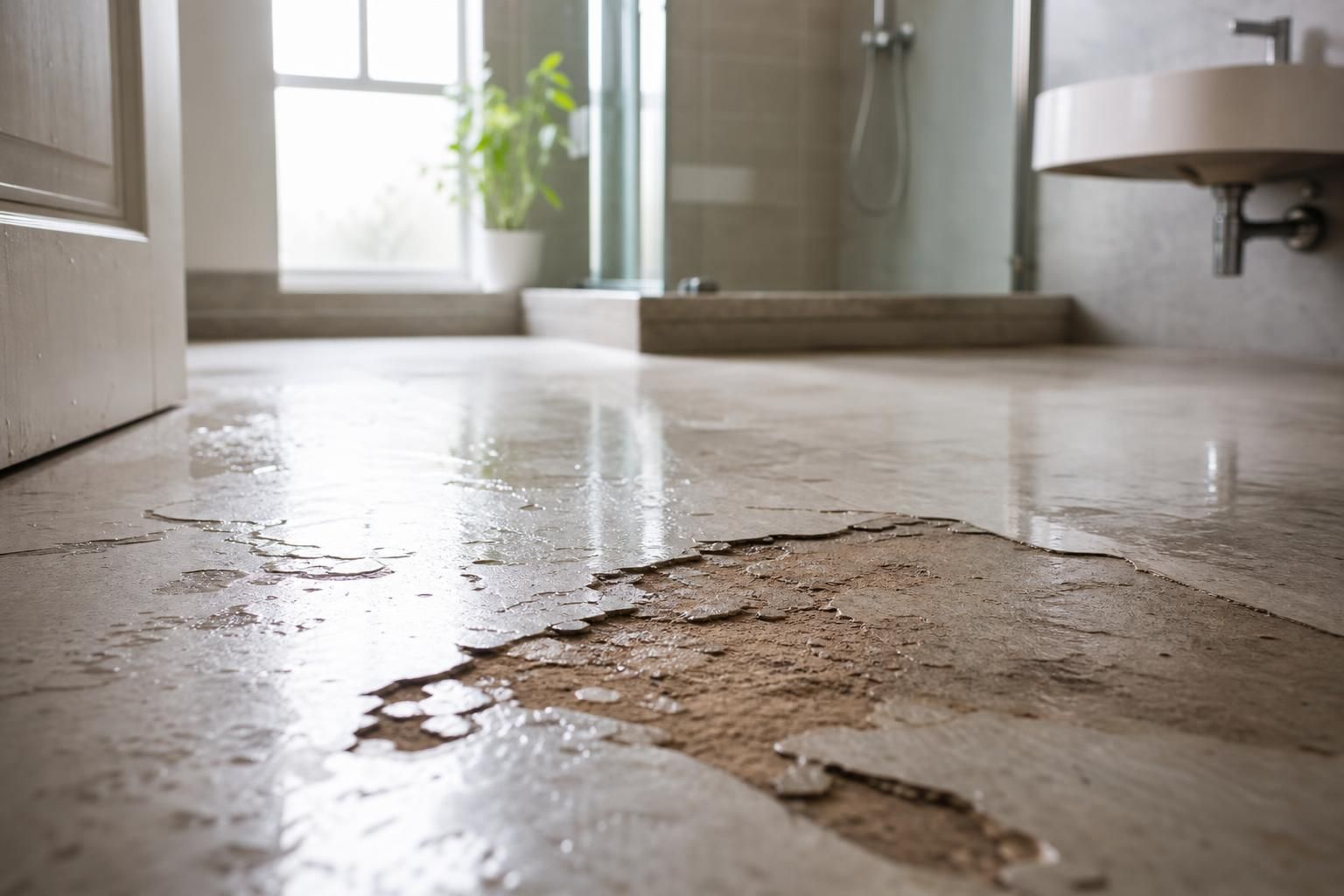
Your bathroom floor likely needs waterproofing if you notice soft or spongy spots, discolored or cracked grout lines, a musty smell near the base of the toilet or tub, or staining on the ceiling below the bathroom. Any of these signs means moisture is getting past the surface layer and into the subfloor, where it can rot wood, corrode fasteners, or feed mold between the layers you can't see. The earlier these signs are caught, the smaller the repair — often a localized membrane and re-floor rather than a full subfloor replacement.
Key takeaways
- Soft, springy, or sloped flooring near the tub, shower, or toilet is the clearest sign of subfloor water damage.
- Discolored grout, lifting vinyl seams, or a persistent musty smell point to moisture getting underneath the surface, not just on top of it.
- Waterproofing a bathroom floor means a sealed membrane under the finish floor, not just a "waterproof" vinyl or tile surface layer.
The physical signs to check first
Walk the bathroom floor slowly, barefoot if you can, paying attention to the areas around the toilet, tub, and shower threshold — these are where failures start almost every time.
- Soft or bouncy spots underfoot, especially within a foot of the toilet base or tub apron, usually mean the subfloor plywood has absorbed water and started to delaminate.
- Grout that's cracked, crumbling, or stained dark along the tub-to-floor joint is a sign water is tracking through the grout line instead of running to the drain.
- Vinyl plank seams that have lifted or separated at the edges, even slightly, let water wick underneath the plank where it can sit against the subfloor indefinitely.
- A toilet that rocks slightly when you shift your weight on it often means the flange and the subfloor around it have softened.
- A musty or mildew smell that's stronger near the floor than in the rest of the bathroom suggests trapped moisture is feeding mold growth under the surface, consistent with EPA guidance that mold needs a sustained moisture source to establish itself.
If you've already found visible damage on a plank or two, it's worth reading how to repair water damaged vinyl plank flooring before deciding whether the whole floor needs to come up.
Where leaks actually start in a bathroom
Waterproofing isn't just about the shower pan — most bathroom floor failures start at predictable weak points, not from water splashing on an otherwise sealed floor.
- The toilet wax ring and flange. A failed seal here leaks small amounts of water with every flush, which is why toilet-adjacent soft spots are so common.
- The tub or shower threshold. Grout and caulk here are not waterproof on their own; they're a cosmetic finish over whatever waterproofing (or lack of it) exists underneath.
- Baseboards and wall-floor junctions. Splashed water from showers or sink overflow collects at the perimeter and sits against untreated subfloor edges.
- Under the vanity, where a slow supply line or drain leak can go unnoticed for months because it's hidden behind the cabinet toe-kick.
This is also why a "waterproof" vinyl plank surface alone doesn't solve the problem — the plank can shed surface water fine, but if water gets underneath it through a seam, a transition strip, or a wall penetration, there's nothing stopping it from sitting against bare subfloor.
What waterproofing actually means at the subfloor level
Waterproofing a bathroom floor means installing a continuous waterproof membrane — sheet, liquid-applied, or a bonded underlayment — between the subfloor and the finish floor, sealed up the wall a few inches and tied into the drain flange. The goal is a tub-like barrier so that any water that gets past the surface finish has nowhere to go but the drain, instead of into the wood framing below. This is standard practice described in tile industry installation guidance for wet-area floors, and it applies whether the finish floor ends up being tile or waterproof vinyl plank over a rigid underlayment.
It's a different thing from a waterproof material. SPC rigid-core vinyl plank resists water absorption into the plank itself, but the membrane underneath is what protects the subfloor and the framing from a leak that gets past the seams, the toilet flange, or the wall-floor joint.
Signs it's a full remodel, not a spot repair
Some damage can be addressed locally; other situations call for pulling the floor and re-waterproofing the whole room.
- Sagging or uneven floor across a wider area (not just one soft spot) usually means the plywood subfloor itself needs replacing, not just the surface.
- A smell that persists after the visible floor is dry often means moisture has reached the joists or insulation below, which a surface-level fix won't reach.
- Repeated staining in the same spot after a prior repair means the original leak source — flange, valve, or membrane gap — was never actually fixed.
- Multiple fixtures showing problems at once (toilet rocking, vanity smell, grout failing) points to a systemic moisture issue, not an isolated incident.
If any of these apply, it's usually part of a larger bathroom or whole-home scope rather than a single-room patch — worth pricing out alongside a broader whole house remodel if other rooms are due for work anyway.
What a proper fix involves
A bathroom floor waterproofing repair typically means removing the existing finish floor and any damaged subfloor, inspecting and replacing rotted plywood, installing a sealed waterproof membrane up the walls a few inches and around the toilet flange, then installing the new finish floor on top. Demo for this kind of tear-out is included at H&W Flooring, and new luxury vinyl plank installation is from $8/sq ft, including demo of old flooring, leveling (incl. self-leveling material), and baseboard, with the vinyl itself priced at $2.79/sq ft retail for homeowners. Because the scope depends on how far the water traveled, this kind of job is priced by the actual tear-out, not a flat per-room number.
Frequently Asked Questions
Q: Can I waterproof over an existing bathroom floor without removing it?
Generally no — a proper waterproof membrane needs to bond directly to a sound, clean subfloor and tie into the drain flange and wall, so any existing finish floor and damaged plywood need to come up first.
Q: Does waterproof vinyl plank mean I don't need a membrane underneath it?
No — waterproof vinyl plank resists moisture at the plank itself, but seams, transitions, and wall penetrations can still let water reach the subfloor, so a membrane underneath is still the layer that actually protects the structure.
Q: How long does it take moisture damage to show up after a leak starts?
It varies with the leak's size and airflow in the room, but slow leaks like a failing wax ring or grout crack can take months to show visible signs like soft spots or smell, which is why small symptoms shouldn't be ignored.
Q: Is a musty smell alone enough reason to open up the floor?
A persistent musty smell near the floor, especially combined with any softness or discoloration, is enough reason to at least pull up a section of flooring near the fixture to check the subfloor condition.
Q: What's the difference between regrouting and actually waterproofing a bathroom floor?
Regrouting only restores the cosmetic surface layer between tiles; it doesn't address whether there's a continuous waterproof membrane underneath, so a floor can look freshly regrouted and still be leaking into the subfloor.