Choosing the Best ADU Flooring in Hawaii
Key takeaway
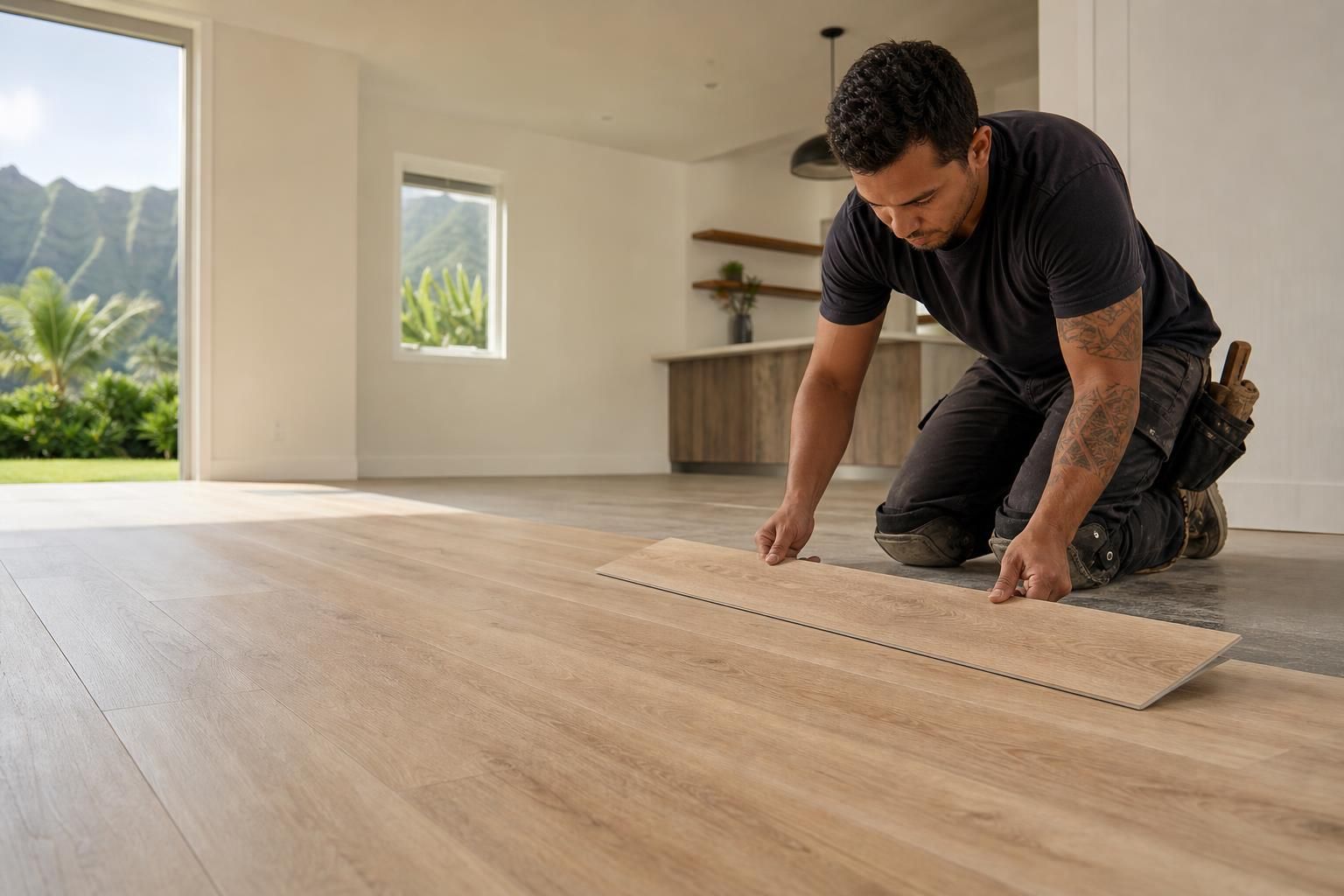
For a Hawaii ADU, waterproof luxury vinyl plank — especially SPC (stone plastic composite) rigid core — is the most practical flooring choice because it resists humidity, minor flooding, and the heavier day-to-day wear that comes with renting the unit out or housing extended family. It costs less per square foot than hardwood or tile, installs faster, and holds up in kitchens and bathrooms where moisture is a constant concern in island construction.
Key takeaways
- Waterproof vinyl plank (SPC core) handles Oahu humidity and wet-area use better than laminate or solid hardwood, at a lower material cost.
- Budget both material and labor: flooring material runs by the square foot, and professional installation typically runs from $8/sq ft, already covering demo, leveling, and baseboard.
- If you're a licensed contractor building several ADUs a year, ask about tiered wholesale pricing rather than paying retail per job.
Why ADU flooring decisions are different from a main-house remodel
An ADU is usually small — often under 800 square feet, since the City and County of Honolulu's accessory dwelling unit ordinance caps most detached units at that size — which changes the math on flooring. A tighter footprint means material cost matters less in total dollars but durability matters more per square foot, because ADUs frequently get used as long-term rentals or multi-generational housing with heavier daily traffic than a typical single-family living room. Permitting for an ADU also usually requires final inspection by the City and County of Honolulu Department of Planning and Permitting, so flooring choices that meet code for moisture control in bathrooms and kitchens aren't optional extras — they're part of passing inspection.
Why waterproof vinyl plank fits ADUs better than the alternatives
Laminate looks similar to vinyl plank but has a wood-fiber core that swells if water gets underneath it, which makes it a weaker fit for an ADU kitchen or bath. Solid hardwood is vulnerable to the same moisture risk and costs considerably more installed. SPC rigid-core vinyl plank, by contrast, has a waterproof core all the way through, so a slow leak under a refrigerator or a bathroom door threshold won't cause the plank to delaminate or warp. If you're deciding between core types for an ADU specifically, it's worth reading through how SPC compares to laminate for durability before committing to a product line.
Tile is also waterproof and a reasonable option for an ADU bathroom or lanai-adjacent entry, but it's harder on bare feet, colder underfoot, and more labor-intensive to install than plank flooring, which is one reason most ADU builds use vinyl plank throughout the main living space and reserve tile for wet zones only.
What ADU flooring actually costs
H&W Flooring publishes its pricing rather than quoting case by case. Retail waterproof luxury vinyl plank runs $3.99 per square foot regularly, with a limited-time Black Friday promotional price of $2.49 per square foot. Professional installation is quoted from $8 per square foot, and that figure is all-inclusive — it covers demo and removal of the old flooring, leveling (including self-leveling compound where the subfloor needs it), and baseboard, rather than tacking those on as separate line items later.
For a small ADU, that means the two numbers to plan around are:
- Material cost: square footage of the unit × the per-square-foot vinyl plank price
- Installed cost: square footage × the from-$8/sq ft installation rate, which already folds in subfloor prep and trim
Because ADUs are compact, it's worth measuring every closet, hallway, and bathroom separately rather than estimating off the overall building footprint — vinyl plank is sold by the box, and leftover material from an odd-shaped room often goes unused.
Wholesale pricing for contractors building multiple ADUs
Hawaii's ADU boom means some contractors now build several units a year rather than one. For those jobs, retail per-square-foot pricing isn't the right comparison — H&W offers tiered wholesale pricing to verified contractors, with the rate scaling down as order volume goes up. To qualify for trade pricing, a contractor generally needs an active Hawaii contractor license, which can be confirmed through the DCCA's professional and vocational licensing lookup before a supplier will extend wholesale terms. If you're pricing out flooring for several ADU builds at once, ask specifically for the volume tier rather than accepting a single-unit retail quote.
Wet-area flooring inside the ADU
Even with waterproof plank throughout the living area, the bathroom deserves its own attention. Slip resistance matters more in a small ADU bathroom where the shower, toilet, and sink are often within a few feet of each other, and the CDC's home safety guidance notes that bathrooms are one of the most common locations for slip-and-fall injuries in a home. Covering the options for that specific room — tile versus vinyl, texture ratings, and transition strips at the shower threshold — is worth a closer look at slip-resistant flooring choices for Hawaii bathrooms before finalizing the ADU layout.
Getting the ADU ready for installation
Because ADUs are frequently built on a tight construction timeline tied to permit inspections, flooring installation often has to happen in a narrow window after drywall and before fixtures go in. Clearing the space, confirming the subfloor is dry and swept, and having appliances staged elsewhere speeds up the install day significantly. The general prep steps are the same as for any room — see how to prepare a home for flooring installation — but on an ADU job site they matter more, since there's usually less room to work around furniture, tools, or other trades.
Stock and lead times matter on a permit timeline
ADU projects run on inspection deadlines, so waiting weeks for flooring to ship from the mainland can stall a project that's otherwise ready to close out. Buying from a supplier that stocks vinyl plank on Oahu for same-day pickup avoids that bottleneck entirely — worth confirming before you lock in a flooring brand for the whole build. What that looks like in practice at one Mapunapuna warehouse is covered in what to expect from a Honolulu flooring store.
Frequently Asked Questions
Q: What is the best flooring for a Hawaii ADU?
Waterproof vinyl plank with an SPC rigid core is generally the best fit because it resists humidity and moisture intrusion, costs less installed than hardwood or tile, and holds up under rental-level foot traffic.
Q: Is vinyl plank flooring waterproof enough for an ADU kitchen and bathroom?
SPC rigid-core vinyl plank has a waterproof core throughout, so it won't swell or delaminate from a spill or slow leak the way laminate or hardwood can, making it suitable for ADU kitchens and most bathroom areas outside the direct shower zone.
Q: How much does it cost to install flooring in a small ADU?
Material for waterproof vinyl plank runs by the square foot at published retail pricing, and professional installation is typically quoted from $8 per square foot, which already includes demo of the old flooring, subfloor leveling, and baseboard.
Q: Can contractors get wholesale pricing on flooring for multiple ADU builds?
Yes — suppliers that sell to the trade typically offer tiered wholesale pricing based on order volume to contractors with an active, verifiable Hawaii contractor license, rather than charging retail rates per project.
Q: Does Honolulu limit how big an ADU can be?
The City and County of Honolulu's ADU ordinance caps most detached accessory dwelling units at 800 square feet, which is one reason flooring durability and moisture resistance matter more per square foot than in a larger home.