Cheap Flooring Oahu: Where to Find Real Low Prices
Key takeaway
Cheap flooring on Oahu means waterproof vinyl plank priced at or near $2.79 per square foot retail, bought from a local warehouse that stocks it on-island instead of shipping it from the mainland. The real savings come from skipping freight and distributor markups, not from choosing a thinner or lower-grade product. Contractors buying in volume can drop further, to $2.59 or $2.39 per square foot, once their order crosses published wholesale thresholds.
Key takeaways
- Local in-stock luxury vinyl plank runs around $2.79/sq ft retail on Oahu; contractors ordering $15,000+ can drop to $2.59, and $100,000+ to $2.39.
- Installation is a separate line item, from $8/sq ft, including demo of old flooring, leveling (incl. self-leveling material), and baseboard.
- Mainland-shipped flooring often looks cheaper online until freight, lead time, and minimum order sizes get added back in.
Why "cheap" on Oahu isn't the same as "cheap" on the mainland
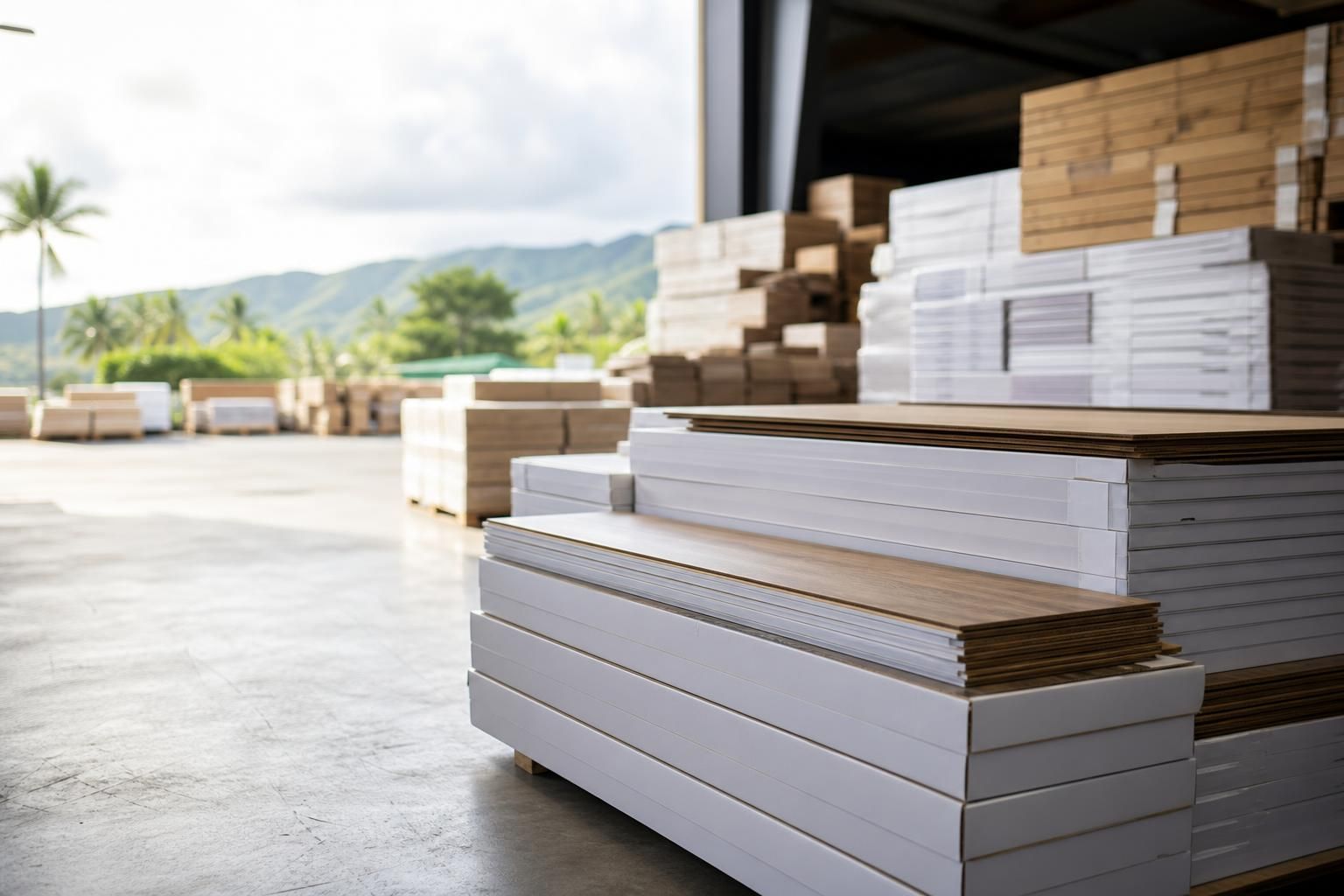
Flooring prices quoted by national chains and online retailers rarely include inter-island or ocean freight. A box of vinyl plank that looks like a bargain on a mainland website can end up costing more once it's shipped to Honolulu, especially if the order is small enough that freight isn't amortized across pallets. Buying from a supplier that already holds inventory in Oʻahu warehouses removes that shipping line entirely, which is a bigger lever on final cost than the sticker price per box.
Lead time matters too. A mainland order can take two to six weeks to land, which stalls a remodel or a rental turnover. Material that's already on a shelf in Māpunapuna can go home the same day, which matters as much to a homeowner redoing one bathroom as it does to a contractor juggling a tight schedule.
What waterproof vinyl plank actually costs here
Published, non-negotiable pricing is the easiest way to compare options honestly, because it removes the guesswork of quote-shopping multiple vendors for the same material.
| Buyer type / order size | Price per sq ft |
|---|---|
| Retail, any quantity | $2.79 |
| Wholesale, $5,000–$14,999 | $2.79 |
| Wholesale, $15,000–$99,999 | $2.59 |
| Wholesale, $100,000+ | $2.39 |
| Wholesale, $200,000+ | Custom, scales with volume |
H&W Flooring publishes this exact tier structure so both homeowners and Hawaiʻi-licensed contractors can calculate a job cost before ever requesting a quote. Contractors verifying trade pricing need an active Hawaiʻi contractor license through the state's DCCA licensing division, since wholesale tiers are reserved for verified trade accounts rather than general retail.
Installation and demo: the costs cheap-flooring searches often miss
A low per-square-foot material price doesn't tell the whole story. Installation at H&W starts from $8/sq ft, including demo of old flooring, leveling (incl. self-leveling material), and baseboard — a starting point that can move based on room layout, stairs, and transitions, not a flat rate. If there's existing flooring to remove, demo is already included in that rate.
Skipping professional installation to save money is one of the most common ways a "cheap" flooring project gets expensive. Moisture problems behind a bad install, especially in bathrooms and other wet areas, can mean replacing cabinetry, baseboards, or subfloor later — costs that dwarf the install fee. For condo buyers specifically, the subfloor transition and sound-dampening underlayment requirements are their own cost variable worth reading up on in this breakdown of what actually works in condo units.
How wholesale tiers work for contractors
A licensed contractor ordering material for a multi-unit job isn't buying the same way a homeowner buys for one bedroom, and the pricing structure reflects that. Once a project's material total crosses $5,000, it qualifies for the first wholesale tier at $2.79/sq ft — the same number as retail, but it unlocks volume ordering and account-based terms. Crossing $15,000 drops the rate to $2.59, and $100,000 drops it to $2.39. Above $200,000, pricing is handled case-by-case and scales with the size of the commitment.
Contractors stacking multiple units — say, a condo renovation company doing floor after floor of the same building — should read through how contractor wholesale pricing is structured before submitting a bid, since the threshold a job falls into can change the margin on the whole project.
SPC vs standard vinyl plank: does "cheap" mean lower quality?
Not necessarily. SPC (stone plastic composite) rigid core vinyl plank and standard flexible-core waterproof vinyl plank are priced within the same retail range on Oahu, so choosing SPC for its extra rigidity and dent resistance doesn't automatically push a project into a higher price bracket. The decision usually comes down to subfloor flatness and foot traffic rather than budget. A side-by-side comparison of how the two perform under real conditions — rentals, pet households, uneven slab — is covered in this contractor's guide to SPC versus standard vinyl plank.
Questions to ask before buying "cheap" flooring
- Is the quoted price per square foot for material only, or does it include installation?
- Is the product in stock locally, or does it ship from the mainland with added freight and lead time?
- What's the wear layer thickness, and is it rated for the room it's going into — a thin wear layer may look identical in a showroom but fail faster underfoot?
- Does the seller publish wholesale tiers, or is "contractor pricing" negotiated case by case with no transparency?
- Is demo and haul-away of old flooring included, or billed separately?
Wear layer thickness in particular affects how long inexpensive vinyl plank actually lasts under daily use; it's worth understanding before comparing two products that look similar on a spec sheet, as explained in this guide to what wear layer numbers actually mean.
Durability and moisture considerations in Hawaiʻi's climate
Hawaiʻi's humidity and the prevalence of slab-on-grade construction in many Oʻahu homes make moisture resistance a bigger factor than in drier mainland markets. The EPA's guidance on moisture and mold control notes that trapped moisture under flooring is a leading contributor to indoor mold growth, which is one reason waterproof core products have become the default recommendation for ground-level rooms and wet areas across the islands rather than a premium upgrade.
Frequently Asked Questions
Q: What is the cheapest type of flooring available on Oahu?
Waterproof vinyl plank is generally the lowest-cost durable flooring option on Oahu, with in-stock retail pricing around $2.79/sq ft. Carpet tile can sometimes undercut that per square foot, but it doesn't hold up as well in humid or wet-prone rooms.
Q: Is it cheaper to buy flooring online and ship it to Hawaii?
Rarely, once freight and lead time are factored in. A product that looks less expensive on a mainland retailer's website often costs more delivered to Oʻahu than the same category of material already warehoused locally.
Q: Does cheap flooring mean lower quality?
Not necessarily — price differences on Oahu are driven more by local stock versus shipped inventory, and by order volume for contractors, than by a drop in wear layer or core quality. Comparing wear layer thickness and waterproof core type is a better quality signal than price alone.
Q: How much does installation add to a cheap flooring quote?
Installation starts from $8/sq ft, including demo of old flooring, leveling (incl. self-leveling material), and baseboard, and varies with room complexity; demo of old flooring is included. Always ask whether a quoted per-square-foot price includes installation or material only.
Q: Can homeowners access contractor wholesale pricing?
Wholesale tiers are reserved for Hawaiʻi-licensed contractors with verified trade accounts, since pricing drops based on order volume tied to active jobs. Homeowners doing a single room typically buy at the published retail rate instead.