Condo Remodel Honolulu: Costs, Permits, and Flooring Picks
Key takeaway
A condo remodel in Honolulu typically means working within your building's AOAO rules, pulling a City and County of Honolulu permit for anything structural or plumbing-related, and choosing waterproof, sound-rated flooring since you're living above and beside other units. Costs scale with scope — a flooring-only refresh runs far less than a full kitchen and bathroom gut — and timelines depend heavily on how fast your association approves the work and how fast materials are actually available on-island.
Key takeaways
- Check your AOAO's flooring and renovation rules before you buy materials — many buildings require minimum sound-insulation specs and written approval before work starts.
- Waterproof vinyl plank is the most common condo flooring choice because it handles moisture in kitchens and lanais and doesn't need acclimation time like hardwood.
- Material cost and installation cost are separate line items — ask any supplier or contractor to break them out so you can compare apples to apples.
What Counts as a Condo Remodel in Honolulu
"Condo remodel" covers a wide range of projects: swapping flooring throughout a unit, redoing a single bathroom, opening up a kitchen, or combining several of these into one project. The scope changes which rules apply. Pure cosmetic work — new flooring, paint, cabinet fronts — usually doesn't need a building permit from the city, but it almost always needs AOAO sign-off. Anything touching plumbing, electrical, or load-bearing elements does need a permit through the City and County of Honolulu's Department of Planning and Permitting.
Because so many Honolulu condo remodels start with flooring, it helps to understand how much a small bathroom remodel runs in Honolulu before deciding whether to bundle bathroom work into the same project.
AOAO Rules Are the First Gate, Not the Permit Office
Before any material gets ordered, most Oʻahu condo associations require owners to submit renovation plans for approval, and many specify a minimum impact insulation rating for flooring installed above another unit to limit noise transmission to the neighbor below. Associations also commonly restrict work hours, require proof of contractor insurance, and may require a refundable deposit against damage to common areas like elevators and hallways. Skipping this step is the single most common reason condo remodels stall — not permitting, not material lead times.
The Community Associations Institute publishes general guidance on how AOAOs and HOAs structure renovation approval processes, which is useful background if your building's house rules are vague.
Flooring That Actually Works in a Condo
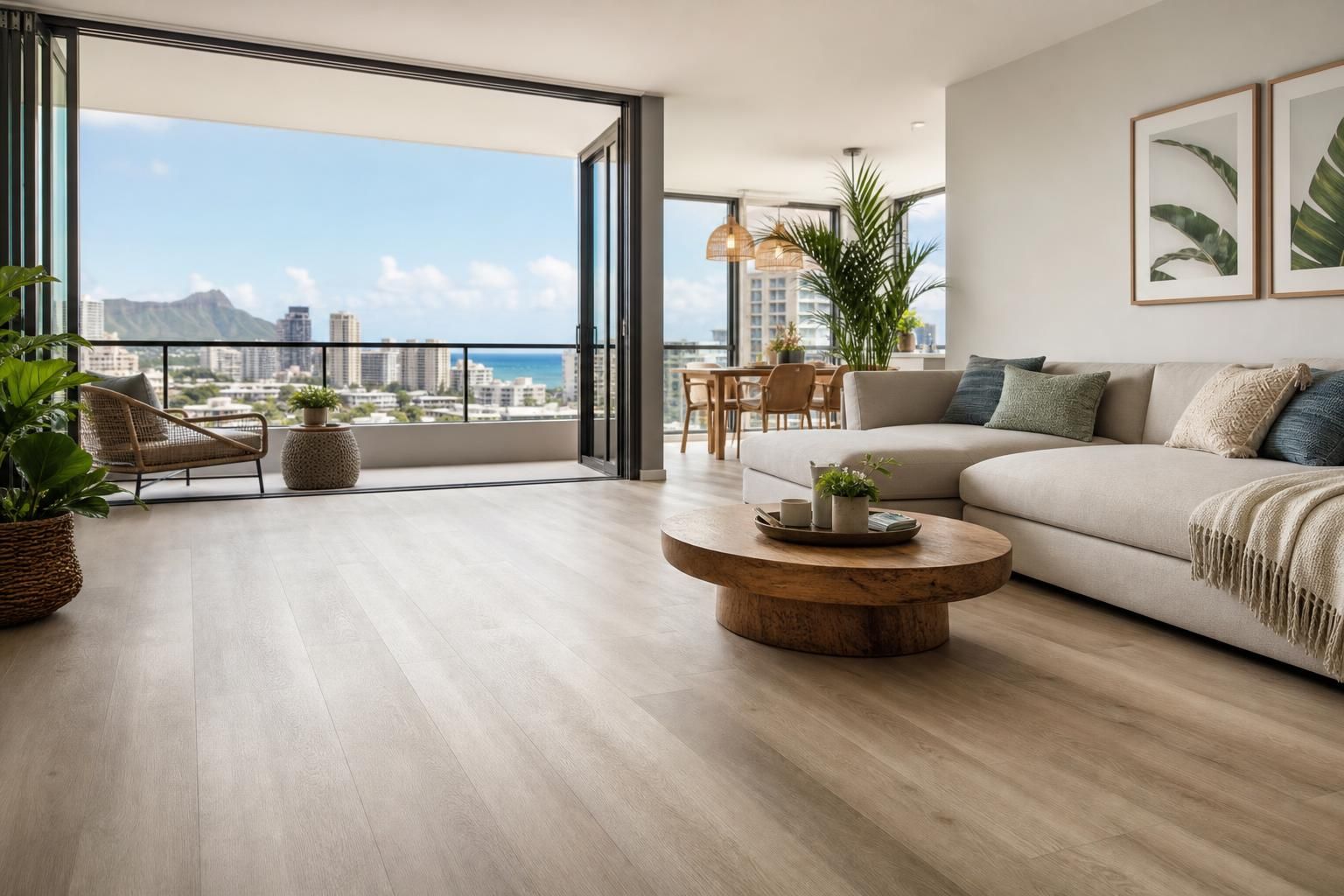
Condo units face moisture conditions that single-family homes often don't: lanai doors that let in rain, kitchens and baths stacked over other units, and little tolerance for water damage reaching a neighbor's ceiling. Waterproof vinyl plank, including SPC rigid-core construction, is built to handle standing moisture without swelling or delaminating, which is why it's become the default condo flooring choice over traditional laminate or solid hardwood. It also doesn't require the acclimation period hardwood needs, which matters when you're trying to minimize days your unit is unlivable.
If your condo is also used as a short-term rental, the flooring needs to tolerate heavier turnover traffic — see the flooring picks that hold up best in Airbnb units for guidance that applies to any high-traffic condo.
Bathroom and Wet-Area Waterproofing
Condo bathrooms sit directly above another owner's ceiling, so waterproofing the subfloor and shower pan correctly isn't optional — a failed membrane can mean a claim against your insurance and your neighbor's ceiling. Waterproofing membranes go under the tile or vinyl in wet areas and around shower curbs, and the labor to do this correctly is part of why bathroom remodels cost more per square foot than open-room flooring work. For a full cost breakdown specific to condo bathrooms, this guide to condo bathroom remodel budgets in Hawaii walks through where the money actually goes.
What Flooring and Installation Cost
Pricing is where condo remodel budgets go sideways fastest, usually because material and labor get quoted as one vague number. H&W Flooring publishes its numbers directly: retail luxury vinyl plank is $2.79 per square foot and installation is from $8 per square foot, including demo of old flooring, leveling (incl. self-leveling material), and baseboard. Material and install are the backbone of any flooring quote, and asking a supplier to separate them lets you see exactly where your budget is going.
For contractors managing multiple condo units or a full building renovation, wholesale tiers apply: $2.79, $2.59, and $2.39 per square foot, with better pricing unlocking at $5,000, $15,000, $100,000, and $200,000 in purchase volume. A contractor renovating several units in the same building can often hit the lower tiers within a single project.
If your remodel also includes a kitchen, the average cost breakdown for a Honolulu kitchen remodel covers cabinets, counters, and labor separately from flooring so you can budget the whole project piece by piece.
Same-Day Material Pickup Matters More in a Condo
Condo remodels are usually timed around elevator reservations, building work-hour windows, and sometimes a tenant move-out date — there's less flexibility than in a single-family home where delays are just inconvenient. Suppliers who ship material from the mainland can add weeks to a project if a box is damaged or an order is short. Stocking flooring on Oʻahu for same-day pickup removes that variable entirely, which matters most when a building only allows renovation work on certain days of the week.
Family-Run Crews vs. Subcontracted Labor
Ask who will actually be on-site during your remodel. Many flooring and remodeling jobs get handed off to rotating day-labor crews once the sale is made, which can mean inconsistent workmanship and no single person accountable for the result. H&W Flooring uses an in-house crew supervised by the owners rather than subcontracted labor, and carries $2 million in liability coverage along with workers' compensation — details worth confirming with any contractor before signing, since your AOAO will likely ask for proof of insurance anyway.
Hawaiʻi contractors working under a general contractor's license should verify their own license status through the State of Hawaiʻi DCCA Professional and Vocational Licensing Division before bidding on condo association work that requires licensed trades.
How Long a Condo Remodel Actually Takes
Timeline depends on three things: how fast the AOAO approves plans, how fast materials are on-site, and the actual scope of work. A flooring-only job in a single unit can often be completed in a few days once approval is in hand and material is on-site. Adding a bathroom or kitchen gut extends that significantly because of plumbing rough-in, waterproofing cure time, and tile setting. Building a buffer into your timeline for AOAO review — which can take longer than the construction itself — avoids the most common source of condo remodel delays.
Frequently Asked Questions
Q: Do I need a permit for a condo remodel in Honolulu?
Cosmetic work like flooring and paint usually doesn't require a city permit but does require AOAO approval. Work involving plumbing, electrical, or structural changes needs a permit from the City and County of Honolulu's Department of Planning and Permitting.
Q: What flooring is best for a Honolulu condo?
Waterproof vinyl plank, including SPC rigid-core options, is the most common choice because it tolerates moisture from lanais and kitchens and doesn't need the acclimation time hardwood requires. Check your AOAO's sound-rating requirements before purchasing, since many buildings set a minimum standard for flooring installed above another unit.
Q: How are flooring costs broken down for a condo remodel?
Material and installation are priced separately; at H&W Flooring, demo is included in the installation rate. As an example, H&W Flooring prices retail luxury vinyl plank at $2.79 per square foot, and installation from $8 per square foot, including demo of old flooring, leveling (incl. self-leveling material), and baseboard.
Q: Does my condo association need to approve my remodel before I start?
Most Oʻahu AOAOs require written approval of renovation plans, proof of contractor insurance, and sometimes a damage deposit before work can begin. This approval process often takes longer than the construction itself, so it should be the first step in your timeline.
Q: Can a contractor get wholesale flooring pricing for a multi-unit condo project?
Yes — contractors buying in volume for multiple units can access tiered wholesale pricing, which typically improves at set purchase thresholds rather than being negotiated unit by unit.