Best Tile for a Hawaii Shower: Porcelain, Ceramic or Stone?
Key takeaway
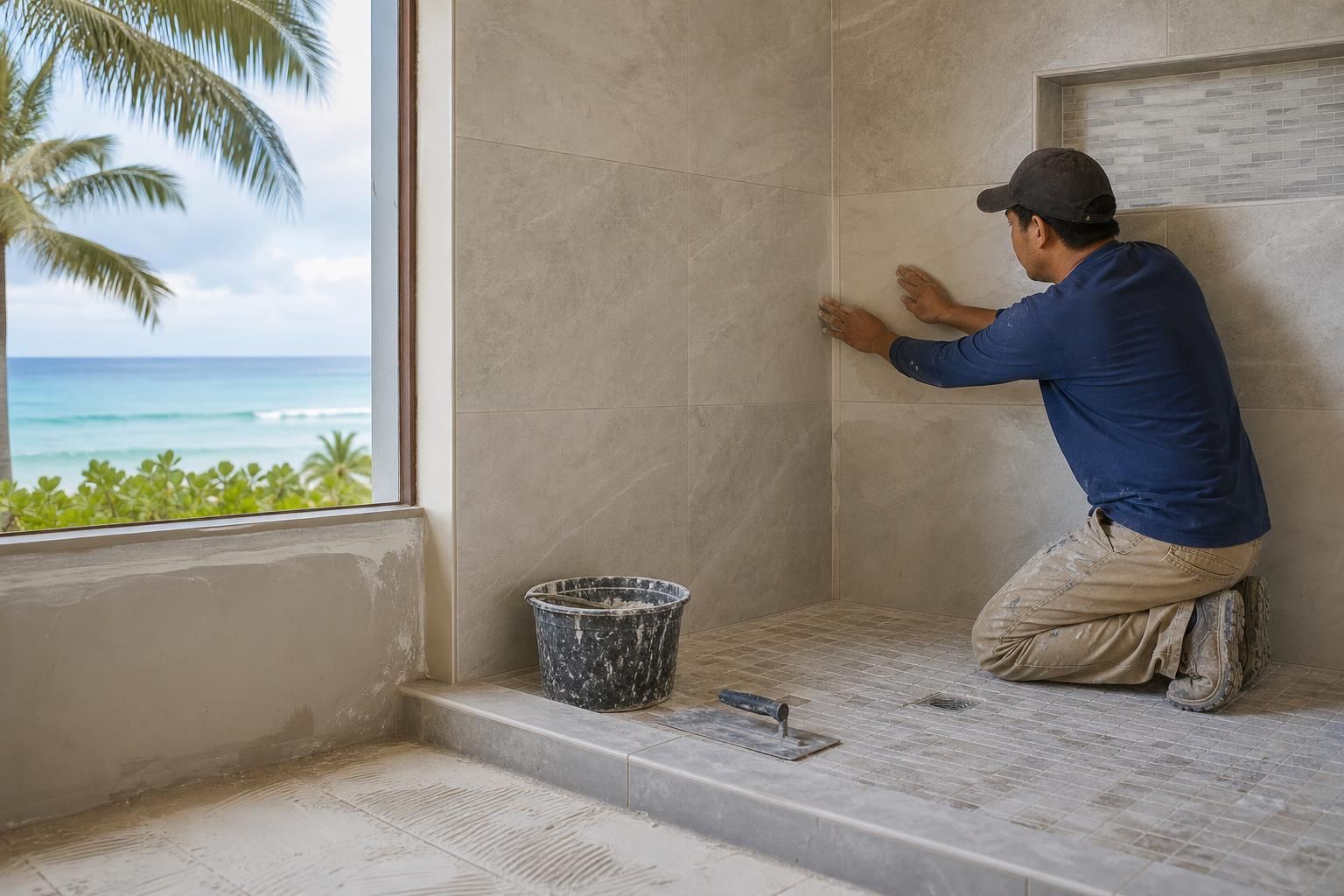
For most Oʻahu bathrooms, small-format porcelain tile is the best choice for a shower floor and larger-format porcelain for the walls, because porcelain's water absorption rate is low enough to handle daily steam and splash without sealing, and a 2-inch-or-smaller floor tile gives your feet more grout lines per square foot for grip. The tile itself, though, is only half the job — in Hawaii's humidity, the waterproofing membrane behind it decides whether the shower lasts five years or twenty-five.
Key takeaways
- Porcelain tile has the lowest water absorption of common tile materials, making it the safer default for Hawaii's humid, wet-area showers.
- Shower floors need a slip-resistant tile with a dynamic coefficient of friction (DCOF) of 0.42 or higher per industry wet-area standards; shower walls don't carry the same requirement.
- The waterproofing membrane behind the tile — not the tile brand or color — is the single biggest factor in whether a shower stays leak-free long term.
Porcelain vs. Ceramic vs. Stone vs. Glass: How They Compare
Every tile material will technically work in a shower, but they don't perform the same way once they're wet every day. Porcelain is fired at a higher temperature than ceramic, which makes it denser and far less porous — that's why it's the standard recommendation for wet areas. Natural stone (marble, travertine, slate) looks the part but is porous and needs ongoing sealing to resist water and soap scum, which is a maintenance commitment most renters and busy households skip. Note that natural stone slab work and fabrication falls outside H&W Flooring's scope — the comparison below is about tile choice, not stone counter or slab sourcing.
| Tile type | Water absorption | Typical slip resistance | Maintenance | Best use in a shower |
|---|---|---|---|---|
| Porcelain (small-format floor) | Very low | High, with textured/mosaic finishes | Low — no sealing needed | Shower floor |
| Porcelain (large-format) | Very low | Moderate, smoother surface | Low | Shower walls |
| Ceramic | Low-moderate | Moderate | Low | Walls, dry-side floor |
| Natural stone | Moderate-high (porous) | Variable, often needs sealing | High — periodic resealing | Accent areas only |
| Glass mosaic | Very low | Low on floors, fine on walls | Low | Accent walls, niches |
Why Tile Size Matters More on the Floor Than the Wall
A shower floor needs traction a wall doesn't. Smaller tiles — often 1x1 or 2x2-inch mosaics — pack in more grout lines, and grout is rougher and grippier underfoot than glazed tile surface. That's why you'll rarely see a 12x24-inch plank tile on a shower pan but will see it climbing the walls above. The Tile Council of North America publishes the industry handbook most Hawaii tile setters work from, and it calls for a dynamic coefficient of friction of at least 0.42 on tile used in wet, barefoot areas like shower floors — a threshold that eliminates most polished or large-format tile from floor use. If you're also weighing vinyl plank for the rest of the bathroom outside the shower pan, the slip-resistance math is similar in spirit — see our guide to slip-resistant bathroom flooring for how that plays out beyond the shower itself.
The Waterproofing Membrane Matters as Much as the Tile
Tile is not waterproof on its own — grout joints and even porcelain itself will pass moisture over time. What actually keeps water out of the wall and subfloor is the membrane system installed underneath: either a sheet membrane or a liquid/trowel-applied membrane that gets rolled over the entire wet wall and pan before a single tile goes up. Hawaii's year-round humidity means a shower assembly that stays slightly damp between uses longer than it would on the mainland, so a continuous, properly lapped membrane behind the tile is what prevents mold and rot inside the wall cavity rather than just on its surface. The EPA's guidance on moisture and mold control notes that controlling moisture at the source is the only reliable way to prevent mold growth indoors — which, in a shower, means stopping water at the membrane, not hoping the grout holds forever.
What a Hawaii Shower Tile Job Costs
Tile installation pricing is quoted by the square foot and scales with the complexity of the waterproofing system, the tile size (mosaic takes longer to set than large-format), and any niches, benches or curbs in the design. H&W Flooring's general installation pricing starts from $8 per square foot, which is all-inclusive — covering demo of the old surface, leveling, and finish trim — rather than tacking those steps on as line-item extras. Shower work specifically layers a membrane step into that scope, so getting an itemized quote in writing (H&W provides written quotes within 48 hours) is the only way to compare bids apples-to-apples. For a fuller walk-through of what drives tile cost room-by-room, see our breakdown on tile installation in Honolulu.
Grout and Sealing in a Humid Climate
Cement-based grout is the default and works fine in a shower as long as it's sealed and maintained, but epoxy grout is nearly impermeable to water and stain, which makes it worth the upcharge on a shower floor that sees daily use. Either way, grout lines are the weak point of any tile shower — they're the first thing to show mildew staining in a humid bathroom, which is a maintenance issue rather than a sign the waterproofing failed. Homeowners who want to minimize grout maintenance altogether sometimes lean toward larger-format wall tile and reserve the smaller, grippier mosaic strictly for the floor pan.
Frequently Asked Questions
Q: What is the best tile size for a shower floor in Hawaii?
Small-format tile, generally 2x2 inches or smaller (including mosaic sheets), is best for shower floors because the added grout lines increase traction. Industry guidance calls for a slip resistance (DCOF) of at least 0.42 for wet, barefoot floor areas.
Q: Is porcelain or ceramic tile better for a shower?
Porcelain is generally the better choice because it's fired denser and absorbs far less water than ceramic, making it more resistant to daily moisture exposure without sealing.
Q: Can I use natural stone in a Hawaii shower?
You can, but natural stone is porous and needs regular sealing to resist water and staining in a humid climate, which is more upkeep than porcelain requires.
Q: Does the waterproofing membrane matter more than the tile I pick?
Yes. The membrane behind the tile and under the pan is what actually stops water from reaching the wall cavity and subfloor; the tile itself is a wear surface, not a waterproofing layer.
Q: How much does it cost to tile a shower in Honolulu?
Installation is typically quoted per square foot and scales with tile size and the waterproofing method used; H&W Flooring's general installation pricing starts from $8 per square foot, all-inclusive of demo, leveling and trim.