Tile Installation in Honolulu: Costs, Process & Wet Areas
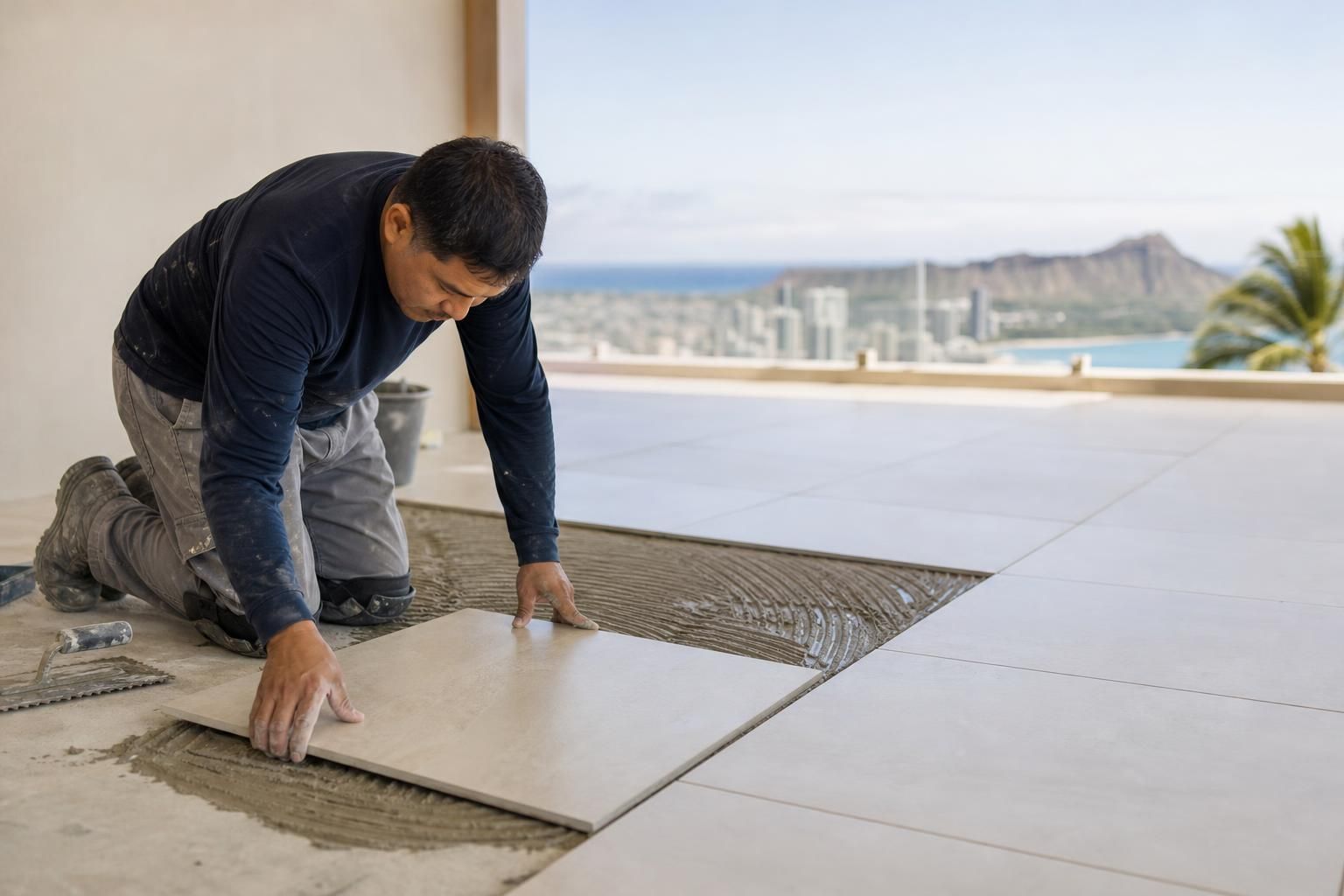
Key takeaway
Tile installation in Honolulu is typically quoted per square foot for labor on top of material cost, with bathrooms and other wet areas priced higher because they require a waterproofing membrane before a single tile goes down. Material costs vary widely by tile type and size, while labor depends on substrate condition, layout complexity, and whether old flooring has to come out first. Demo and haul-away of existing flooring is commonly billed separately.
Key takeaways
- Labor for tile installation is quoted per square foot; wet areas cost more because of required waterproofing.
- Removing old flooring before new tile goes down is usually a separate line item, not bundled into the install price.
- Get a written quote that breaks out material, labor, demo, and waterproofing so you can compare bids apples-to-apples.
What drives the cost of tile installation
Tile pricing has two separate halves: the tile itself, sold by the box or square foot, and the labor to set it. Labor is the variable most homeowners underestimate. A straight lay on a flat, prepped slab is the cheapest scenario; a diagonal or herringbone pattern, large-format tile that needs a flatter substrate, or a small bathroom with lots of cuts around fixtures all push labor time up.
Substrate condition matters more in older Honolulu homes than people expect. Slab floors that have settled or cracked need to be leveled before tile goes down, because tile telegraphs movement in the substrate as cracked grout lines or lifted edges within a year or two. That leveling work is usually quoted separately from the tile install itself, so a quote that looks low may simply be skipping a step the job needs.
Why wet areas cost more
Showers, tub surrounds, and bathroom floors require a waterproofing membrane under the tile, not just a mortar bed. Without it, water works through grout lines and tile joints over time and gets into the wall or subfloor, where it can sit against wood framing and eventually support mold growth. The EPA's guidance on moisture and mold control is explicit that controlling water intrusion at the source is far cheaper than remediating mold after the fact.
The tile industry's own installation standards, published jointly by the Tile Council of North America and the American National Standards Institute, specify different waterproofing methods depending on whether a wet area is a shower pan, a steam shower, or a standard bathroom floor. A contractor who treats every wet area the same way, or skips the membrane step to save time, is cutting a corner that doesn't show up until the warranty period is long over. If your project is a full bathroom gut rather than just a floor swap, it's worth reading about what a flooring installation quote should include before you sign anything, since wet-area jobs have more line items than a dry room.
Tile vs. waterproof vinyl plank for wet rooms
Tile isn't the only waterproof option for bathrooms, laundry rooms, and lanai-adjacent spaces. Rigid-core SPC vinyl plank is also fully waterproof at the plank level and installs faster than tile because there's no thinset cure time and no grout to seal. For a budget-focused bathroom remodel, SPC plank with proper edge sealing at walls and fixtures can be a reasonable alternative to tile, though tile remains the standard choice for shower walls and floors that see standing water regularly. H&W Flooring stocks both tile and waterproof vinyl plank on Oʻahu, so the choice usually comes down to look and how much the floor will actually get wet versus just humid.
What a typical tile installation quote should break out
A clear quote separates the job into pieces so you can see where the money goes:
- Demo and haul-away of existing flooring, commonly priced separately
- Substrate prep or leveling, priced by the scope of the problem
- Waterproofing membrane for wet areas, priced separately from dry-room labor
- Tile material, by the box or square foot depending on the line
- Installation labor, quoted per square foot and scaling up with pattern complexity and cuts
- Grout and trim, often a smaller line but worth confirming is included
If a bid doesn't separate these, ask the contractor to break it down before you compare it to another bid. A guide to getting a flooring installation quote in Honolulu covers the general version of this same checklist for any flooring material, not just tile.
Licensing and insurance questions worth asking
Hawaiʻi requires contractors doing tile and remodeling work above certain thresholds to hold a state license verified through the DCCA's Professional and Vocational Licensing Division. Ask any contractor for their license number and confirm it's active before work starts. Separately, ask about insurance: general liability coverage and workers' compensation protect you if something goes wrong on your property during the job, and a contractor should be able to state their coverage amounts without hesitation. H&W Flooring, for example, carries $2M in liability coverage and workers' comp on its own crew rather than relying on day labor subcontractors.
Timeline expectations for a tile project
A single bathroom floor retile, including demo of the old floor, can often be completed in a few days once materials are on hand, assuming no major substrate repair is needed. Adding a full shower waterproofing and tile job extends that timeline because the membrane needs to cure before tile goes over it. Larger projects — a whole kitchen and multiple bathrooms as part of a remodel — stretch out further and are worth planning against a whole house remodel budget rather than pricing each room in isolation, since sequencing and shared demo days can change the per-room math.
Frequently Asked Questions
Q: How much does tile installation cost per square foot in Honolulu?
Labor for tile installation is quoted per square foot, with wet areas like showers costing more due to required waterproofing membranes. Material cost is separate and varies by tile size and type.
Q: Is waterproofing required under bathroom tile?
Yes. Industry installation standards from the Tile Council of North America specify a waterproofing membrane under tile in showers, tub surrounds, and bathroom floors to keep water from reaching the subfloor or wall framing.
Q: Can I install waterproof vinyl plank instead of tile in a bathroom?
Rigid-core SPC vinyl plank is fully waterproof and can work well in bathrooms and laundry rooms if edges are sealed properly at walls and fixtures. Tile is still the standard for shower floors and walls that see regular standing water.
Q: Does a tile quote usually include removing the old floor?
Not automatically. Demo and haul-away of existing flooring is commonly a separate line item, so confirm it's included before comparing bids.
Q: Do I need a licensed contractor for tile work in Honolulu?
For most remodeling and tile work above minor repair thresholds, yes — Hawaiʻi requires an active state contractor license, which you can verify through the DCCA's licensing division before hiring.