How Do I Clean Grout in a Bathroom Shower?
Key takeaway
Clean shower grout with a paste of baking soda and water, scrubbed in with a stiff nylon brush, then rinsed and followed by a 1:1 white vinegar spray for stubborn mineral and soap scum buildup. For mold-blackened grout, a diluted bleach solution (never mixed with vinegar or ammonia) works best, followed by thorough rinsing and drying. Reseal grout once it's clean and dry so it resists future staining.
Key takeaways
- Baking soda paste plus a vinegar rinse removes most everyday soap scum and hard-water film without damaging grout.
- Dark, persistent staining is usually mold or mildew and needs a diluted bleach solution, good ventilation, and full drying afterward.
- Clean, dry grout should be resealed so it stops absorbing water and staining again within a few months.
What actually causes dirty shower grout
Grout is porous cement, so it absorbs soap residue, body oil, and the minerals in hard water rather than letting them rinse away like tile does. In Honolulu's humid bathrooms, that same porosity holds moisture longer between showers, which is exactly the environment mold and mildew need to take hold. The CDC notes that mold grows wherever there's moisture, organic material, and limited airflow — a description that fits an unvented shower stall almost exactly.
Step-by-step cleaning method for everyday grime
For routine soap scum and water spots, a simple two-step approach handles most showers:
- Mix baking soda with a small amount of water until it forms a spreadable paste.
- Apply the paste directly onto the grout lines and let it sit for 10–15 minutes.
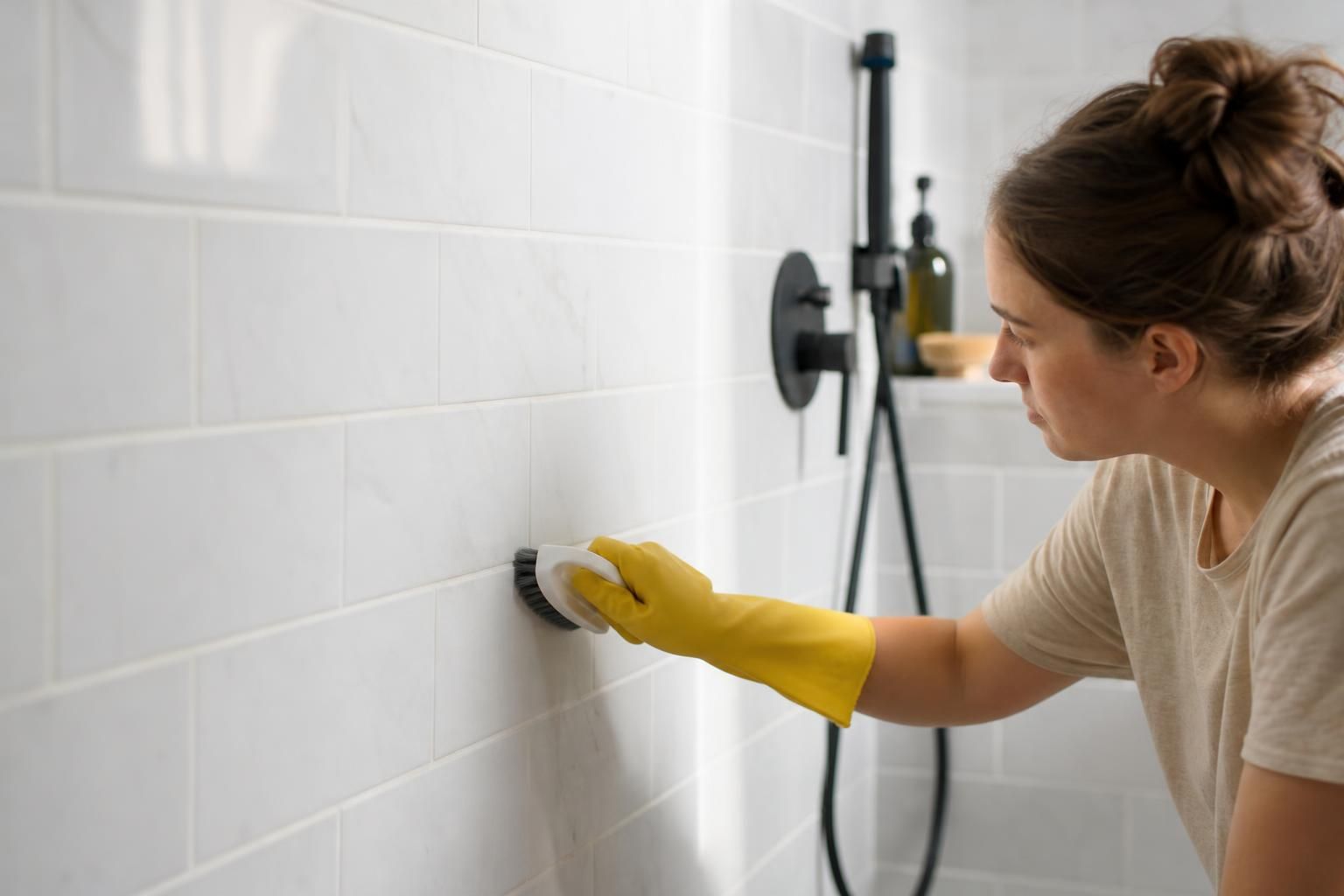
- Scrub with a stiff nylon-bristle brush (an old toothbrush works for tight lines), working along the grout line rather than across it.
- Rinse thoroughly with hot water.
- Spray a 1:1 white vinegar and water solution over the same area, let it fizz and sit for a few minutes, then rinse again.
Vinegar's mild acidity dissolves hard-water mineral deposits, which is why this combination outperforms baking soda alone in homes on municipal water with higher mineral content.
When you need bleach instead
If grout lines look black or gray rather than just dingy, that's typically mold or mildew growth rather than surface dirt, and baking soda alone won't fully remove it. In that case, mix about 1 part household bleach to 10 parts water, apply with a brush, let it sit a few minutes, then rinse completely. The EPA warns against ever mixing bleach with ammonia-based cleaners or vinegar, since the combination can release hazardous chlorine gas — run the bathroom fan or open a window the entire time you're working with bleach.
Never combine the baking soda/vinegar method and the bleach method in the same session. Rinse the grout fully and let it dry before switching approaches.
Why grout keeps getting dirty after you clean it
If grout stains come back within weeks, the sealer has likely worn off or was never applied. Unsealed grout behaves like a sponge — it pulls in soap, oil, and water every time the shower runs, and daily rinsing can't fully flush it back out. A penetrating grout sealer, applied to clean, completely dry grout, fills those pores so future spills sit on top long enough to wipe away instead of soaking in. Most sealers need reapplication every year or two in a daily-use shower, faster in Hawaii's humidity than in a drier climate.
Tools and products that make the job easier
- Stiff nylon brush or grout brush: angled bristles reach into narrow lines better than a sponge.
- Steam cleaner: loosens grime without chemicals, useful for sensitive skin or well water.
- Oxygen-based cleaner: a gentler alternative to bleach for lighter mildew staining.
- Grout sealer (silicone or penetrating): applied after cleaning, not before.
- Squeegee: kept by the shower and used after every use, this single habit does more to prevent future grout staining than any cleaner.
When cleaning isn't enough
Grout that's crumbling, pitted, or missing in sections isn't a cleaning problem — it's a repair problem, and cleaning products won't fix gaps that let water reach the subfloor or wall framing underneath the tile. If you're seeing soft spots in the floor near the shower, discoloration spreading past the grout line, or a musty smell that doesn't clear after cleaning, it's worth checking whether water has already gotten past the tile. Our guide on signs your bathroom floor needs waterproofing walks through what to look for before it becomes a bigger repair. If you're planning a shower remodel anyway, it's also worth reading about choosing the right tile for a Hawaii shower, since some tile and grout combinations resist staining and mildew far better than others from day one.
H&W Flooring's installation crew handles wet-area waterproofing as part of bathroom remodels, which is a different scope than routine grout cleaning but relevant if repeated staining turns out to be a sign of failed waterproofing underneath the tile.
Frequently Asked Questions
Q: Can I use bleach and vinegar together to clean shower grout?
No. Mixing bleach with vinegar (or any ammonia-based cleaner) releases chlorine gas, which is hazardous to breathe in an enclosed bathroom. Choose one method per cleaning session and rinse thoroughly before switching.
Q: How often should shower grout be cleaned?
A light wipe-down after each shower and a deeper clean every one to two weeks keeps grout from building up stains. Homes with hard water or heavy daily shower use may need the deeper clean weekly.
Q: Why does my grout turn black even though I clean it?
Black grout is almost always mold or mildew growing in the porous surface, not just surface dirt, which is why soap and water alone don't remove it. It typically needs a diluted bleach solution plus better bathroom ventilation to stop it from returning.
Q: Does sealing grout stop it from getting dirty?
Sealing doesn't make grout stain-proof, but it fills the pores so soap, oil, and water sit on top long enough to wipe away instead of soaking in. Most showers need resealing every year or two, sooner in humid climates.
Q: Is steam cleaning safe for shower grout?
Yes, steam cleaning is generally safe for cement grout and tile, and it loosens grime without harsh chemicals. Avoid steam on grout that's already cracked or missing, since forcing moisture into gaps can push water further into the wall or floor assembly.