How Do I Order Flooring Samples Before Buying?
Key takeaway
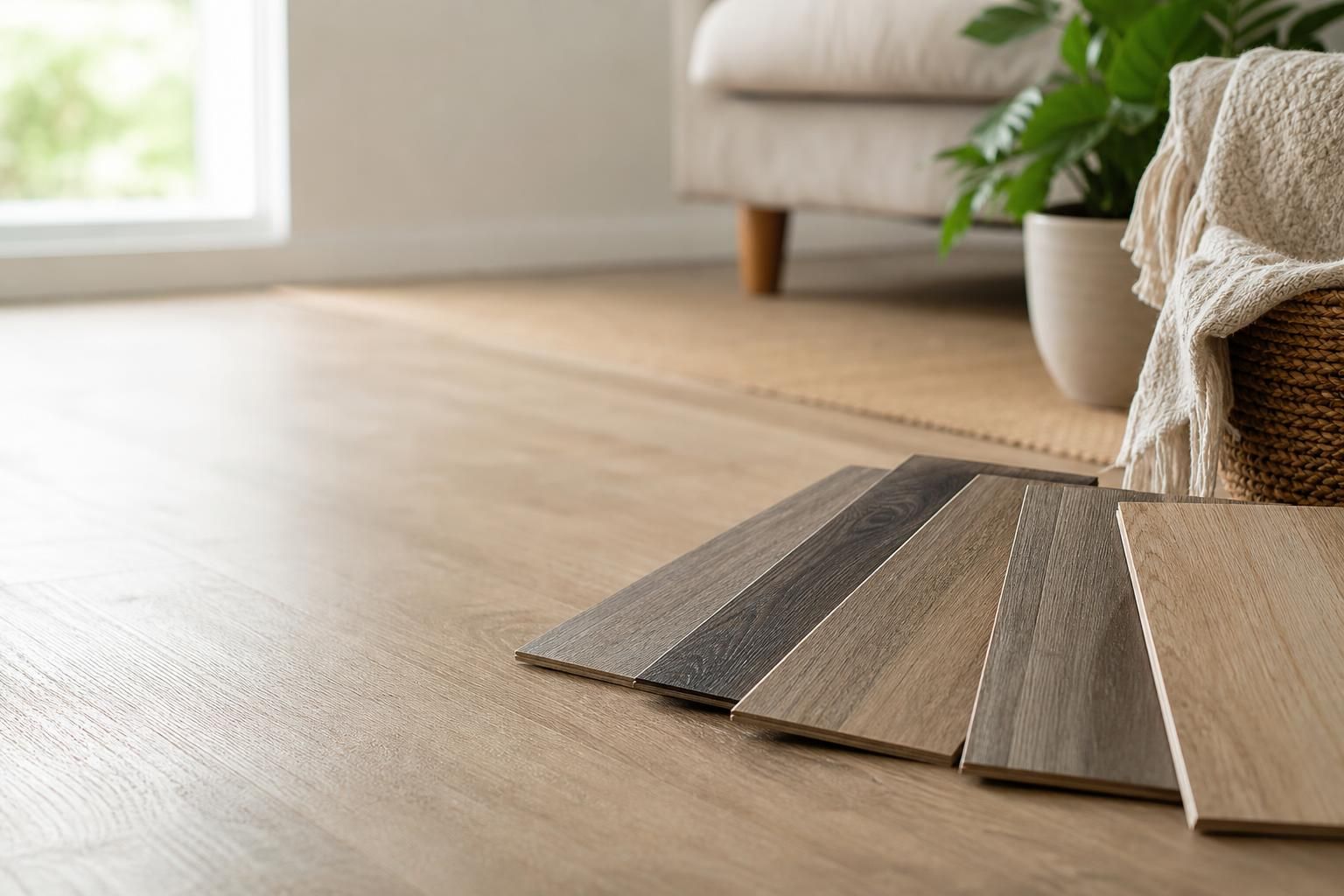
You order flooring samples by contacting a local supplier's showroom or warehouse directly — by phone, website form, or in person — and asking for cut samples of the specific planks, colors, and core types you're considering, ideally 3 to 5 at a time so you can compare them side by side in your own lighting. Most Oahu flooring sellers will let you take samples home for a few days to a couple of weeks before you commit to a full order. Bring the samples into the actual room, check them at different times of day, and set them against your cabinets, trim, or existing tile before buying anything by the box.
Key takeaways
- Request 3-5 samples minimum so you can compare undertones side by side, not one plank in isolation.
- Test samples in the actual room and against existing cabinets, walls, or trim — showroom lighting changes everything.
- Confirm the sample matches the exact product name and lot, since dye lots can shift color slightly between runs.
What to Ask For When You Request Samples
A useful sample request is specific, not general. Instead of asking for "some vinyl plank," name the product line, the finish (matte, textured, embossed), and whether you want SPC rigid core or a flexible WPC-style plank. If you're shopping for a wet area — a bathroom, laundry, or lanai — ask specifically for waterproof cores rated for full water exposure, not just water-resistant surface layers, since the two perform very differently over years of standing moisture.
It also helps to ask what size the sample is cut to. A 4-inch chip tells you the color but nothing about how the plank's visual grain repeats; a full plank or half-plank sample shows you the pattern repeat and lets you see how multiple pieces will look butted together across a real floor.
How Many Samples to Compare at Once
Comparing a single sample against a mental image of your room rarely works, because memory for color is unreliable. Lay 3 to 5 options side by side under the same light at the same time. This is also the point where most buyers narrow from a broad shortlist down to one or two finalists worth testing in the room itself.
If you're also choosing trim or transition pieces for a multi-room layout, it's worth sorting that out at the sample stage too — mismatched transitions are a common surprise during install. For guidance on that, see this breakdown of how to transition vinyl plank flooring between rooms.
Testing Samples in Your Actual Space
Showroom lighting is almost always different from home lighting — more even, often cooler or brighter than a living room with mixed window and lamp light. Color perception shifts measurably under different light sources and color temperatures, which is why professionals recommend viewing any finish sample in the destination room before finalizing a choice, according to lighting guidance from the U.S. Department of Energy. Set the sample flat on the floor, not propped against a wall, and look at it in the morning, midday, and evening.
Also set it next to anything it has to coexist with: kitchen cabinets, bathroom vanity, existing tile that's staying, or baseboards you're keeping. A plank that looks neutral alone can read distinctly warm or cool next to existing wood tones.
Where to Get Samples on Oahu Without Waiting on Shipping
Because most vinyl plank sold on the mainland ships to Hawaii by container, many online retailers quote long sample lead times. Buying from a supplier that stocks inventory on-island avoids that wait entirely — you can pick up or request samples the same day instead of waiting on a shipment. H&W Flooring stocks waterproof vinyl plank, laminate, hardwood, and tile in Māpunapuna, which is why samples and full orders alike don't carry mainland shipping delays. For a broader list of where to look island-wide, see this guide to flooring samples near me on Oahu.
Checking Price and Fit Before You Commit
Once you've picked a finalist, ask how the product is priced and sold before ordering the full quantity. Retail buyers purchasing vinyl plank should expect a published per-square-foot price rather than a quote that changes by salesperson — H&W Flooring's retail rate is $2.79 per square foot, and licensed contractors buying volume move onto tiered wholesale pricing starting at the same $2.79/sq ft and stepping down to $2.59 and $2.39/sq ft as order size crosses $5,000, $15,000, and $100,000 thresholds. Knowing the published rate ahead of time lets you compare the sample you liked against the actual cost of flooring your square footage, instead of guessing.
If you're also budgeting for install, ask what the installation quote covers before you order material — labor, underlayment, transitions, and disposal of old flooring can all be itemized separately. This rundown of what's included in a flooring installation quote is a useful reference before you request pricing on a finalist.
Letting Samples Acclimate Before Final Judgment
Vinyl plank, like most flooring materials, can shift subtly in appearance and flatness depending on temperature and humidity in the room where it sits. If your sample is cold from a warehouse or just arrived by mail, give it a day at normal room temperature before making a final color call — the same principle used for full orders, which is why professionals recommend letting cartons acclimate before installation. For the mechanics of why this matters at full-order scale, see this guide on how to acclimate vinyl plank flooring before installation.
Common Mistakes When Ordering Samples
- Only requesting one sample. A single chip gives you no contrast reference and makes every color look "fine" in isolation.
- Judging color under store lighting only. Retail lighting is typically brighter and more color-neutral than home lighting.
- Ignoring the core type. A sample that looks identical to another may have a completely different waterproof rating — ask directly whether it's rated for standing water exposure, not just splashes.
- Skipping the trim and transition check. Matching a plank to existing tile or carpet in adjoining rooms is easier to solve before ordering than after installation.
- Not asking how long you can keep the sample. Some suppliers set a return window; knowing it upfront avoids a rushed decision.
Frequently Asked Questions
Q: How many flooring samples should I order before deciding?
Most buyers do best comparing 3 to 5 samples side by side under the same lighting. Fewer than that makes it hard to judge undertone and contrast; many more becomes difficult to compare meaningfully at once.
Q: Are flooring samples usually free?
Policies vary by supplier — some provide sample chips at no cost, while larger cut samples or multiple requests may carry a small charge or deposit. Ask directly what a specific seller's sample policy is before requesting several.
Q: How long can I keep a flooring sample at home before deciding?
This depends on the supplier, but many allow a sample to stay in your home for several days up to a couple of weeks so you can view it across different lighting conditions. Confirm the window when you request the sample so you're not rushed.
Q: Does the sample I test match the exact product I'll receive?
It should match the product line and color name, but dye lots can shift slightly from run to run, especially with natural wood-look finishes. For large orders, ask whether your material will come from a single production lot to minimize variation across planks.
Q: Should I test samples in a wet area differently than a dry room?
Yes — for bathrooms, laundry rooms, or lanai areas, ask specifically whether the sample's core is rated for standing water, not just surface moisture, since that affects long-term performance in ways color alone won't show you.