How to Choose a Vinyl Plank Flooring Color for Your Home
Key takeaway
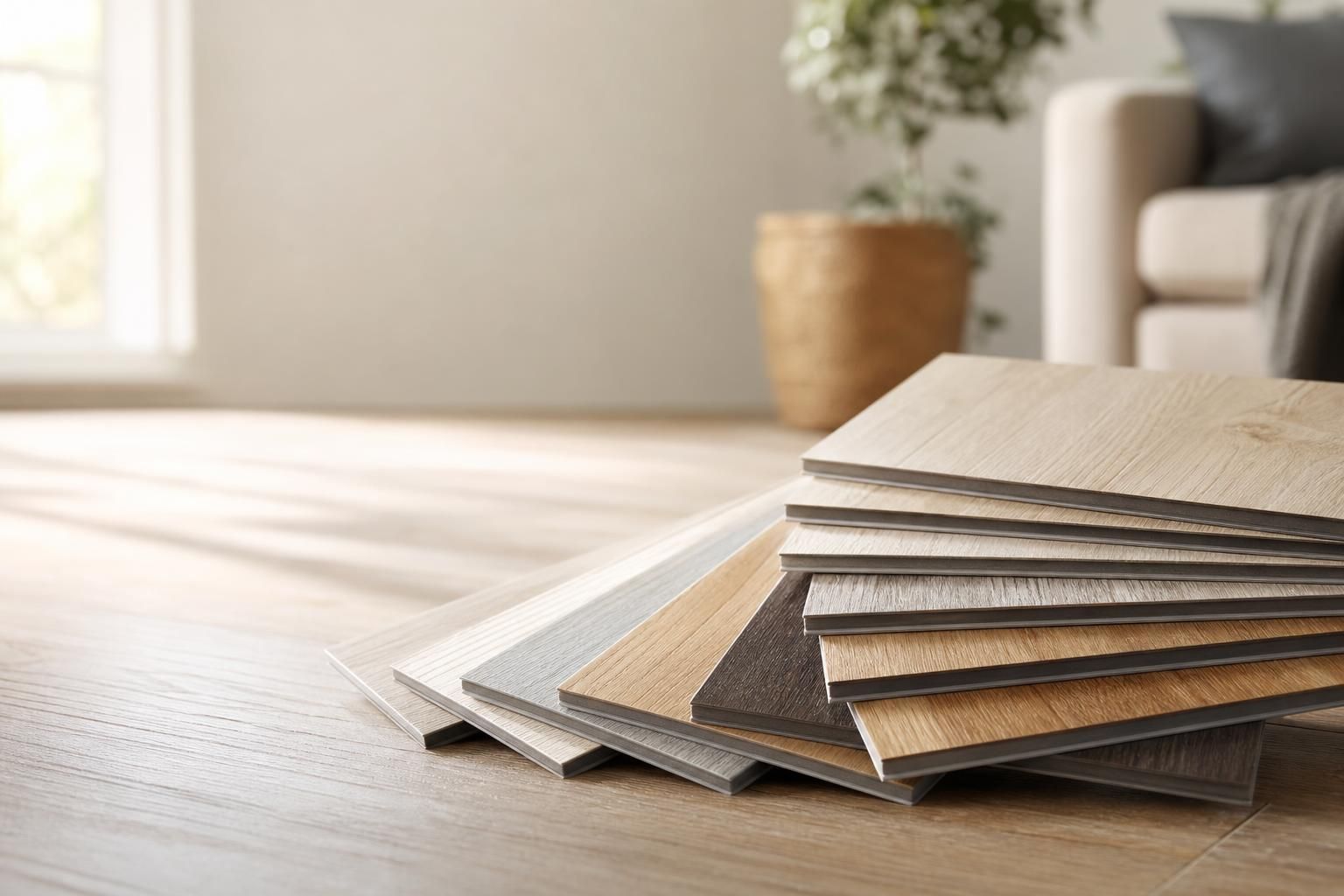
Choose a vinyl plank color by testing physical samples in your own room at different times of day, matching the undertone (warm or cool) to your trim and cabinetry, and sizing the contrast to the room — darker tones shrink a space visually while lighter, warmer tones open it up. Skip online photos for the final call; vinyl plank color shifts noticeably under incandescent bulbs versus daylight, so the sample has to sit on your actual floor before you commit.
Key takeaways
- Bring home at least 2-3 physical samples and view them in your room at morning, midday, and evening light before deciding.
- Match undertones first (warm honey vs. cool gray), then worry about exact shade — mismatched undertones clash more than mismatched shades.
- In smaller or low-light rooms, favor mid-tone or lighter planks; reserve dark walnut or espresso tones for larger rooms with good natural light.
Start With the Light in the Room, Not the Showroom
A plank that looks rich and warm under a showroom's fluorescent lighting can read orange or muddy once it's under your living room's LED bulbs or beside a lanai door flooding in afternoon sun. Oahu homes often get strong, direct daylight through sliders and jalousie windows, which tends to wash out subtle color variation and make mid-tones look lighter than they do indoors. The U.S. Department of Energy notes that daylight shifts in color temperature throughout the day, which is part of why a sample can look completely different at 8 a.m. versus 4 p.m. The fix is simple: lay the sample flat on the actual subfloor, in the actual room, and check it morning and evening before buying.
Match the Undertone Before the Shade
Vinyl plank colors generally fall into two undertone families — warm (honey, amber, reddish oak) and cool (gray, taupe, driftwood). Mixing undertones is the single most common color mistake: a cool gray-toned plank next to warm oak cabinets or warm-toned baseboards will look slightly "off" even if both are technically attractive on their own. Before narrowing down shades, hold a sample next to your cabinetry, trim, and any built-in woodwork that's staying put. If the existing wood leans warm, stay in the warm plank family; if your fixtures and trim are already gray or white, a cool or neutral plank will blend more seamlessly.
Let Room Size and Natural Light Guide Contrast
- Small or dim rooms (interior bathrooms, laundry closets, hallways without windows): lighter, mid-tone planks make the space feel larger and bounce available light around.
- Large, bright, open-concept rooms: darker tones like walnut or charcoal can anchor the space without feeling closed-in, since there's enough ambient light to keep them from looking flat.
- Condos with limited natural light: a warm light-to-mid tone tends to read as cozy rather than cave-like; very dark planks in a windowless condo living room often look almost black indoors.
If you're flooring a whole home and want the same color to flow from the living room into the lanai or covered patio area, check first whether the product you're considering is rated for that kind of exposure — not every plank holds up to outdoor use in Hawaii's humidity and UV.
Consider How the Grade Affects Color Consistency
Not all vinyl plank is cut from the same cloth, even within a single color name. Lower-grade product often has a shorter print-and-texture repeat, meaning the same two or three plank patterns show up every few feet, which can make a busy wood-grain color look repetitive once it's down across a whole room. Higher-grade SPC rigid core planks typically use a longer, more varied print run, so the color and grain look more natural at scale. If you're choosing between a few color options that look similar in a small sample, it's worth understanding how vinyl plank flooring grades differ before you decide, since grade affects how a color reads across 500 or 1,000 square feet versus a single 7-inch sample.
Plan for Transitions Between Rooms
If you're not replacing every floor in the house at once, think about where the new color will meet existing flooring — tile, carpet, or a different vinyl plank in an adjacent room. A dramatic color jump at a doorway can look intentional and clean, or it can look like an afterthought, depending on how the transition is handled. It's easier to choose a color with this in mind up front than to fix a jarring transition later; see how to transition vinyl plank flooring between rooms for the options.
Practical Ways to Narrow It Down
- Pull 3-5 samples, not just one or two — color perception is relative, and a plank that looks "fine" alone often looks wrong next to a true favorite.
- Photograph each sample in your room with your phone's camera in both daylight and evening lighting; photos often reveal undertone clashes your eye glosses over in person.
- Lay samples on the floor, not on a table or counter — flooring color reads differently at ground level under furniture shadows than it does at eye level.
- Live with your top two choices for at least a day or two before ordering, especially for a large room where a mistake is expensive to undo.
Retail buyers shopping for a single room can expect in-stock waterproof vinyl plank at a published $2.79 per square foot at H&W Flooring, which makes it affordable to buy two or three sample-size color options rather than guessing from a swatch card. Contractors specifying flooring across multiple units or spec homes work off wholesale tiers instead, so locking in a color early matters more when volume pricing is involved.
Durability Still Matters More Than Color Trends
Color should fit your home, not a trend that will look dated by the time you resell. The National Association of Home Builders has pointed to neutral, warm mid-tone wood looks as consistently resale-friendly flooring choices, since they're easier for a future buyer to picture their own furniture against than a very dark or very pale extreme. If you're choosing between a safe mid-tone and a bold trend color, the mid-tone is the lower-risk pick for a primary living space, while bolder colors work better in a smaller, lower-commitment room like a powder bath.
Frequently Asked Questions
Q: Does vinyl plank flooring color look the same in every room of the house?
No — the same plank color can look noticeably different depending on the room's natural light, wall color, and artificial lighting. Always test a physical sample in the specific room before deciding, rather than relying on how it looked in a different room or online photo.
Q: Should I match vinyl plank flooring color to my cabinets or my walls?
Match to cabinets and trim first, since those are usually permanent, then treat wall color as flexible since paint is easy to change later. Matching undertone (warm vs. cool) between flooring and cabinetry matters more than matching the exact shade.
Q: Are light or dark vinyl plank floors better for small rooms?
Lighter and mid-tone planks generally make small or dim rooms feel larger because they reflect more available light. Very dark tones can make a small, low-light room feel smaller and more closed-in.
Q: How many samples should I order before choosing a color?
Order at least three samples rather than one or two, since color choices are easier to judge by comparison. View each sample on the actual floor in morning, midday, and evening light before making a final decision.
Q: Does the grade of vinyl plank affect how the color looks once installed?
Yes — lower-grade planks often repeat the same few printed patterns across a room, which can make a color look less natural at scale than it did on a small sample. Higher-grade SPC products typically use a longer print variation, giving a more realistic, less repetitive look across a full floor.