Do I Need a Permit for Vinyl Plank Flooring in Hawaii?
Key takeaway
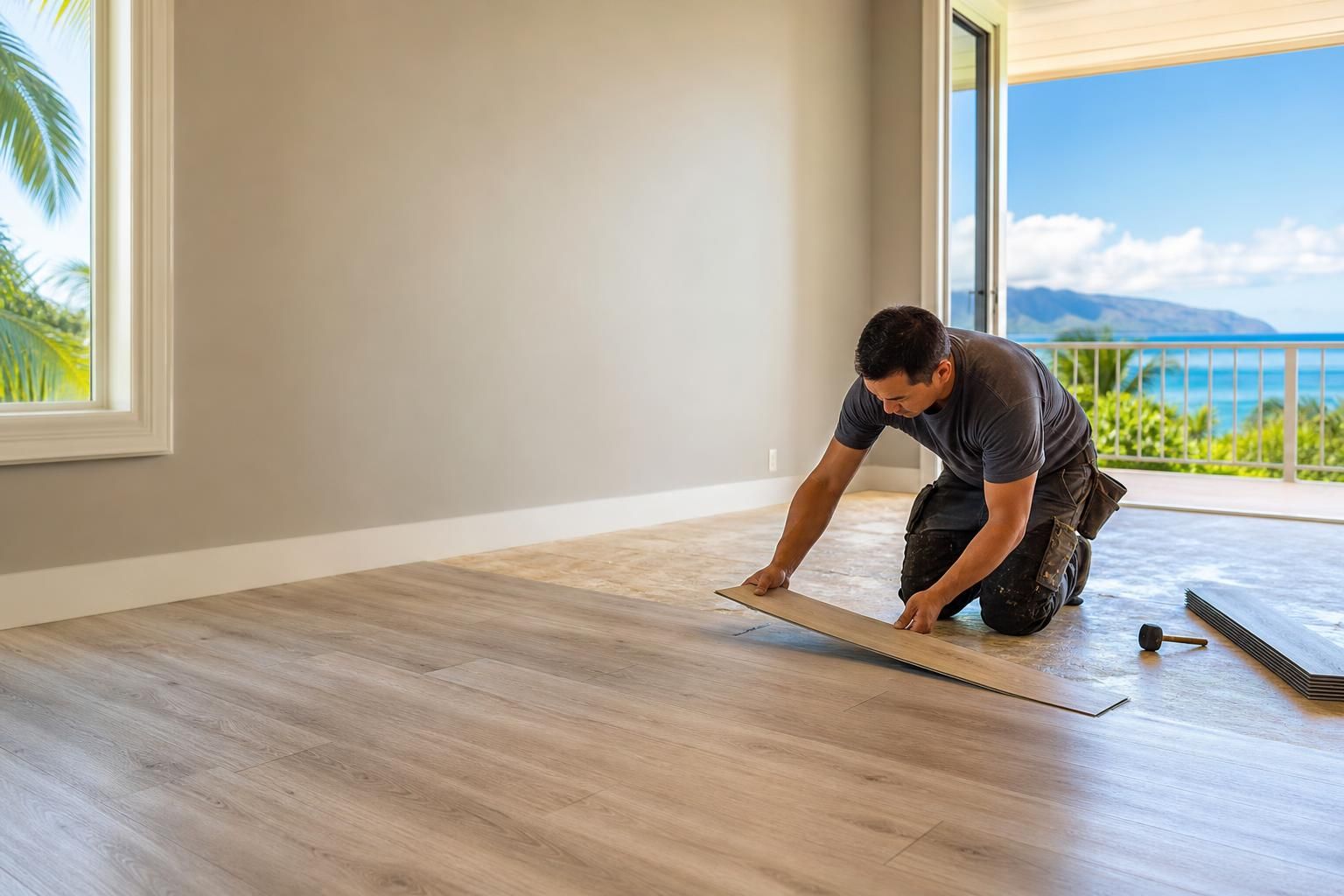
In most cases, no — replacing existing flooring with vinyl plank in an Oʻahu home is considered a cosmetic repair, and the Honolulu Department of Planning and Permitting (DPP) does not require a building permit for it. A permit becomes necessary only when the job touches plumbing, structural framing, electrical, or is bundled into a larger remodel like a bathroom gut-renovation that includes new waterproofing membranes or moved fixtures.
Key takeaways
- Straight floor-for-floor vinyl plank swaps over an existing subfloor are typically permit-exempt under Honolulu DPP rules.
- Permits are triggered by scope, not material — moving plumbing, altering framing, or wet-area waterproofing changes the picture even if the flooring itself is just vinyl plank.
- When in doubt, call DPP's permit counter or ask your contractor to confirm in writing before work starts — it's a five-minute question that avoids a costly stop-work order later.
When a Permit Usually Isn't Required
A permit exists to make sure structural, electrical, and plumbing work meets code — not to regulate what surface material sits on top of a floor. If you're removing old laminate, tile, or carpet and installing vinyl plank over the same subfloor, with no change to plumbing, electrical, or the structure underneath, this is classified as a repair/replacement project in most Hawaiʻi jurisdictions, including the City and County of Honolulu. That covers the overwhelming majority of residential vinyl plank jobs: bedrooms, living rooms, hallways, and most kitchens where no fixtures move.
This is consistent with how most U.S. building departments treat floor covering replacement — the International Code Council publishes model codes that distinguish cosmetic finish work from structural or life-safety work, and local jurisdictions like Honolulu DPP adopt and localize those categories.
When You Do Need to Pull a Permit
A handful of conditions move a flooring job from "cosmetic" into "needs a permit" territory:
- Bathroom or wet-area remodels that include waterproofing changes. If you're redoing the shower pan, moving a toilet flange, or altering the subfloor waterproofing system alongside the vinyl plank, that's a plumbing and waterproofing scope DPP will want to review.
- Structural subfloor repair. Replacing rotted joists, sistering framing, or correcting a sagging subfloor before laying new flooring is structural work, not finish work.
- Work tied to a condo association project. Some Oʻahu condo buildings require an internal permit or AOAO approval for any flooring swap, separate from the city process, because of noise and sound-transmission rules between units — always check your house rules first.
- Additions or layout changes. If the flooring project is part of moving a wall, enlarging a room, or changing a doorway, the whole scope needs a permit, and the floor just rides along with it.
If your project includes new subfloor prep, it helps to understand what's underneath the vinyl first — see our breakdown of installing vinyl plank over plywood subfloors for how that layer is typically handled before flooring goes down.
Bathrooms and Wet Areas Are the Gray Zone
Bathrooms are where homeowners most often get surprised. Swapping out a bathroom's finish flooring alone — same waterproofing, same fixtures, same layout — usually stays permit-exempt. But the moment a remodel adds a new waterproofing membrane, changes drain location, or reconfigures the shower, it becomes a wet-area remodel that DPP treats differently than a simple floor replacement. Waterproof vinyl plank is a surface layer; it is not a substitute for a code-compliant waterproofing system underneath a shower or tub surround. If you're weighing how water protection actually works beneath the plank, our guide to moisture barriers under vinyl plank flooring explains the distinction between a moisture barrier and true wet-area waterproofing.
Stairs and Thickness Changes
Vinyl plank, especially SPC rigid core, adds a small amount of height to a floor — typically a fraction of an inch once you include underlayment. On a flat room floor that's a non-issue. On stairs, though, building codes set maximum riser heights and minimum tread depths (the IBC standard most U.S. jurisdictions reference caps risers around 7.75 inches), so if a flooring change alters a step's dimensions enough to violate that, it can draw code scrutiny. This is rare with vinyl plank nosing kits designed for stairs, but it's worth checking before you commit. We cover the specifics in vinyl plank flooring on stairs.
How to Confirm Before You Start
The fastest way to get a definitive answer for your specific project is to call Honolulu DPP's permit counter and describe the scope in plain terms: are you changing plumbing, electrical, structure, or waterproofing, or just swapping the surface material? If the answer to all of those is "no," you're almost certainly exempt. If you're hiring a contractor for a larger remodel, ask them to state the permit status in the written scope of work, not just verbally.
It's also worth confirming who you're hiring is appropriately licensed for the scope of work, since licensing and permitting are related but separate questions. Hawaiʻi's Department of Commerce and Consumer Affairs (DCCA) maintains a public license lookup so you can verify any contractor's license number and status before signing a contract.
Why This Matters for Resale and Insurance
Unpermitted structural or plumbing work discovered during a home sale can delay escrow or force retroactive permitting, which is slower and more expensive than doing it upfront. Cosmetic flooring replacement carries none of that risk precisely because it doesn't require a permit in the first place — which is one reason straightforward vinyl plank swaps remain one of the lower-friction remodeling projects on Oʻahu.
Frequently Asked Questions
Q: Does installing vinyl plank flooring in a condo require HOA approval even if no city permit is needed?
Often yes. Many Oʻahu condo associations require an internal application for any flooring replacement, separate from city permitting, mainly to enforce sound-transmission (underlayment) rules between units. Check your building's house rules before starting, even for a simple cosmetic swap.
Q: Will my contractor pull the permit if one is needed?
A licensed contractor handling a scope that requires a permit should pull it in their name as part of the job, not leave it to the homeowner. Ask for this in writing before work starts, and verify their license status on the DCCA lookup.
Q: Does waterproof vinyl plank itself need special permit approval because it's "waterproof"?
No. The permit question is about the scope of work — plumbing, structure, electrical, waterproofing membranes — not the flooring material's water resistance. Waterproof vinyl plank is treated the same as any other finish flooring for permitting purposes.
Q: What if I'm only replacing flooring in one room, like a bedroom?
A single-room, surface-only flooring swap with no plumbing, electrical, or structural changes is the clearest example of permit-exempt work under Honolulu DPP's general approach to repair and replacement projects.
Q: Can I just ask my flooring supplier whether my project needs a permit?
Yes, and it's a smart first step — an experienced flooring and remodeling crew will have handled enough projects to flag anything unusual in your scope, though for a final answer on an edge case, DPP's permit counter is the authoritative source.