What Is Luxury Vinyl Plank Flooring? A Complete Guide
Key takeaway
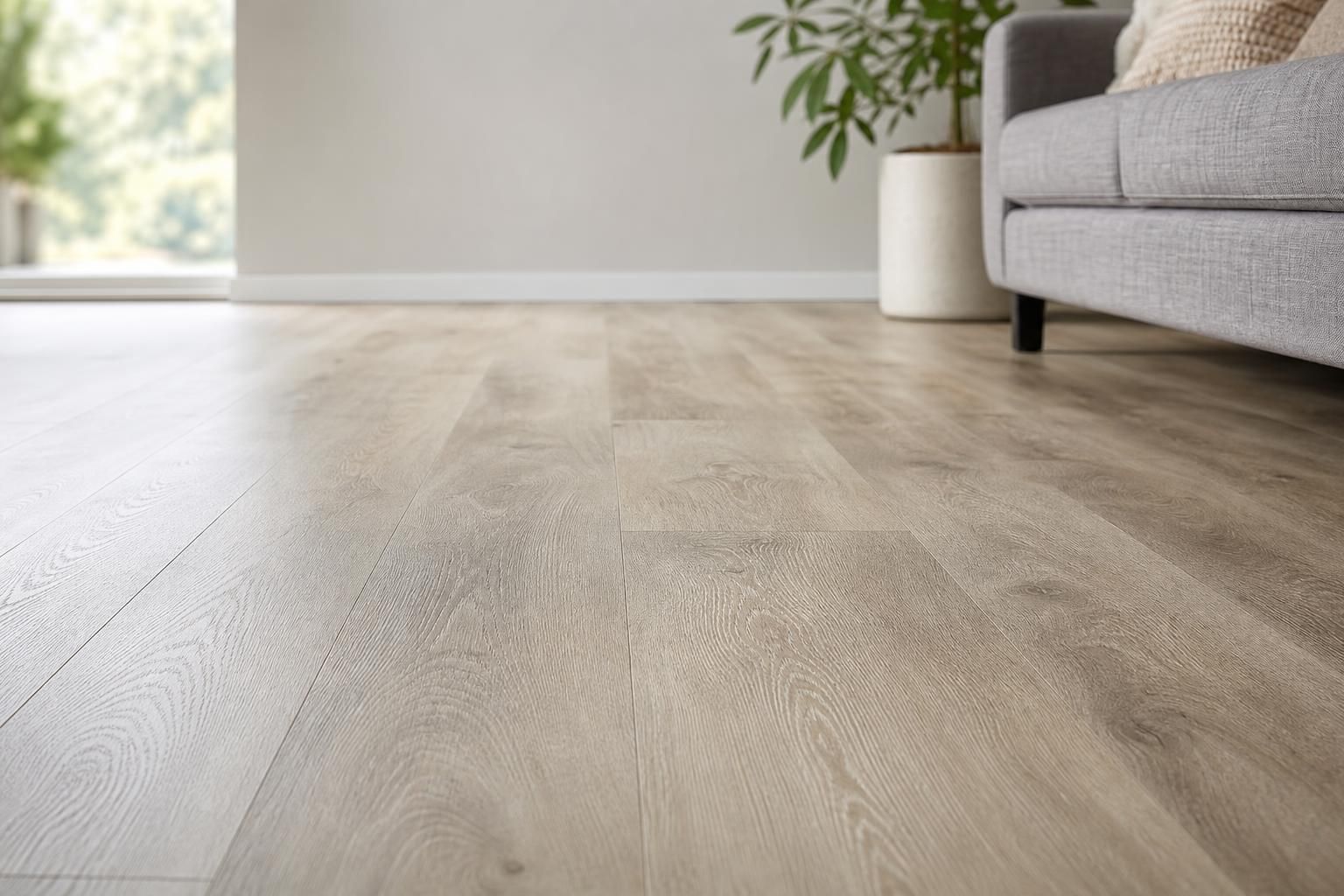
Luxury vinyl plank flooring is a multi-layer synthetic flooring product that mimics the look of hardwood using a printed design layer protected by a clear wear layer, built on either a flexible vinyl core or a rigid SPC (stone polymer composite) core. It's 100% waterproof, click-locks together without glue in most cases, and runs from standard retail prices around $3.99/sq ft down to promotional pricing during sales events. It's a strong fit for Hawaii homes because it tolerates humidity, salt air, and moisture-prone rooms better than solid hardwood or laminate.
Key takeaways
- Luxury vinyl plank is built in layers — wear layer, print layer, core, backing — and the core type (flexible vinyl vs. rigid SPC) determines how it feels underfoot and how well it hides subfloor imperfections.
- Regular retail runs $3.99/sq ft at H&W Flooring, with installation from $8/sq ft that already includes demo, leveling, and baseboard — no itemized add-ons.
- Contractors buying in volume get tiered wholesale pricing by order size, separate from the retail rate homeowners pay.
How Luxury Vinyl Plank Is Built
Every plank is a sandwich of distinct layers, and understanding them explains why some vinyl floors outlast others:
- Wear layer — a clear urethane or similar coating on top that resists scratches and scuffs. Thicker wear layers generally hold up better in high-traffic areas.
- Print/design layer — a high-resolution photographic layer that gives the plank its wood or stone look.
- Core layer — either flexible WPC (wood polymer composite) or rigid SPC. SPC cores are denser and more dimensionally stable, which matters in a climate with daily humidity swings.
- Backing layer — adds cushioning, sound dampening, and sometimes a built-in underlayment.
Most residential-grade luxury vinyl plank sold today click-locks edge to edge, so planks "float" over the subfloor rather than requiring adhesive — though glue-down versions exist for commercial or high-moisture applications.
Why It's Waterproof (and What That Actually Means)
"Waterproof" refers to the plank itself resisting water penetration and swelling — it does not mean a room is sealed against water intrusion at seams, walls, or drains. In bathrooms, kitchens, and lanai-adjacent rooms, the plank can handle standing water and spills without warping, but proper transitions, caulking, and waterproofing behind tile or at wall penetrations still matter for a fully wet-area-ready install. If you're also tiling a shower or tub surround as part of the same remodel, that waterproofing work is a separate scope from the vinyl plank itself.
This waterproof core is also why vinyl plank has become the go-to over laminate in Hawaii, where laminate's wood-fiber core can swell if water gets past the surface. For a side-by-side on how the two compare beyond moisture resistance, see this comparison of vinyl plank and vinyl sheet flooring.
What It Costs: Retail vs. Wholesale
Pricing is where a lot of flooring quotes get vague. At H&W Flooring, regular retail luxury vinyl plank is priced at $3.99/sq ft, with a limited-time Black Friday promotional price of $2.49/sq ft. That's a published shelf price, not a quote you have to negotiate for.
Installation is quoted from $8/sq ft, and that figure is all-inclusive — it covers demo and removal of the old flooring, leveling (including self-leveling compound where the subfloor needs it), and baseboard. There's no separate line item added later for haul-away or leveling.
Contractors with a valid Hawaii license buying in volume qualify for wholesale/trade pricing, which is tiered by order size rather than a flat rate — the more square footage ordered, the better the per-foot price, verified and quoted directly to the contractor's account. If you're sourcing material at volume, it's worth understanding where to find vinyl plank flooring wholesale on Oahu before comparing bids.
Where Subfloor and Moisture Prep Come In
Luxury vinyl plank's waterproof core doesn't eliminate the need to think about what's underneath it. On ground-level slabs, especially in older Oahu homes, residual slab moisture can still affect adhesives or cause long-term issues if the installer skips vapor prep. Reviewing what a moisture barrier actually does under vinyl plank is useful before signing off on an install over a bare slab. Vinyl plank can also go over plywood subfloors in most cases, which matters for older wood-frame homes common in Honolulu neighborhoods — see installing vinyl plank over plywood for the prep steps involved.
Durability and Lifespan Factors
Vinyl plank doesn't have a single universal lifespan — it depends on wear layer thickness, foot traffic, and whether furniture pads are used. The Consumer Product Safety Commission and building-material standards groups don't publish a fixed vinyl plank lifespan the way they do for things like water heaters, so most of what you'll see quoted as "20-30 years" online is manufacturer marketing rather than a tested standard. What is measurable is wear layer thickness in mils, which is printed on every product's spec sheet and is the single best predictor of how a floor will hold up in a busy kitchen or entryway versus a guest bedroom.
Grade also plays into this — residential, commercial, and heavy-commercial grades differ in core density and wear layer thickness, not just price. A breakdown of luxury vinyl plank flooring grades is worth a read before buying based on price per square foot alone.
Luxury Vinyl Plank vs. Other Flooring Types
- vs. laminate: laminate's core is wood-based and can swell with water exposure; vinyl plank's core does not.
- vs. hardwood: hardwood can be refinished multiple times over its life; vinyl plank cannot be sanded or refinished, only replaced plank by plank or in full.
- vs. tile: tile is harder and colder underfoot and grout lines need maintenance; vinyl plank is softer, warmer, and seamless between planks.
The National Association of Home Builders has noted vinyl flooring's rising share of new-home flooring choices in its industry surveys, reflecting the broader shift toward waterproof, low-maintenance options in both new construction and remodels.
Is It Worth the Investment?
For a rental unit, a kitchen, or a condo near the water where humidity and moisture are constant concerns, the combination of waterproof performance and moderate cost tends to pencil out well against hardwood or tile. For a deeper look at the return on investment question specifically, this breakdown of whether vinyl plank flooring is worth it weighs resale value, durability, and comfort factors side by side.
Frequently Asked Questions
Q: What's the difference between SPC and WPC luxury vinyl plank?
SPC (stone polymer composite) has a rigid, dense core that resists dents and temperature-related expansion better, while WPC (wood polymer composite) has a softer, slightly cushioned core that feels warmer underfoot but can be more prone to denting under heavy furniture.
Q: Can luxury vinyl plank be installed directly over existing tile or vinyl?
In many cases yes, as long as the existing surface is flat, structurally sound, and free of major damage — though an installer should check for height clearance at doorways and transitions first.
Q: How long does it take to install luxury vinyl plank in an average room?
Timing depends on room size, subfloor condition, and whether demo or leveling is needed first, but a straightforward single room can often be completed in a day once material and site prep are ready.
Q: Does luxury vinyl plank need an underlayment?
Some products have an attached underlayment pad for sound and cushioning, while others require a separate underlayment layer depending on the subfloor and the manufacturer's installation instructions.
Q: Is luxury vinyl plank flooring safe for homes with pets?
Yes — its scratch-resistant wear layer and seamless, waterproof surface make it a common choice for pet owners, since spills and accidents don't penetrate the core the way they would with hardwood or laminate.